



You're standing at the door with coffee in one hand, keys in the other, trying to decide if your faux fur cheetah coat is enough for the walk to the bus, the train platform, and the office beyond it. That decision is exactly where this coat earns its place. It's not a technical expedition shell, and we're not going to pretend it is. It's a polished urban layer, designed to make a simple knit look finished while keeping you cozy, plush, and comfortable through real city movement.
At Pandemonium, we build that layer by hand in our Seattle studio. We're direct about the tradeoffs, because a statement coat you'll keep for years deserves honest guidance, not a sales pitch.
What Makes a Faux Fur Cheetah Coat Different
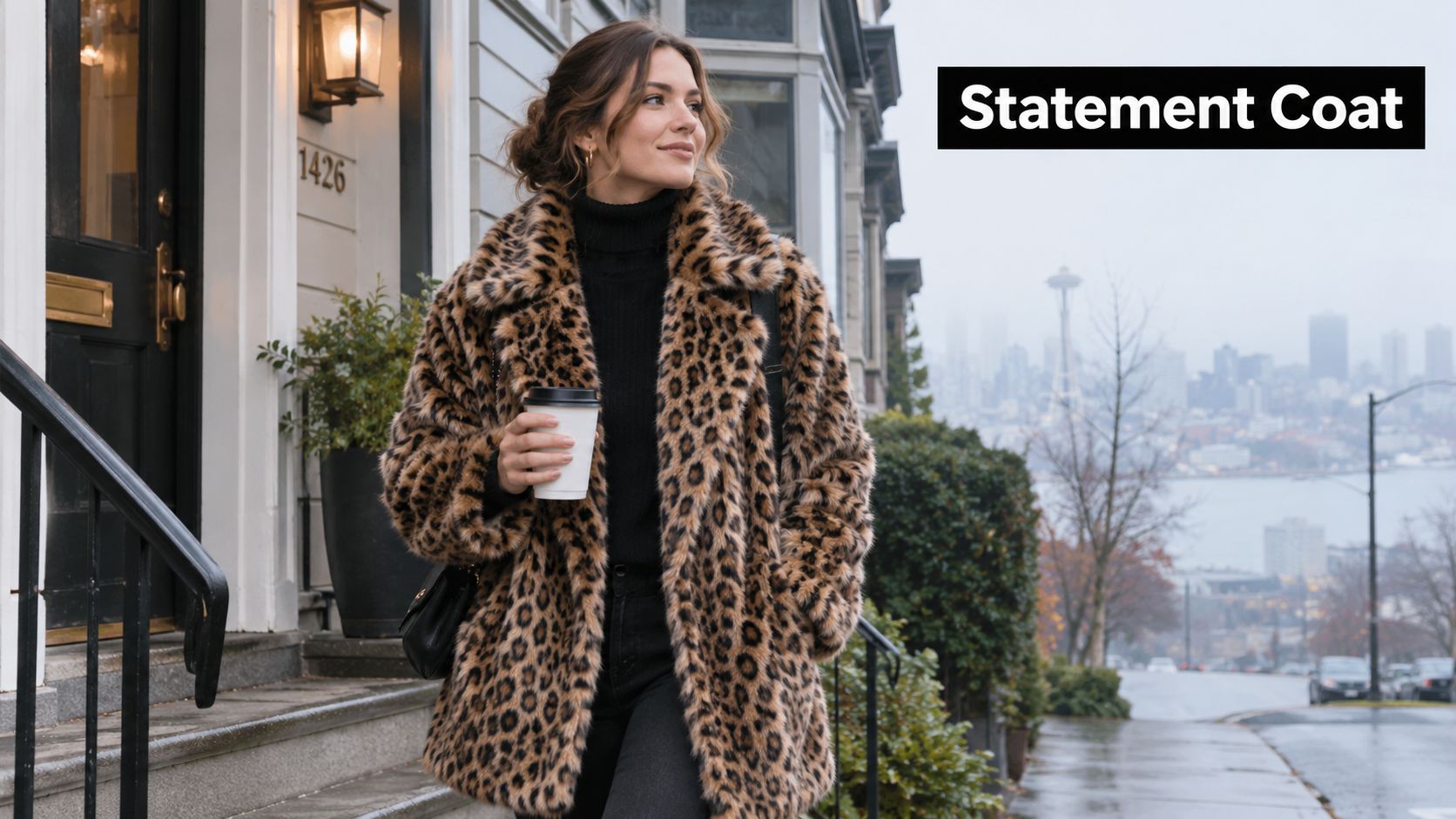
The commute starts damp and gray. She steps out of a Seattle townhouse in a black knit, straight-leg trousers, and ankle boots, then pulls on a rich-toned cheetah coat and suddenly the whole outfit has intent. The faux fur cheetah coat does that work in seconds, without asking her to change everything underneath it.
That instant polish is the point. A cheetah print in a high-end faux fur is not trying to pass as animal fur. It's a cruelty-free luxury textile chosen for its own softness, shimmer, and substantial hand-feel, cut into an architectural silhouette that reads as a deliberate style choice.
Hand-Sewn in Seattle, Not Pulled From a Rack
Our small-batch coats are made in our Seattle studio, where our team cuts, sews, and finishes each piece under designer Leigh Young's direction. We've done this work for more than 25 years, and you can feel that experience in the drape across the shoulders and the way the pile brushes cleanly in one direction. Small-batch production lets us check seams, collar roll, and lining tension on every garment before it leaves.
That matters more with a bold print than with a plain coat. If the pattern breaks badly at a seam or the collar collapses, the whole piece looks unfinished. Hand-sewn construction keeps the print placement thoughtful and the structure standing up to daily wear, so the coat looks as good in year three as it does on the first morning out.
A statement print only works when the construction underneath it is quiet, solid, and correct.
An Ethical Alternative With Honest Limits
We use the term ethical alternative precisely. A faux fur cheetah coat avoids the use of animal pelts, but material sourcing, production, maintenance, and end-of-life handling still matter, according to reporting on the tradeoffs of petroleum-derived synthetic fibers and recycling difficulty. We won't call any synthetic pile impact-free, and you shouldn't buy from anyone who does.
Our answer is durability. A well-made coat in a luxury textile, fitted properly and cared for gently, stays in rotation instead of heading to a donation bag after one season. That's also why we offer custom sizing and our "your fabric, our expertise" bespoke service from the start, so you order the coat that fits your body and your life the first time.
If you want the look without wearing animal fur, this is the right starting point. If you want a coat that also respects your time, your commute, and your closet for years, construction is where you should look next.
Inside the Fabric and Warmth
Run your hand across a good cheetah pile and you'll understand it faster than any label can explain. The surface should feel velvety and plush, spring back lightly, and move in one direction without a scratchy backing showing through. That hand-feel comes from three things working together, and we'll walk you through each one.
Pile, Backing, and Lining Work as a System
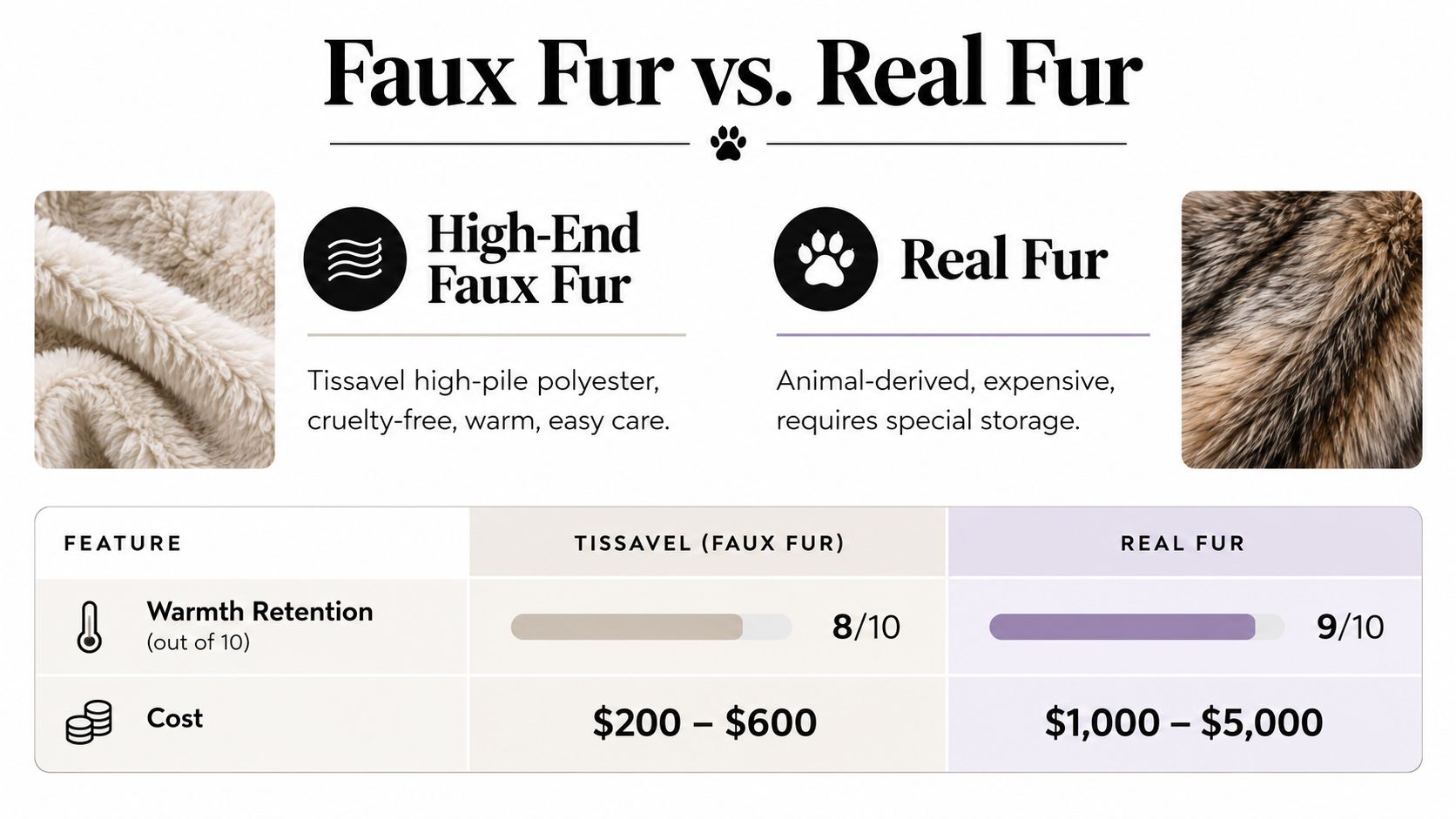
Pile density is the first layer. A dense, high-pile surface, like the Tissavel luxury textiles we favor, traps air between fibers and gives you that cozy, weightless warmth against the cold. Sparse pile looks thin, feels cheap against the fingers, and lets wind cut straight through to the backing.
The backing holds those fibers in place and gives the coat its body. A firm, well-finished backing keeps the silhouette architectural instead of floppy, and it helps the print read as rich-toned spots rather than a flat pattern. Turn a coat inside out in our studio and we'll show you exactly what to look for before you buy anything.
Lining is the layer against your clothes. A smooth lining, including the velvet linings we use across our millinery and apparel, lets the coat slide over a knit without grabbing, and it adds a modest wind break. If you're comparing textiles before you order, start with our guide to the types of faux fur fabric we work with and then talk to us about which pile suits your climate.
Fashion Warmth Versus Technical Outerwear
Here's our honest position. One independent laboratory comparison measured animal fur at 2.54 clo and faux fur at 2.31 clo, close enough to describe them as similar in insulation but not identical, in a summary of that vegan fur warmth comparison. Those numbers tell you the pile insulates well. They don't tell you how you'll feel standing on a windy platform in Chicago or walking twenty blocks in New York.
Warmth depends on pile density, backing, lining, wind protection, moisture, and time outdoors. Faux fur pile can also compress when wet, reducing loft and changing how the garment feels. So we recommend you judge by scenario, not by a single claim.
- Short urban commute: A lined cheetah coat over a knit is the right top layer for door-to-door city movement, short waits, and indoor-outdoor transitions.
- Sustained exposure below freezing: Add a warm mid-layer underneath, choose a longer length with a secure closure, and cover your head and neck.
- Driving rain or hard wind: Reach for a windproof or water-resistant layer instead, and save the cheetah coat for dry cold.
Practical rule: If you'd describe the weather as a commute, wear the cheetah coat. If you'd describe it as an expedition, wear technical outerwear.
That's not a weakness. It's clarity. A weather-resistant, cozy urban layer you'll reach for five days a week serves you better than a bulky technical coat you leave at home.
Choosing the Right Silhouette and Print
You don't need three statement coats. You need one that fits the life you lead, and we'll help you choose it plainly. The cheetah print is the loudest voice in most wardrobes, so the silhouette around it should be classic, clean, and easy to repeat.
How Cheetah Compares With Black and Camel
Place the three options side by side before you commit. Each one earns its place for a different reason, and none of them replaces the others perfectly.
| Coat Type | Visual Impact | Versatility | Best Occasion |
|---|---|---|---|
| Faux fur cheetah coat | Vibrant, high, instantly recognizable | Moderate, anchors simple outfits | Commutes, dinners, gallery nights |
| Classic black coat | Low, sleek, recedes quietly | High, pairs with nearly everything | Formal offices, conservative settings |
| Neutral camel or brown coat | Moderate, warm and classic | High, softens both black and denim | Daytime meetings, travel, layered knits |
The table makes the decision simple. Choose cheetah when you want the coat to carry the outfit. Choose black or camel when you want the coat to disappear behind what you're wearing. If you want more background on working pattern into a capsule wardrobe, read our notes on styling animal print faux fur before you settle on a print scale.
Length, Collar, and Closure by Lifestyle
Length follows movement. A hip-length coat suits drivers and anyone climbing in and out of cars all day. A knee-length coat suits walkers, transit riders, and anyone who wants more coverage over trousers and dresses in cold wind.
Collar shape follows your neck and your calendar. A structured collar frames the face, stands up against a breeze, and reads polished for the office. A softer, open neckline layers better over scarves and chunky knits, and it feels more relaxed for evenings.
- Open-front: Easiest over layers, best for mild cold and quick transitions indoors.
- Single button: Clean line, secure enough for a commute, simple to tailor.
- Belted: Defines the waist over dresses, adds wind protection, takes a minute more to fasten.
Our recommendation for most commuters is firm. Pick a knee-length, single-button coat with a collar you can turn up, and let the print be the single focal point. Keeps the rest of the outfit quiet, and the coat will never fight your clothes for attention.
If you prefer your statement saved for evenings, go shorter and more open. Either way, decide by how you'll move in it, not by how it photographs on a hanger.
Fit, Sizing, and Bespoke Options
A cheetah coat draws the eye, so fit errors show up fast. Shoulders that slump past your own shoulder line make the print look borrowed. Sleeves that swallow your hands make the whole garment read as costume instead of clothing, and we'll fix both problems before you ever wear it out.
What Correct Fit Looks and Feels Like
Start at the shoulder seam. It should sit at the edge of your shoulder, letting the pile fall in a clean vertical line instead of pooling. Raise both arms as if you're reaching for a transit strap. The coat should move with you without pulling across the back or lifting at the hem.
Sleeve length sets the proportion. We like the cuff to end at the wrist bone, showing a sliver of knit or glove. If you're between standard sizes, petite, tall, or tired of compromising, it helps to visualize your body measurements against a garment's proportions before you send us your numbers, so the conversation starts from something concrete.
Custom Sizing and Your Fabric, Our Expertise
Our bespoke service works two ways. You can customize an existing pattern, adjusting length, collar, lining, and closure to suit your body and your commute. Or you can send us a fabric you already love through "your fabric, our expertise", and our Seattle team will cut and tailor the coat for you in the studio.
We've laid out the steps, timelines, and alteration options in our overview of bespoke faux fur coat alterations, and we recommend you read it before booking. Bring us your measurements, your preferred length, and one honest sentence about how you'll wear the coat most weeks. We'll tell you directly if a requested change will help or hurt the drape.
Fit is the single biggest reason a small-batch coat outperforms an off-the-rack one. The print gets the compliment, but the tailoring earns the repeat wear.
Pet parents, we haven't forgotten you. Many of our customers coordinate their own coat with our pet apparel for their dog or cat, in matching or complementary textiles. Tell us when you order and we'll cut both pieces from the same story, so the household arrives looking intentional.
Don't settle for almost right. Send us your measurements, ask about custom sleeve length, and let us build the version that sits on your shoulders like it was always yours.
Styling for Commuter and Evening Looks
You'll get the most from this coat when you stop saving it. Wear it on a Tuesday. Wear it to dinner on a Friday. The print is vibrant enough to finish an outfit, so everything under it can stay simple, warm, and already hanging in your closet.
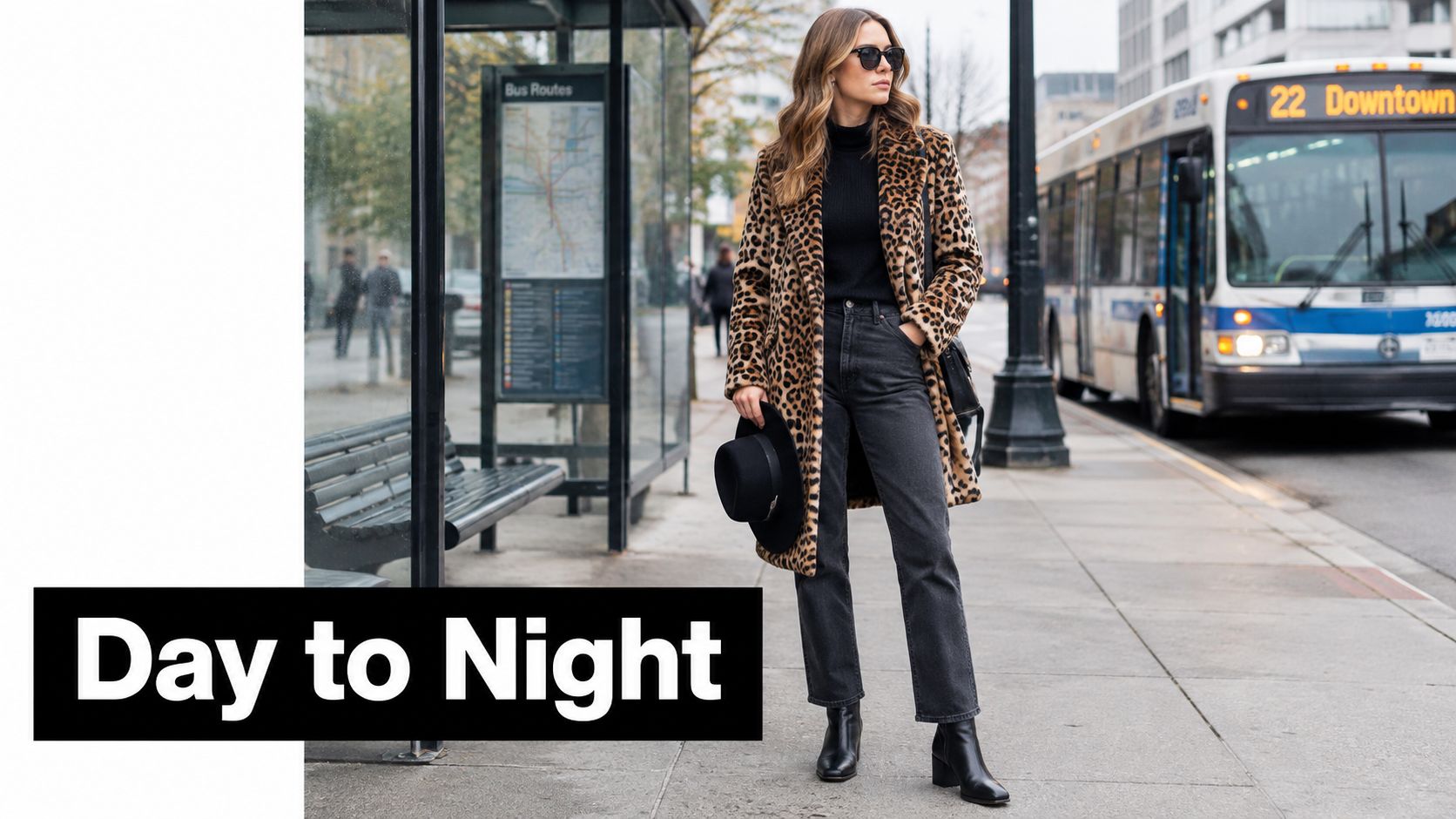
This morning look shows the coat doing its everyday work on a city sidewalk.
The Commuter Look
Start with a fitted black knit, straight-leg denim or fitted trousers, and ankle boots you can walk in. Add the cheetah coat and you're done dressing. The outfit underneath is quiet, which lets the rich-toned spots read as classic rather than loud.
Finish it with millinery. A structured beret keeps the line sharp for the office, while one of our faux fur pillbox hats echoes the coat's plush texture without repeating the print. Keep the bag simple and the jewelry minimal, and let the coat carry the whole commute from sidewalk to desk.
On colder mornings, layer one of our Cozy Cable knits underneath for warmth that doesn't add bulk at the shoulder. A long scarf in a solid tone protects the collar area and gives you something to adjust as trains and offices swing warm and cold.
The Evening Look
Evening asks for contrast. Slip the coat over a silk slip dress, add a velvet clutch from our handbag collection, and choose one statement earring. The silky dress against the substantial pile creates exactly the tension that makes animal print feel dressed up instead of dressed over.
Watch how the coat moves over an evening base before you plan your own version.
Notice the restraint. No competing prints, no second statement piece, no heavy layering to crush the pile. Boot toppers and reversible accessories from our collection work the same way, adding texture at the edges of an outfit while the coat stays the focal point.
Our rule in the studio is simple. Whether something goes with cheetah, try it in black, cream, or denim first. Build two outfits you trust, repeat them without apology, and the coat will pay for its place in your closet quickly.
Care and Storage That Protects the Pile
Treat this coat like the long-term piece it is. Most damage we see in the studio doesn't come from wearing. It comes from overwashing, rough brushing, and storage that crushes the pile flat for months, and every one of those problems is preventable at home.
Lower-Impact Ownership in Practice
Brush gently and only in the direction of the pile, using a soft tool to lift surface debris and restore loft. Spot-clean small marks instead of washing the whole garment. After rain or snow, shake off moisture, hang the coat away from direct heat, and let it air-dry completely before it goes back in the closet.
There's a sustainability reason behind that restraint. A peer-reviewed study of domestic laundering measured an average of 131 milligrams of microfiber mass per kilogram of textile per wash for synthetic textiles, described in the PLOS ONE research on microfiber release from consumer fabrics. Fewer, gentler washes mean less cumulative fiber loss and a better-looking print, which is why we treat care as part of the design.
Industry reporting also estimates that roughly 60% of faux-fur products are polyester-based and identifies textile washing as a significant source of ocean microplastics, in a market overview of faux fur materials and washing impacts. We won't pretend that trade-off away. Our position is that durability, repair, and custom alterations are the honest sustainability strategy for a synthetic pile garment.
For step-by-step help, follow our complete guide on how to clean a faux fur coat and always check the care label first. Federal guidance requires manufacturers and importers to provide care instructions under the Care Labeling Rule, outlined in the FTC guidance on fur product labeling and care disclosure, and we write ours to be followed, not ignored.
Your Closet Checklist
- Brush lightly: Work in the direction of the pile after wear, never against it.
- Spot-clean first: Reserve full cleaning for real need, and choose professional cleaning for structured or heavily lined coats.
- Air-dry always: Keep the coat away from tumble drying and direct heat sources.
- Store with room: Use a broad hanger and a breathable garment bag, with space around the shoulders so the pile keeps its loft.
Pin that list inside your closet door. Five quiet minutes of care after a wet commute will protect the softness, the spots, and the shape for seasons.
The Leigh Young Legacy and Finding Your Own
Every coat that leaves our studio carries a maker's judgment with it. Leigh Young founded Pandemonium Millinery in Seattle and has spent more than 25 years refining how a plush, cruelty-free textile should be cut, lined, and finished. Our small team still sews by hand at the same workbenches, checking each collar and closure before a piece is wrapped.
You can read more about that journey in our profile of Leigh Young and the Seattle studio. We share it because who makes your coat changes how it wears. A named designer and a local team will answer your fit questions, adjust a sleeve, and repair a lining years later.
Why This Coat Makes a Strong Gift
A cheetah coat from a small Seattle boutique lands differently than a department-store purchase. It suits the ethical-luxury friend who refuses animal fur, the cold-climate commuter between Seattle, Chicago, and New York who wants polish with her warmth, and the pet parent who'd love a matching piece for the whole household. It's specific, tactile, and clearly chosen rather than grabbed.
The comparison behind vegan fur is also concrete. A comparative environmental analysis found one kilogram of mink fur had a carbon footprint of 309.91 kilograms of CO2-equivalent, reported as 25 times that of polyester, in the Humane World for Animals analysis of fur material footprints. That doesn't make every faux fur perfect in every category, and we've said so throughout. It does give you a grounded reason to choose a cheetah-patterned vegan fur coat over an animal pelt, then keep it in use for years.
Buy the coat you'll wear for a decade, from people who'll still be here to alter it in year five.
Start soft, then commit. Join "The Crowd", our email list, for 15% off your first order and first word on small-batch releases. When you're ready, explore the Fractal Collection and our faux fur apparel, send us your measurements or your own fabric, and let our studio build your cheetah coat to order.
We hand-sew faux fur coats, millinery, and accessories in our Seattle studio, with custom sizing and "your fabric, our expertise" bespoke service for pieces built around your body and your commute. If a plush, cruelty-free cheetah coat belongs in your rotation, visit Pandemonium Millinery to explore the collections and start your order with our team.


