



A Seattle commute can begin with damp, 34-degree air, a gust at the corner, and a quick decision about whether your hat is built for more than the mirror. The right choice among furry hats for women feels plush against the skin, covers the ears, and stays comfortable when you step indoors. At Pandemonium, we bring 25+ years of design experience under Leigh Young to hand-sewn, cruelty-free millinery made in our Seattle studio, with bespoke sizing for people who rarely find a comfortable fit off the rack.

A hat earns its place through a mix of warmth, weather resistance, fit, and finish. Plush texture matters, but so do the crown, lining, and coverage. We approach a winter hat as both a tactile accessory and a practical piece of cold-weather gear, shaped by years of making for Seattle weather and people who need their wardrobe to work beyond a photo.
That craft has a longer history. Beaver pelts were first prized largely for men's hats because the dense underfur could be felted into durable, water-resistant headwear; by the late nineteenth century, fur was increasingly part of women's clothing and accessories. The material's association with glamour grew, too, as fashion houses made fur jackets and statement pieces, a history that helps explain the appeal of today's high-end faux fur as an ethical alternative (Fashion and Fur).
The Core Silhouette Family
A silhouette should suit your coat, your hair, and how you move through the day. Each of these shapes has its own history, but a Seattle interpretation needs to perform in drizzle and fit naturally into a working wardrobe.
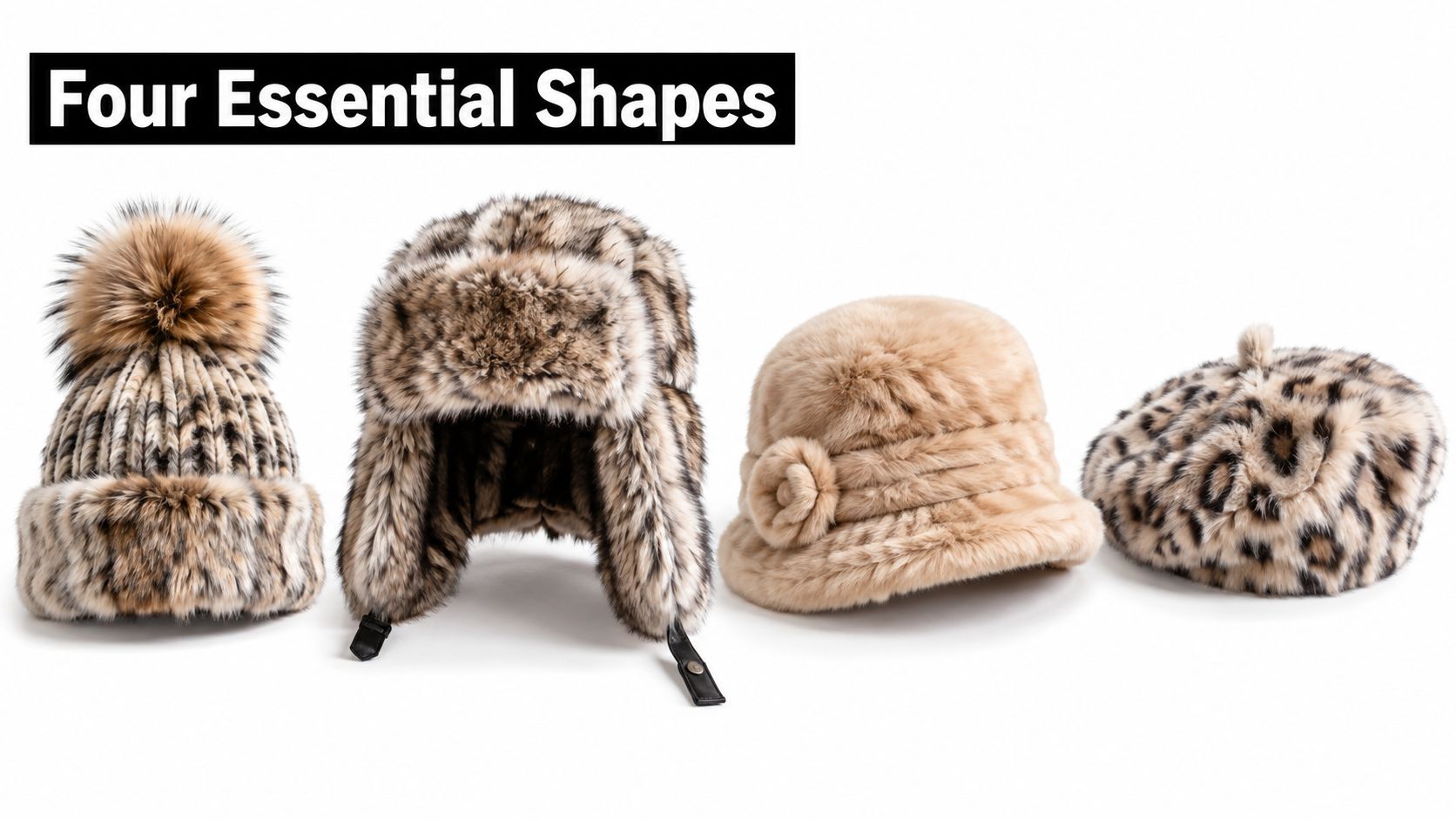
Four familiar shapes, rethought for daily wear
- Pom-pom beanie: A playful knit-and-fur pairing with an easygoing feel. It sits comfortably with long hair worn loose or tucked into a coat, and its softer outline works well with chunky scarves and casual outerwear.
- Trapper: Built around ear coverage, the trapper borrows a practical shape associated with cold-weather protection. Its flaps can be useful in exposed wind, though the extra structure can feel bulky beneath a hood or in a crowded bag.
- Cloche: This close-fitting, bell-shaped style comes from early twentieth-century millinery. Its defined crown frames the face, suits shorter hair especially well, and brings a polished line to a fitted coat.
- Beret: With its roots in European headwear, the beret offers a softer, more flexible profile. Wear it with a bob or longer hair, angled or centered, for a relaxed finish that still feels considered.
Pile changes the character of each shape. A shorter, dense pile tends to read clean and architectural, while a longer, Tissavel-style pile gives a more velvety, sweeping surface with extra visual movement. Neither is automatically warmer; the right choice depends on coverage and construction as much as appearance.
For examples in finished form, browse the Faux Fur Hats collection, then compare the texture and shape of the Fractal Collection. A close look at the crown and brim often tells you more about how a hat will sit than a product name does.
See how different materials and silhouettes move on the head before choosing:
What Actually Makes a Furry Hat Warm
The biggest-looking hat isn't necessarily the warmest. A long, airy pile can look wonderfully dramatic, but coverage, lining, fit, and protection from wind and moisture determine whether a hat feels useful on a real commute. Cold-weather clothing guidance from the National Athletic Trainers' Association emphasizes trapping warm air, moving sweat away, insulating, and shielding the body from wind and water (cold-weather clothing guidance).
A four-point warmth check
- Insulation: Dense pile and a considered lining help hold a layer of warm air. Long pile can feel plush, but if it's sparse or loosely arranged, it may offer less dependable insulation than its volume suggests.
- Moisture management: A hat that feels clammy indoors can become uncomfortable quickly. Look for a lining that feels smooth against the head and consider whether you tend to overheat during brisk walks or crowded transit.
- Wind protection: Ear coverage and a close-fitting crown matter more than decorative fullness when wind finds its way under the brim. A trapper can cover more skin, while a cloche may offer a snugger, less exposed fit.
- Fit: Aim for a secure crown that doesn't press, pinch, or slide around. Too tight can become uncomfortable; too loose can leave gaps and shift as you walk.
| Feature | What to Look For | Why It Matters |
|---|---|---|
| Pile | Dense, even coverage or long pile with a substantial base | Helps the hat feel insulating rather than merely voluminous |
| Crown | Snug but non-compressive fit | Keeps the hat stable without pressure |
| Ear coverage | A brim or flap that reaches the ear | Reduces exposed skin in wind |
| Lining | Smooth velvet or satin that sits comfortably | Improves feel and helps the hat move on and off without tugging hair |
For Seattle rain, consider how the hat handles damp air and whether the pile is easy to refresh after wear. For Chicago wind, prioritize close fit and secure ear coverage. For New York transit, balance warmth with a shape that's comfortable under a hood and won't leave you overheated once you arrive indoors.
Practical rule: If you're choosing between extra pile and better coverage, choose the hat that protects the areas you feel getting cold first.
For another cold-weather comparison, read our guide to choosing hats for cold weather. A hat's performance is personal, so think about your route, outerwear, and time spent indoors, not just the weather outside.
Reading Faux Fur Claims Honestly
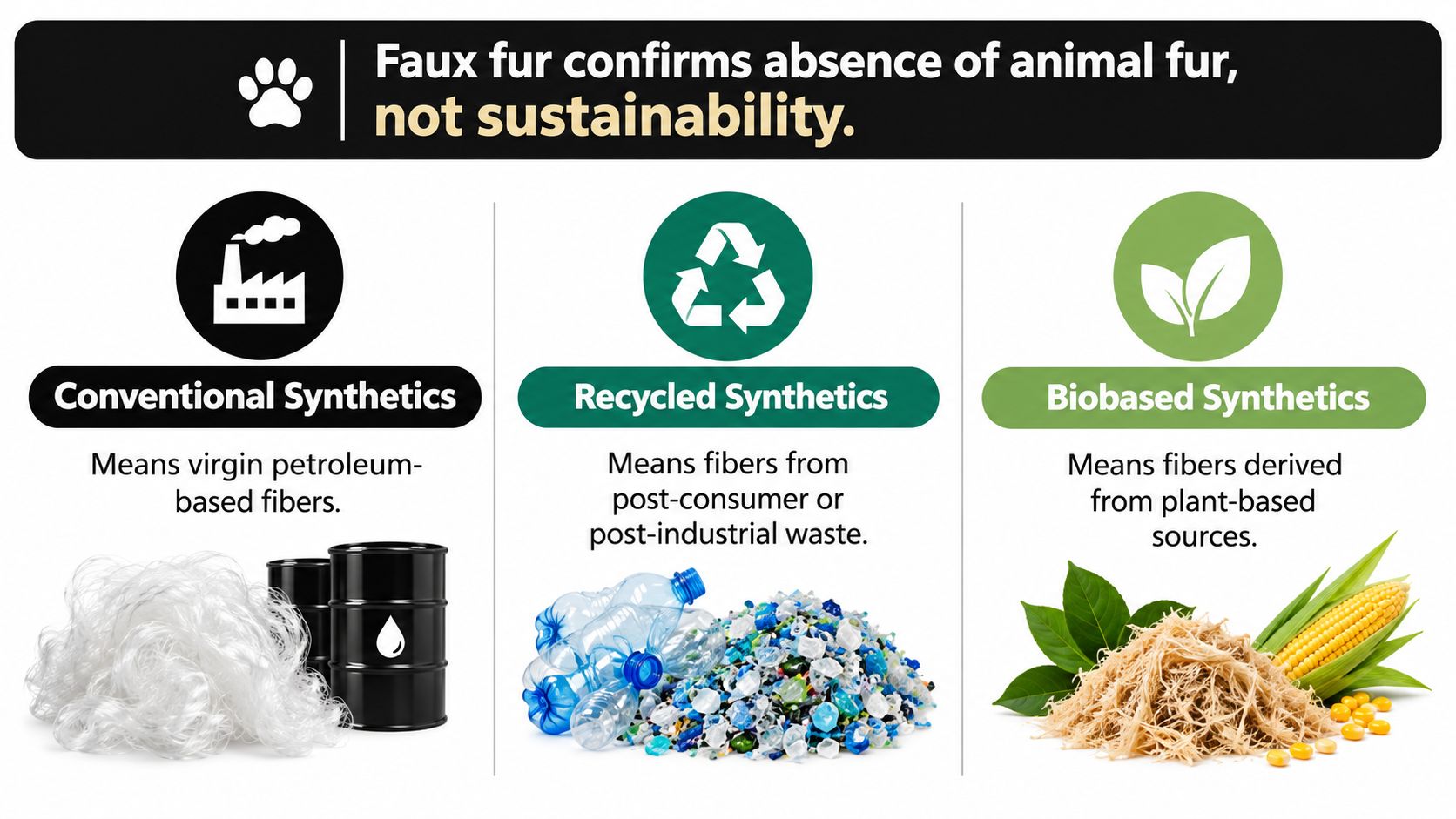
Faux fur describes a material's relationship to animal fur, not its full environmental profile. A label that says vegan or faux doesn't, on its own, tell you whether the fibers are conventional, recycled, or biobased. Textile Exchange uses those categories to distinguish material types and to clarify that preferred materials are intended to improve environmental or social outcomes compared with conventional production (Materials Terminology Guide).
Compare the claim with the material
| Material description | What it means | What to check |
|---|---|---|
| Conventional | Fibers such as polyester or polyamide are made from petrochemical feedstocks derived from non-renewable fossil fuels | Whether the fiber type is identified clearly |
| Recycled | Fiber uses recycled feedstock rather than only virgin material | Which fiber is recycled and whether the claim applies to the whole item or part of it |
| Biobased | Fiber is made using plant-based or other biological feedstocks | The specific material and any supporting certification |
Recycled content is meaningful, but it needs context. Textile Exchange reported that recycled fibers made up approximately 8.1% of total global fiber production in 2020, with recycled polyester accounting for about 7.6 percentage points (Preferred Fiber and Materials Market Report). That figure describes fiber production, not the composition of any particular hat, so ask for the product's actual material details rather than assuming.
In the United States, the Fur Products Labeling Act requires disclosures for products made partly or entirely with animal fur, including species and manufacturer information, along with country of origin for imported fur and whether the fur was processed in specified ways (FTC guidance on fur product labels). Clear, accurate labeling helps shoppers distinguish animal fur from an ethical alternative.
A small-batch studio can speak directly to the materials and construction used in its own work. We encourage shoppers to ask what a hat is made from and to treat cruelty-free and recycled as separate claims that deserve separate answers. You can also explore our notes on cruelty-free certification.
Sizing, Custom Fits, and Hard-to-Fit Heads
A good hat should stay in place without squeezing. If you've got a smaller or larger head, wear voluminous hair, or want a particular band or ear flap, an off-the-rack fit may not account for the details that make a hat comfortable.
Measure with care
- Use a flexible tape. Place it around the head where the hat will sit, typically across the forehead and above the ears. Keep the tape level rather than angled.
- Check the fit you want. Hold the tape comfortably against the head, not tight enough to compress hair or skin. If you wear your hair up or have thick curls, measure with that style in mind.
- Note the construction details. Consider whether you want a deeper crown, longer ear flaps, or a particular band. Those choices affect how the hat feels and how it works with glasses, headphones, or a hood.
- Compare with the maker's guidance. Follow the maker's sizing instructions, and ask before ordering if your measurement falls between sizes or your head shape is difficult to fit.
Small-batch production makes it more practical to discuss adjustments before a hat is finished. At Pandemonium, our bespoke approach includes custom sizing and a “your fabric, our expertise” service for customers who have a specific material in mind. Browse the custom hat options and share the fit details that matter to you.
A hat that fits well shouldn't need to be stretched into submission.
A thoughtful fit can help a hat hold its shape through regular wear, which makes customization part of responsible ownership, not just a style preference. For measuring details, use our hat sizing guide.
Three Real Wardrobes, Three Hat Formulas
A winter hat works hardest when it belongs to the outfit you already wear. These formulas start with recognizable wardrobes and make the hat's role specific, whether that means holding its shape beneath a hood or bringing a soft contrast to tailoring.

The PNW commuter
Pair a wool coat, vegan leather boots, and a structured cloche. The cloche's defined shape gives a polished finish and can sit neatly with a hood, while a close fit helps limit shifting as you walk. Choose a rich-toned or classic color that works with the coat you reach for most.
The polished office professional
A camel topcoat, minimalist gold accents, and a trapper create a sharper look with a softer edge. For this formula, consider how the ear flaps sit when they're not needed and whether the hat can fold into your tote without losing its shape. A flexible construction may travel better than a rigid crown, but always check the hat's care guidance before packing it tightly.
The weekend in layers
Start with a chunky knit and oversized scarf, then add a pom-pom beanie or beret for texture. A beanie makes the outfit feel relaxed and playful; a beret gives it a more architectural finish without competing with the scarf's volume. Keep the palette simple if the hat has a vibrant or high-pile surface.
The principle is straightforward: match the hat's structure to the outerwear, then use texture to set the mood. For ideas on building the rest of the outfit, see our guide to layering for cold weather.
Care, Repair, and the Ethical-Ownership Lifecycle
Cruelty-free materials are one part of ethical luxury. Care, repairability, and long-term wear matter too. A survey of 5,013 consumers across five European markets found that 71% wanted to make more sustainable purchases and 74% wanted to wear fashion more sustainably, while consumers also reported uncertainty about where to shop and what actions to take (2025 consumer survey).
Keep the pile from getting crushed
Store a faux-fur hat somewhere dry, with enough room that heavier items won't press down on the pile. A shelf or a hat box with space around the crown is often better than pushing it into a packed drawer. If the pile looks flattened, gently lift it with your fingers or use a soft brush, working in the direction of the fibers rather than pulling.
Clean gently, repair early
Spot cleaning is usually a safer first step than machine washing, especially when the hat has a structured crown, a lining, or embellishment. Blot a small area with a clean, damp cloth and let it air-dry away from direct heat. Always follow the maker's care advice, since pile and construction vary.
If the lining loosens or elastic loses its stretch, ask whether it can be replaced before the hat becomes uncomfortable. A bespoke maker who understands the original construction can often assess an adjustment or repair more precisely than a general alteration service. For guidance on a common care question, see whether you can steam faux-fur accessories. Choose care methods conservatively, and don't apply heat unless the maker confirms it's suitable.
Choosing the Right Hat for Your Winter
Use this quick checklist when comparing two hats. It keeps the decision grounded in how you'll wear the piece, not only how it looks online.
- Warmth: Check pile density, lining, ear coverage, and how well the crown sits.
- Weather: Match the construction to your usual conditions, from damp streets to exposed wind.
- Silhouette: Pick a pom-pom beanie for casual texture, a trapper for more ear coverage, a cloche for structure, or a beret for a softer profile.
- Wardrobe: Decide whether the hat needs to work with commuter tailoring, office layers, or weekend knits.
- Fit: Measure carefully and ask about custom sizing if standard proportions don't work for you.
- Materials and care: Read claims precisely, and choose a maintenance plan you can follow.
For the soft-touch option, join The Crowd for 15% off. For a direct look at the shapes and materials discussed here, explore the Faux Fur Hats collection.
At Pandemonium, each hat is hand-sewn in our Seattle studio, with small-batch craft, custom sizing, and bespoke adjustments available. Leigh Young's 25+ years of design experience inform a practical kind of luxury: plush, considered millinery made to suit the person who'll wear it.
For a hand-sewn faux-fur hat shaped around your winter routine, explore the Pandemonium Millinery collections and bespoke services. Join The Crowd for 15% off, or contact our Seattle studio to discuss a custom fit and the details that will make your hat comfortable from commute to doorstep.


