



What if timeless style fashion isn't about owning a quiet wardrobe of beige basics, but about choosing pieces that work with your body, your weather, and your values? After more than 25 years of hands-on millinery, we've learned that enduring elegance feels less like a rulebook and more like a well-made hat: shaped with care, comfortable in use, and distinctive enough to feel personal.
At Pandemonium, our Seattle studio works in small batches, with hand-sewn details and tactile materials that invite repeat wear. This guide looks at the history behind timeless dressing, the principles that make a wardrobe last, practical cold-climate formulas, care rituals, and the role of ethical luxury, including high-end faux fur and vegan fur.
What Timeless Style Fashion Really Means
Timeless style fashion is fit-for-life dressing. It means selecting clothing and accessories for a real body, a real climate, a real schedule, and real convictions. The result doesn't have to be plain, expensive, or tied to one decade. It needs to remain useful, wearable, and emotionally right as your life changes.
A timeless piece usually has three qualities:
- Durable construction: Seams, linings, closures, and edges are made to withstand regular use.
- Adaptable shape: The silhouette works with layers, changing occasions, and personal styling.
- Personal meaning: You reach for it because it feels like you, not because a seasonal mood board told you to.
That definition helps resolve a common confusion. A classic black coat may be timeless for one person, while a rich-toned velvet hat, sculptural faux-fur collar, or vibrant scarf may be the enduring signature for another. Timelessness isn't the absence of character. It's character supported by reliable design.
A useful test: If you can imagine wearing a piece in several settings, styling it with more than one layer, and caring for it properly, it has the beginnings of longevity.
The commercial case for this approach is clear. Consumers now buy 60% more clothing than they did 15 years ago, yet wear each item for half as long, according to figures cited in modern coverage of timeless wardrobes. WRAP research places the average active lifespan of a garment in a woman's closet at 2.2 years, while a European Environment Bureau report found that fewer than 15% of purchased clothes last longer than three years, both figures summarized by the same source. These facts help explain why quality, fit, and repeat wear matter.
We'll trace how this idea traveled through fashion history, then turn it into five practical principles, outfit formulas, a cold-weather capsule, and care habits. Along the way, we'll consider ethical alternatives, hard-to-fit bodies, and what our Seattle small-batch practice can teach us about making accessories that outlast a trend.
A Brief Look at How Timeless Style Traveled Through Fashion History
Fashion history shows that “timeless” has never meant frozen. The 1920s popularized sleeveless, knee-length slip dresses decorated with beading and fringe. Christian Dior's “New Look” arrived in 1947, bringing sculpted waists and fuller skirts into a new postwar vocabulary. In the 1960s, the miniskirt marked a major shift in women's fashion.
Each milestone began as a recognizable moment, yet elements survived because later wearers reinterpreted them. The little black dress, commonly traced to Coco Chanel in the 1920s, remains a global reference point because its understated elegance can absorb new fabrics, proportions, and accessories. The garment lasts culturally because people keep finding new uses for its underlying simplicity.
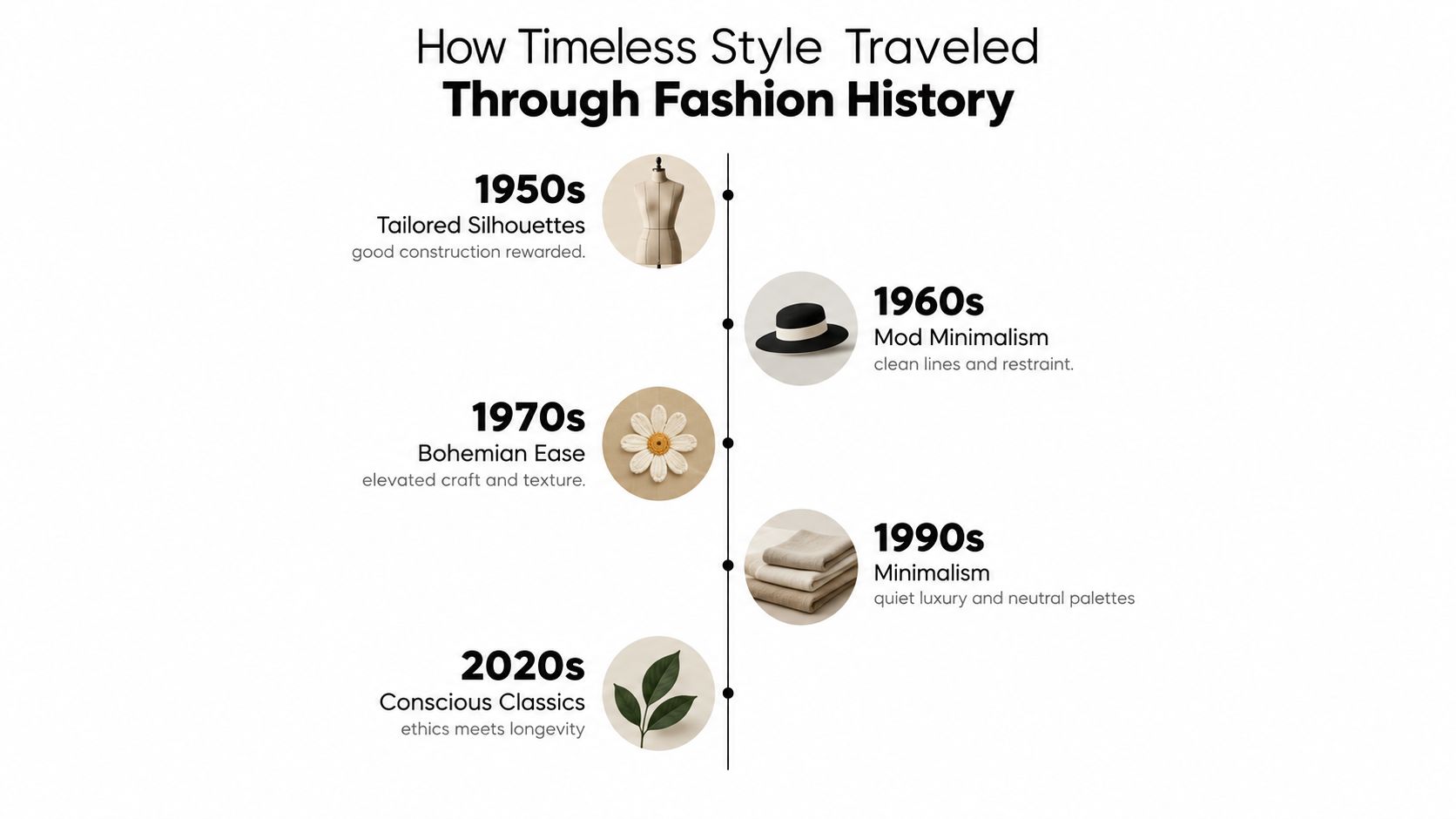
The same pattern appears in later decades. Postwar tailoring valued construction and proportion. The 1970s emphasized handcraft, texture, and relaxed movement. The 1990s favored restraint and clean lines. Today's slow-fashion conversation connects longevity with ethical sourcing, repairability, and fewer, better-made pieces.
At our studio, we see this history in millinery. A cloche can recall the 1920s without looking like costume. A pillbox can feel architectural and modern when its scale, trim, and color suit the wearer. A broad brim can provide presence and weather coverage while remaining unmistakably contemporary.
The reason durable construction outperforms a short trend cycle is practical. Strong fibers, secure stitching, thoughtful linings, and repairable shapes keep an object useful after its original moment has passed. The slow-fashion comparison from Pandemonium offers another way to think about that distinction, especially when the choice is between repeated wear and constant replacement.
Timeless style therefore travels through reinterpretation. It survives when a silhouette remains comfortable, a material remains satisfying, and the wearer can make the piece their own.
The Core Principles Behind a Wardrobe That Lasts
A lasting wardrobe isn't assembled through a single shopping list. It grows from repeatable decisions. Use these five principles as a filter before bringing anything new home.
Fit and proportion first
A beautiful fabric can't rescue a shape that pulls, collapses, or overwhelms you. Check shoulder placement, sleeve length, crown scale, trouser break, and where a hem lands relative to your proportions.
For a hat, measure the head rather than guessing from a standard size. A carefully balanced crown and brim can make a piece feel weightless, while the wrong scale may make the same design seem heavy.
Quality of materials and construction
Look closely at the places that experience strain. Reinforced stitching, tighter stitch density, and seam reinforcement can reduce failure around armholes, pockets, and other high-stress areas. Slow-fashion guidance also identifies linen, wool, organic cotton, hemp, and TENCEL among the lower-impact or natural fibers often selected for strength and lasting wear, as explained in this overview of slow-fashion construction.
For textiles used in home or hospitality settings, the same logic applies. This resource on GOTS-certified robe benefits for businesses is useful because it connects material standards with the experience and long-term value of a finished product.
A restrained color story
Neutrals give a wardrobe room to mix, but restraint doesn't require a colorless closet. Start with a small foundation of black, charcoal, cream, camel, navy, or brown, then add one or two accents that feel yours.
A shimmering teal ribbon, oxblood trim, or rich emerald hat can remain wearable when the rest of the outfit provides visual breathing space.
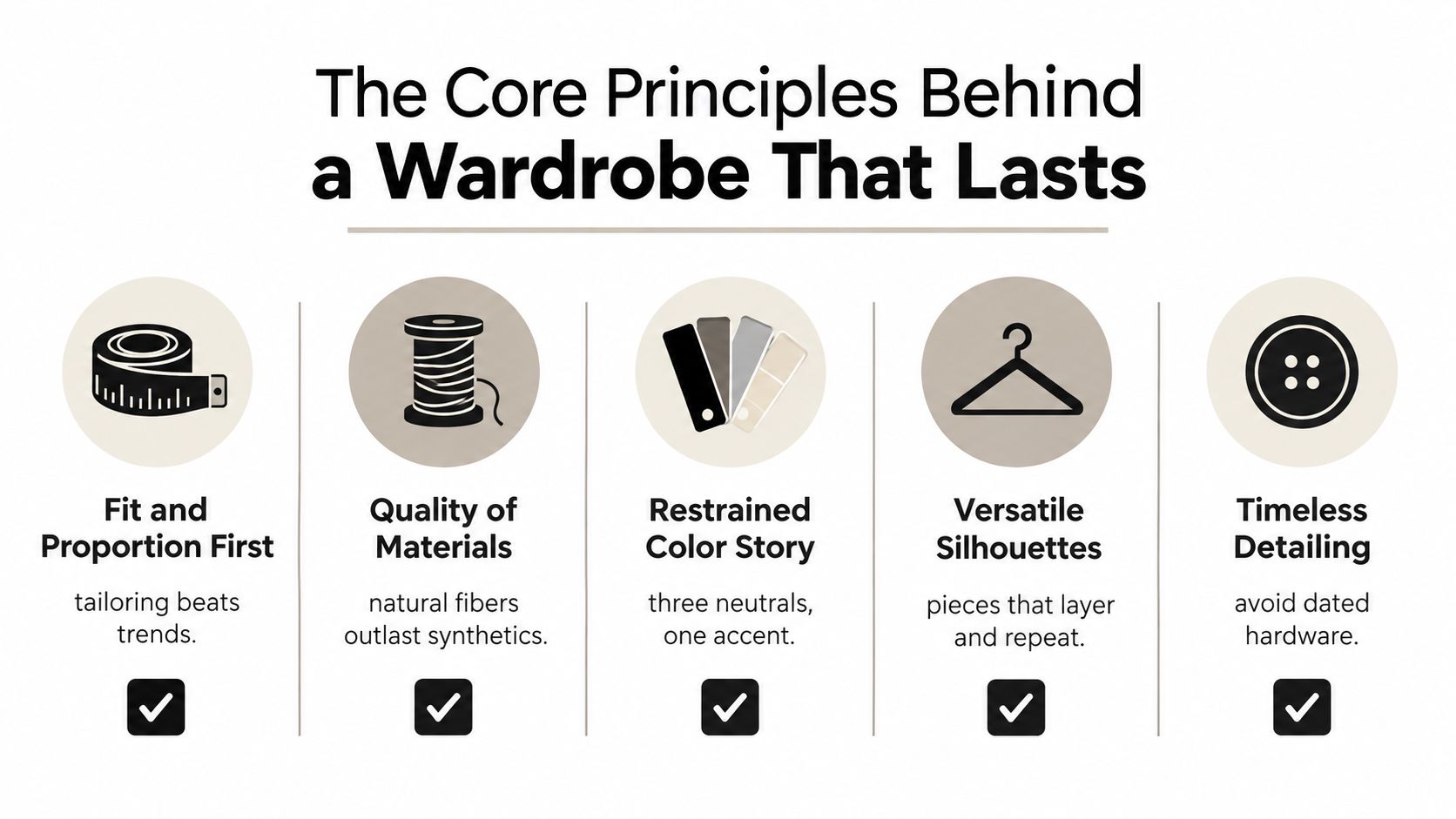
Versatility through layers
A piece earns its place when it can move between settings. A felt fedora may accompany a wool coat on a commute, then add structure to a simple knit dress. A faux-fur stole can soften tailoring, warm a shoulder, or bring high-end texture to an evening look.
Ethical provenance
Ask who made the item, what it contains, how it can be maintained, and whether the design avoids planned obsolescence. High-end faux fur can serve as an ethical alternative for people who want plush, luxurious texture without direct animal use, but material tradeoffs still deserve honest attention.
These principles interlock. Fit makes repeat wear possible. Good construction supports repair. A coherent palette encourages combination. Layering creates versatility. Ethical provenance gives the purchase meaning beyond appearance. Our discussion of sustainable luxury fashion explores that relationship between tactile pleasure and considered production.
Outfit Formulas That Put Timeless Style Into Practice
Timeless style becomes easier when you have a few dependable combinations. These aren't rigid uniforms. Treat them as starting points, then adjust the proportions, textures, and accessories to suit your day.
The warm tailored line
Begin with a camel wool coat that has enough room for a substantial knit. Underneath, use a cashmere turtleneck and wide-leg trousers with a clean break over the shoe. The wool feels substantial without looking stiff, while the cashmere adds a silky layer close to the skin.
A structured felt hat gives the outfit a clear vertical line. Change the ribbon, crown height, or brim proportion to suit your face and outerwear. That small adjustment is where an atelier consultation can turn a familiar formula into a personal one.
The crisp feminine contrast
Tuck a crisp white shirt into a high-waisted A-line skirt. Choose a lined wool or firm cotton skirt that holds its shape, then add leather boots and a compact bag. The shirt brings brightness, while the skirt provides movement without relying on novelty.
A pillbox or cloche can echo the clean geometry of the outfit. If your head is smaller, larger, or difficult to fit, custom sizing matters more than forcing a standard piece into place. Browse Pandemonium's classic hat collection for silhouettes that can inspire that conversation.
The charcoal column
Build a long, quiet line with charcoal wool trousers or a knit dress, then add a faux-fur stole and a structured felt hat. The combination feels plush and polished, especially when the fur has a velvety surface and the felt has enough body to hold its architecture.
High-end faux fur avoids direct animal harm, but it isn't automatically low-impact. Faux fur is commonly made with petroleum-based nylon or polyester fibers, and one cited source reports that synthetic jackets released an average of 1,174 milligrams of microfibres per wash in testing discussed by Ethical Consumer's fur review. Handle it gently, wash infrequently, and follow the care instructions.
| Factor | Real Fur | High-Quality Faux Fur | Cruelty-Free Wool |
|---|---|---|---|
| Animal ethics | Uses animal fur | An ethical alternative that avoids direct animal harm | Avoids animal fur, though wool production still requires responsible sourcing |
| Feel | Naturally warm and tactile | Plush, silky, and available in rich textures | Soft to substantial, depending on the weave |
| Environmental concern | Resource and animal-welfare questions | Usually plastic-based and non-biodegradable | Fiber sourcing and processing require attention |
| Maintenance | Specialist care may be needed | Gentle care helps limit microfiber shedding | Airing, careful brushing, and appropriate cleaning support longevity |
Independent reporting also notes that five faux-fur coats have been cited as having lower climate impact than one mink coat, while emphasizing that faux fur remains plastic-based and non-biodegradable, as discussed in this review of sustainable coat choices.
The knit dress with a defined waist
Choose a knit dress with enough density to skim rather than cling, then add a leather belt and weather-resistant boots. A belt gives the outfit shape, while a rich-toned hat or faux-fur headband introduces dimension around the face.
For more ideas on choosing adaptable anchors, see our guide to wardrobe staple pieces. The strongest formula is the one you'll repeat because it feels comfortable, expressive, and ready for real weather.
A Cold-Climate Capsule for Ethical, Lasting Wear
Cold-climate dressing begins with sequence, not bulk. In Seattle, damp air can make a breathable base and weather-resistant shell more useful than merely adding a heavy layer. In Chicago or New York, the same logic helps you move from a bitter outdoor commute into heated offices without losing your polished line.
A practical capsule can contain 14 pieces, organized around three layers:
- Skin layer: A breathable merino base and another moisture-managing top.
- Mid layer: Two cashmere sweaters or wool knits, selected in complementary neutrals.
- Outer layer: A knee-length wool coat and a water-resistant trench.
- Bottoms: Fitted trousers and a lined skirt.
- Footwear: Sturdy leather boots.
- Hand and neck protection: Leather gloves and a wool scarf.
- Millinery: A structured felt hat.
- Occasion texture: A faux-fur trim piece for high-gloss dressing.
The exact pieces should reflect your proportions. A petite wearer may need a shorter coat length, a narrower brim, or a smaller crown to preserve balance. A tall wearer may prefer a longer coat, broader lapel, or more substantial hat. Someone with a fuller bust, longer arms, or a narrower head shouldn't have to squeeze into a generic template and call the discomfort elegance.
Layering rule: Keep the breathable layer close, the insulating layer adjustable, and the outer layer protective. Your hat should finish the silhouette, not fight the coat.
Customization makes the capsule more useful:
- Measure the head: Use the actual circumference for a secure, comfortable fit.
- Adjust the ribbon: Swap a classic band for a richer or quieter color.
- Choose the trim: Consider feather or wool-felt substitutions where appropriate.
- Refine proportions: Discuss crown height, brim width, sleeve length, and coat balance.
- Plan for movement: Make sure the finished piece works while commuting, sitting, and carrying a bag.
For the home side of cold-weather comfort, a tactile throw can extend the same philosophy beyond clothing. Cosy throws for Australian homes offer a useful reference for choosing warmth and texture with attention to how a textile lives in an actual room.
The visual below shows how the pieces relate across the body. Watch it after considering your own commute, indoor temperature changes, and tolerance for layering.
A timeless capsule isn't about owning less at any cost. It's about making each layer solve a real problem while still contributing to a graceful, coherent silhouette.
Care Habits That Extend the Life of Every Piece
Longevity begins after the purchase. A garment or hat can be beautifully constructed, but careless storage, repeated over-washing, and poor handling will shorten its useful life. Our millinery practice has taught us to treat maintenance as part of design, not as an afterthought.
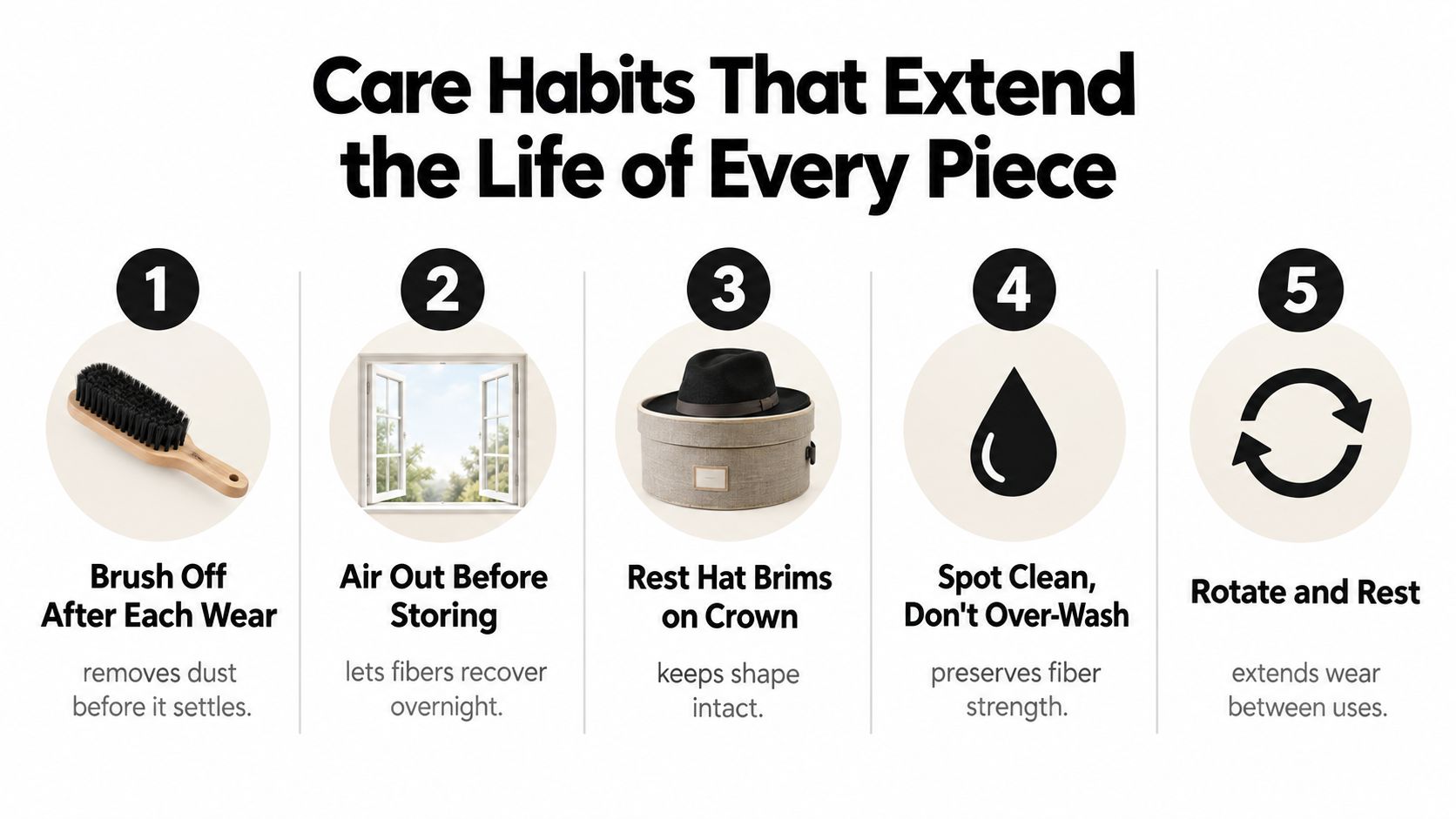
Five habits for daily use
- Brush off after each wear: Remove dust before it settles into fibers or trim.
- Air out before storing: Let materials recover overnight instead of sealing in body heat or dampness.
- Rest hat brims on the crown: Use a hatbox or stable surface that protects the brim from distortion.
- Spot clean, don't over-wash: Preserve fiber strength by cleaning only where needed.
- Rotate and rest: Give hats, coats, shoes, and bags time between wears.
Seasonal maintenance
At the end of winter, brush outerwear, inspect seams, and clean visible marks before storage. Use cedar for a fresh, dry environment, and choose breathable garment bags rather than sealed plastic. Fold knits flat so shoulders don't distort, and use rotating shoe trees to help leather footwear keep its form.
Wool, cashmere, and felt hats need a gentle approach. Follow the care label, hand-wash only when the material permits, and use a trusted cleaner for pieces that require specialist treatment. Steam can help relax minor creases, but keep moisture controlled and never rush a reshaping process.
Millinery restoration often involves blocking, brim reshaping, and patient handling. A small amount of care can return structure to a hat that has softened through use, which is one reason we value repair and adjustment rather than treating an accessory as disposable. For textile maintenance beyond hats, Urban Totes' tote bag washing tips provide a practical example of why washing instructions matter.
A seasonal ritual can stay simple:
- Weekly: Brush, air, and inspect.
- At season's end: Clean, repair, and store.
- Before the next cold season: Check fit, lining, trim, and weather protection.
For faux-fur garments, our clean fur coat guide explains why gentle cleaning and proper drying matter. Well-kept ethical-luxury pieces often become more familiar and satisfying with wear. Their value grows through the relationship you build with them.
Building Your Timeless Wardrobe With Pandemonium Millinery
Our Seattle studio translates these principles into wearable objects through small-batch production. Founded by Leigh Young, Pandemonium has more than 25 years of design experience, with a practice centered on hand-sewn faux fur accessories, apparel, and home pieces.
Millinery is a tactile discipline. We block and shape materials, check how a crown meets the head, study the way a brim changes the face, and consider how a hat sits with a coat collar or scarf. A velvet lining can make a hat feel silky and secure, while a carefully chosen trim gives a classic form a fresh point of view.
That attention becomes especially useful for hard-to-fit shoppers. A made-to-order piece can address a smaller or larger head measurement, a preferred crown height, or a brim proportion that standard sizing doesn't provide. The same principle applies to custom sleeve lengths and built-to-order adjustments elsewhere in a wardrobe. Our guiding phrase is “your fabric, our expertise,” because customization should be a conversation between the material you love and the skills that shape it.
The studio's collection includes faux-fur hats, berets, headbands, scarves, and other accessories designed for cozy, weather-aware dressing. Materials such as Tissavel can bring a plush, luxury-textile surface to an outfit without using animal fur. The intention isn't to make every piece quiet. It's to give expressive design enough quality and flexibility to remain wearable.
If you'd like to understand our local process, read handmade millinery in Seattle. You can also explore the Fractal Collection for vibrant pattern, or look toward the Cozy Cable range for a softer, more classic knit texture.
A custom fitting is a practical starting point when standard sizing leaves you adjusting, pinning, or compromising. For ongoing guidance, our hat care collection can help you build better maintenance habits, while the journal offers ideas for slow-fashion dressing and seasonal styling.
We create small-batch, hand-sewn faux fur and millinery pieces in our Seattle studio, with custom sizing and “your fabric, our expertise” services for wardrobes shaped around real lives. Join The Crowd for 15% off and thoughtful updates, then visit Pandemonium Millinery to explore a piece designed for your climate, your proportions, and your enduring sense of style.


