


You're standing in a shop, phone in hand, trying to find a birthday gift for someone who seems to own everything already. Another candle feels forgettable, a generic monogram feels lazy, and the most unusual object on the page may be destined for a drawer. The strongest unique birthday gift ideas don't win because they look strange. They win because they fit a real person.
At our Seattle millinery studio, we've learned that thoughtful gifting starts with attention. A recipient's climate, habits, aesthetic, fit, and memories matter more than a novelty label. Our team has spent 25+ years working with hand-sewn accessories, high-end faux fur, and custom details, and we've seen the same truth repeatedly: a familiar category can feel extraordinary when it's made personal.
Why Most Unique Birthday Gift Ideas Fall Flat
Your friend has a beautiful home, a carefully edited wardrobe, and a habit of buying whatever she wants before anyone else can. You have already rejected the novelty cocktail kit, the monogrammed pouch, and the decorative object that looked clever online but felt meaningless in person.
That panic points to the question gift lists often miss: “What would make this person feel noticed?” is more useful than “What is unusual enough?”

A strange gadget may get a laugh, but laughter rarely creates lasting affection. Personalization fails for the same reason when a name is added without considering the recipient's style, routine, available space, or willingness to maintain the item.
Relevance beats rarity
A nationally representative survey of more than 500 U.S. consumers aged 18–74 found that 39% preferred personalized gifts, 51% highly appreciated receiving a personalized message with a gift, and 77% considered it important for gifts to reflect individual preferences. PPAI's national gifting survey breaks down the preference data.
Uniqueness comes from recognition, not scarcity. The right gift reflects an identity, a taste, a practical need, or a shared memory. Ethical craftsmanship strengthens that connection because the object carries care in its materials and making, not just a name printed on the surface.
This birthday gift guide with a personal touch reinforces another useful point: presentation and emotional context can matter as much as the object. A heartfelt note can enrich a good gift, but it cannot rescue a poor match.
Our studio rule: If the recipient wouldn't choose it, use it, wear it, or display it, don't buy it merely because it looks unique.
At Pandemonium Millinery, we prefer a familiar category made unusually personal. A hat with the right proportions, a plush accessory in a color they already wear, or a home piece selected for the way they live can feel more intimate than an eccentric novelty. Add an experience, such as a fitting, workshop, or shared outing, and the gift becomes a memory rather than another object.
Map the Recipient Before You Browse
Before opening another gift guide, build a quick recipient profile. You don't need an elaborate spreadsheet. Five honest answers can prevent the most common gifting mistake, choosing something attractive that doesn't belong in the recipient's life.
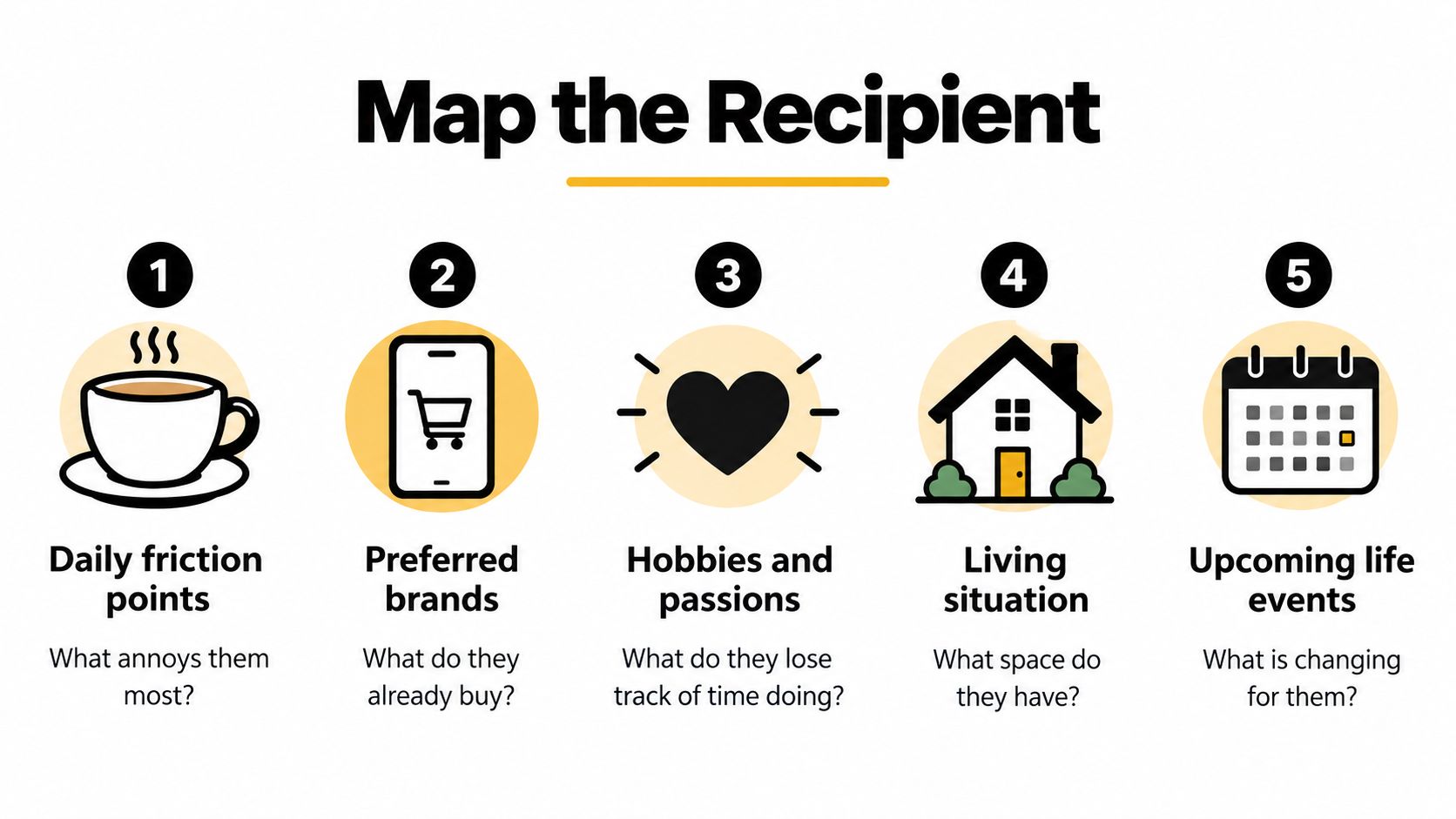
Ask five practical questions
-
What irritates them during an ordinary day?
Maybe your friend is always adjusting a scarf indoors because it slips, or your colleague complains that hats never fit comfortably. A gift that removes a small daily nuisance has emotional weight because it proves you listen. -
What aesthetic words describe their taste?
Write down three words. Are they drawn to architectural, classic, shimmering, rich-toned, or neutral pieces? If their wardrobe is mostly charcoal and camel, a vibrant accessory may be exciting, but a color they'll wear is usually the safer and more thoughtful choice. -
How much maintenance will they tolerate?
Some recipients enjoy careful garment care and fabric rituals. Others want to grab a piece from the hallway and leave. Match the construction and care requirements to their habits rather than giving them a beautiful responsibility. -
What climate and setting shape their routine?
A Seattle commuter, a Chicago office worker, and someone living in a mild coastal climate have different needs. Think about cozy warmth, plush texture, weather resistance, portability, and whether the gift must move from outdoors to a polished workplace. -
Do they value an object, an experience, or a story?
The object person wants something tactile and lasting. The experience person may prefer a workshop or styling appointment. The story person wants a meaningful connection, such as a textile with family history or a card explaining who made the gift.
These answers create useful personas without putting anyone in a rigid box:
- The cold-climate commuter needs polished warmth that earns regular wear.
- The ethical-luxury connoisseur wants rich texture without animal fur.
- The hard-to-fit shopper values measurements, adjustments, and confidence before purchase.
- The pet-as-family recipient appreciates design-led essentials for a beloved companion.
- The interiors enthusiast wants a tactile piece that works with an existing room.
At our local studio, we use this kind of conversation before discussing custom sizing or fabric. It helps us decide whether the right direction is a velvet-lined hat, a high-end faux fur accessory, a pet essential, or an experience around the making process.
Skip the Novelty, Choose the Craft
A joke gift can earn a laugh at the kitchen table and collect dust by next month. A hand-sewn accessory, well-made home textile, or carefully selected loose tea collection from Tealyra can become part of the recipient's routine. Loose tea works particularly well because it turns an ordinary ritual into a choice shaped by taste, mood, and habit.
Compare the story behind the object
When two gifts serve a similar purpose, compare the maker, material, construction, and expected lifespan. A clear origin gives the recipient a story that lasts beyond the unboxing, while thoughtful design gives the object a reason to stay in regular use.
At our Seattle studio, we work in small batches and use hand-sewn techniques across millinery, accessories, apparel, home décor, and pet essentials. Designer Leigh Young brings more than 25 years of design experience to that work. Tissavel fabrics, velvet linings, plush textures, and careful finishing create tactile interest without depending on loud novelty.
Slow-fashion research commonly connects this approach with small-scale production, skilled local labor, traditional skills, durable construction, and products intended to retain personal value over time. The review in the Journal of Sustainability Research outlines these recurring characteristics. Handmade does not automatically mean suitable. It gives you a stronger buying filter than a trend label, especially when the recipient's habits and taste are clear.
For practical inspiration, our guide to handmade gift ideas for women shows how useful accessories can express personality without adding clutter.
The useful uniqueness test
Ask these questions before buying:
- Can I explain who made it?
- Can I explain why this recipient will use it?
- Will the material and construction make it feel better over time?
A meaningful gift should answer all three. Personalization has value when it changes the fit, function, texture, or daily ritual. A favorite color alone may look attentive, but a custom proportion, durable fabric, or accessory suited to a familiar routine shows closer observation.
That distinction separates genuine thoughtfulness from superficial monogramming. Choose the object with a maker's story, a material worth touching, and a clear place in the recipient's life. Novelty gets the first reaction. Craft gives the birthday gift staying power.
Match the Spend to the Story
Price communicates something, but it doesn't communicate everything. A high price can feel careless if the item is generic, while a modest gift can feel intimate when the details show close attention.
We recommend matching the spend to the relationship, occasion, and degree of involvement. A birthday for a new colleague calls for a different message than a milestone for a partner, sibling, or lifelong friend.
Three Price Tiers and What Each Communicates
| Price Tier | Message It Sends | Example Gift | Personalization Mechanic |
|---|---|---|---|
| Modest | “I noticed the small things.” | A boutique headband, hand-written note, or small accessory | Choose a known color, texture, or daily-use detail |
| Mid-range | “I invested in your comfort.” | A custom-sized hat, plush scarf, or selected home textile | Use measurements, fit guidance, or material preference |
| Meaningful | “This moment and our relationship matter.” | A bespoke piece with a studio consultation | Select fabric, adjust proportions, and include a story card |
A modest gift can carry plenty of feeling when it's paired with a specific note. Mention the morning routine it suits, the color they always reach for, or the shared place that inspired your choice. Don't pad a small gift with unrelated extras just to make the package look larger.
A mid-range gift makes sense when the recipient will use it frequently. Custom sizing is especially valuable for people who struggle with standard dimensions. That adjustment can turn a beautiful accessory from “lovely” into “finally, something that fits.”
For a larger gesture, make the process part of the gift. A fabric conversation, measurement appointment, or design consultation gives the recipient agency and creates an experience before the finished piece arrives.
Research on personalization found that design-stage customer involvement increased perceived customization, anticipated time before disposal, and willingness to pay. The study on mass customization and clothing lifetimes is available through Penn State. The important point isn't to spend more automatically. It's to spend where involvement changes the result.
Our guide to sustainable luxury gifts under $200 is useful for shoppers who want a considered object without turning a birthday into a financial performance. A smaller, well-matched gift with useful personalization often beats a generic splurge.
Personalization That Actually Changes Anything
Decorative personalization adds a mark. Useful personalization changes the way a gift fits, functions, or belongs to someone.
A monogram can be lovely, especially when its placement suits the design. But a name printed on an unsuitable color or awkward object doesn't create intimacy. The strongest customization may be invisible to everyone except the person wearing or using the piece.
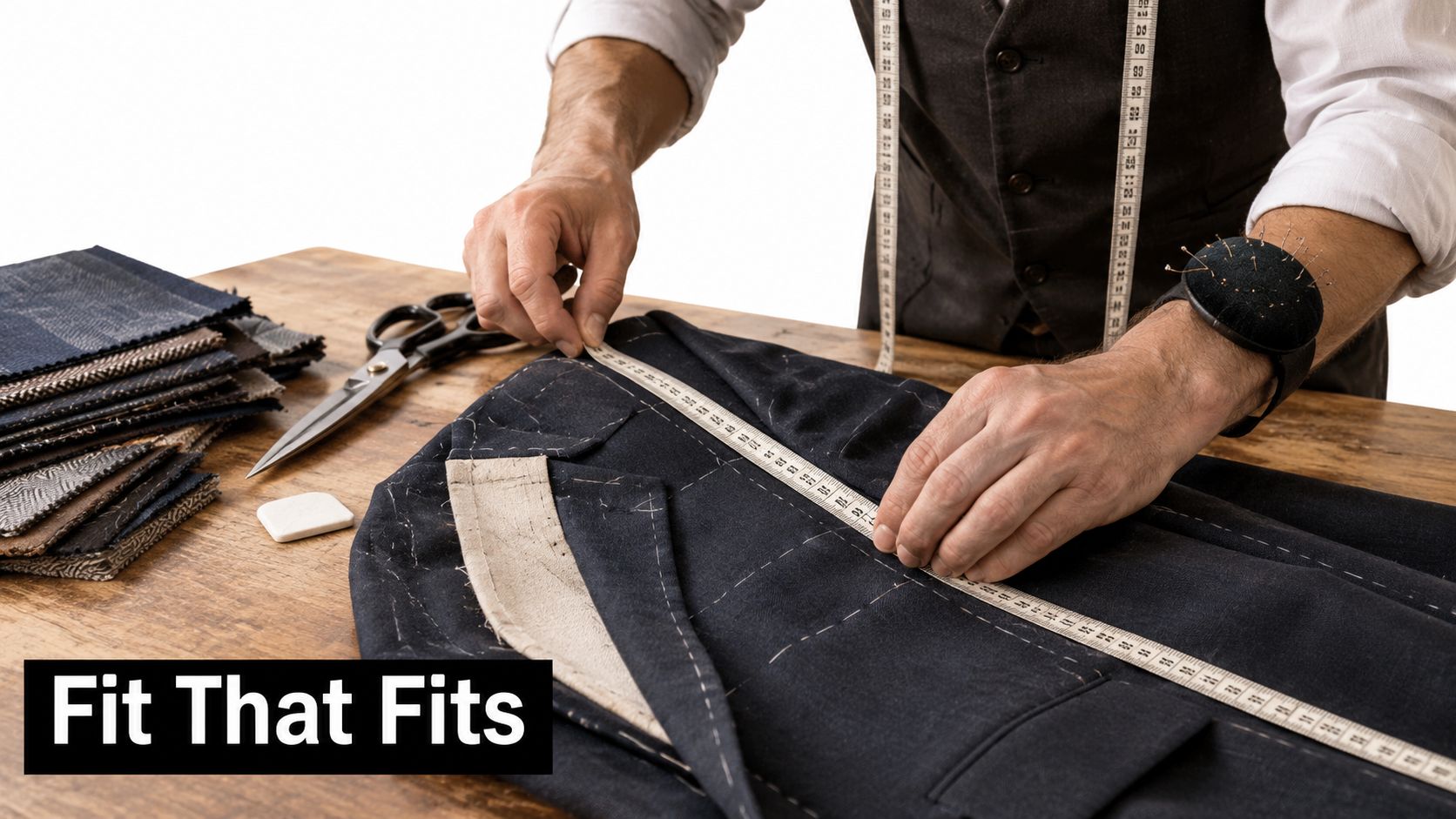
Choose function before decoration
Start with the recipient's real requirements:
- Fit: Ask about head size, sleeve length, preferred ease, or how the recipient likes a garment to sit.
- Material: Consider softness, warmth, texture, care, and any known sensitivities.
- Color: Select from the shades they already wear or live with, unless you know they enjoy experimentation.
- Construction: Reversible designs, adjustable details, and repairable components can add practical value.
- Meaning: If they have a meaningful textile, ask whether a “your fabric, our expertise” service could bring it into the design.
At Pandemonium, our bespoke approach includes custom sizing and “your fabric, our expertise” services. That makes sense for a hard-to-fit recipient or someone who values the material story as much as the finished silhouette. A custom consultation can also protect the surprise. You can give the experience of choosing together without revealing every final detail.
The evidence requires precision. Personalization can improve fit and emotional relevance, but it isn't automatic proof of lower waste. A Delft University of Technology study found that personalized garments were not kept longer or used more frequently than ready-made clothing, and it found no evidence that personalization alone reduced demand for new products or clothing waste. The full study is available through TU Delft.
That's why we never treat the word “bespoke” as a sustainability shortcut. We ask whether the customization solves a real problem.
The best personalization is felt before it's noticed.
For further examples of how custom apparel can work as a gift, see custom apparel gifts. Then ask yourself whether the recipient will feel the benefit every time they put the piece on.
Here's a simple decision:
- If the recipient has a fit problem, customize the measurements.
- If they have a strong material preference, customize the fabric.
- If they have a distinctive style, customize the proportions or color.
- If you know none of these things, choose a flexible design and include fit guidance, a gift receipt, or an exchange option.
A personal gift should reduce guesswork, not create a new obligation. That's the difference between customization that changes something and decoration added at checkout.
The Ethical Layer Most Lists Skip
Ethical gifting requires more than a soft color palette and the word “sustainable.” Read the product description as carefully as you'd read a wine label. Look for material information, production location, care instructions, labor transparency, and a clear account of who made the piece.
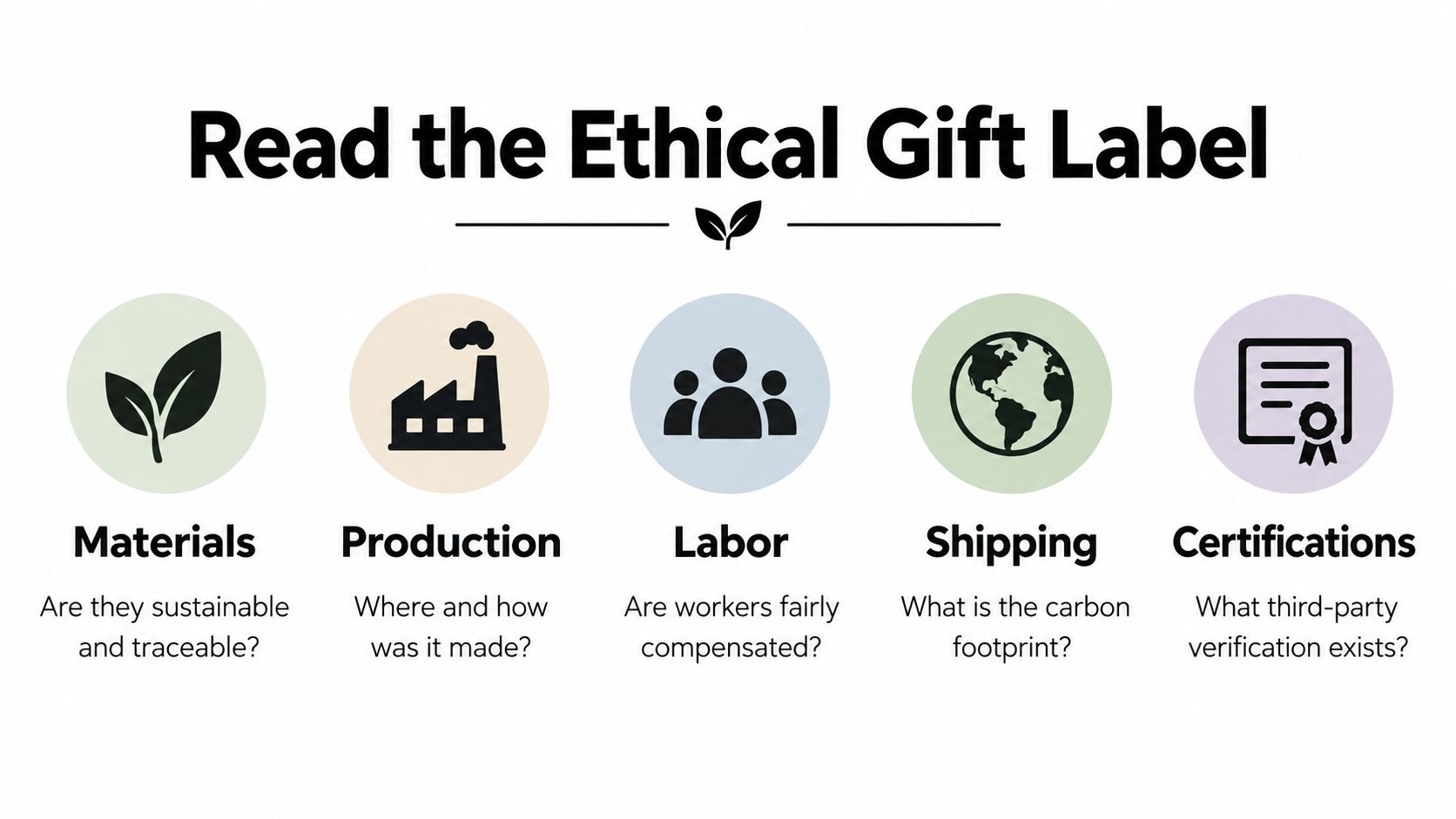
Compare claims instead of accepting labels
High-end faux fur deserves specific discussion. A 2021 CE Delft life-cycle assessment compared natural mink fur and faux-fur products, including coats and collars. Across every environmental-impact category examined, the natural-fur product had a greater impact than the faux-fur alternative. The natural-fur impact was at least three times higher than that of the least favorable faux-fur variant, while some categories exceeded a tenfold difference. CE Delft publishes the comparison here.
That supports describing well-made high-end faux fur as an ethical alternative to animal fur. It doesn't justify claiming that every faux-fur product is environmentally superior in every situation. Shipping, care, replacement cycles, and material composition still matter.
Our team values local studio production and small-batch work because origin should be part of the conversation. Our perspective on supporting local business explains why the maker, location, and production scale belong in a gift decision.
Use this verification checklist
- Materials: Are the fibers and textiles described clearly?
- Production: Does the maker explain where and how the item is produced?
- Labor: Is there a real account of the people or studio involved?
- Care: Can the recipient maintain the piece without unrealistic instructions?
- Longevity: Is the object designed to be used repeatedly, repaired, or cherished?
- Alternatives: Would an upgrade to something they already own, a made-to-order piece, or an experience create less clutter?
Environmental commitment matters to shoppers, but it shouldn't replace judgment. A durable object that suits the recipient can be more responsible than a pile of supposedly sustainable novelties. For an ethical-luxury shopper, uniqueness often means reduced waste plus emotional durability.
Layer the Gift With an Experience
The most memorable birthday gifts often combine a tactile object with a small event around it. A private styling consultation, fabric-selection conversation, workshop, or seasonal outing gives the recipient a role in the gift rather than making them a passive receiver.
Across four studies of real and simulated gift exchanges, recipients reported greater relationship strengthening after receiving experiences than material objects. One experiment measured a mean relationship-strength change of 0.66 for experiential gifts versus 0.40 for material gifts, with a statistically significant effect. The Journal of Consumer Research study details the findings.
Pair the object with a ritual
- A faux-fur hat and a winter photo outing: Wrap the hat with a plan to visit a favorite neighborhood, take photographs, and stop for something warm afterward.
- A custom throw and a movie-night ritual: Add a handwritten list of films, a chosen tea, and a promise to use the throw for the first viewing together.
- A reversible pet coat and a first-walk tradition: Give the coat with a planned park walk and a story card about why the colors suit the pet and its home.
The experience doesn't need to be elaborate. A fabric-selection call, a boutique fitting, or a short studio story can make the object feel connected to a real moment.
If the recipient loves movement and social activities, an experience such as private dance lessons to fast-track your dance progress can stand alone or accompany a wearable gift. The principle is the same: give them a memory and a useful keepsake.
For presentation ideas, our guide to luxury gift boxes focuses on making the unwrapping feel deliberate without burying the actual gift under unnecessary packaging.
Your Pre-Checkout Gift Checklist
Before you buy, check five things:
- Recipient: Can you describe their routine, taste, climate, and fit needs?
- Message: Does the spend suit the relationship and occasion?
- Personalization: Does it improve fit, function, material, or meaning?
- Maker: Can you explain who produced it and where?
- Experience: Can you add a note, consultation, outing, or ritual?
Then confirm the practical details. Review measurements, include fit guidance, request a gift receipt, and write a story card that explains why you chose the piece. Those details often matter more than adding another item.
Join The Crowd for 15% off and receive studio news, gifting ideas, and new small-batch releases.
At Pandemonium Millinery, we make hand-sewn, cruelty-free luxury in our Seattle studio, from custom-sized hats and high-end faux fur accessories to tactile home and pet pieces. Visit Pandemonium Millinery to choose a birthday gift with useful personalization, a real maker's story, and enough character to be remembered.


