



Seattle drizzle has a way of exposing a hat's weaknesses. You leave the house with a polished coat, pull on a black faux fur hat, and notice within minutes whether the crown pinches, the lining creeps over your brows, or the plush pile collapses against the wind. The right piece feels velvety and secure, with enough ear coverage for a damp walk and enough shape to look intentional when you arrive at work.
At our local studio, we've spent 25+ years of design experience working through those small details. This guide approaches a faux fur hat black as a millinery decision, not a quick accessory purchase. We'll look at fiber grade, silhouette, head measurement, lining, care, ethics, and everyday styling, so you can choose a hat with the same attention we give one at the block.
Why a Black Faux Fur Hat Deserves a Thoughtful Choice
A customer once came into our Seattle studio before a winter trip, already wearing the coat she planned to take. She wanted something black, warm, and refined, but the first hat she tried sat too low at the forehead and left the temples exposed. The second had a beautiful sheen, yet its shallow crown pushed against her hair. Neither problem appeared clearly in the product photograph.
That's why we treat a black faux fur hat as part of the wardrobe's architecture. Black absorbs visual volume, which can make a generous pile look sleek, but it can also shorten the face if the crown is too low or the brim too broad. On the head, the important questions are practical:
- Warmth: Does the pile retain cozy air around the crown and temples?
- Coverage: Do the ears stay protected when the wind comes across the water?
- Stability: Does the hat remain comfortable after a train commute?
- Finish: Does the black look rich and even in daylight?
- Wearability: Can you reach for it with a structured coat, parka, or weekend jacket?
A hat that looks luxurious on a table may feel heavy, slippery, or restrictive after an hour outside. Fit and construction matter more than drama alone, especially in the Pacific Northwest, where damp weather tests every seam and lining.
Workshop rule: A winter hat should solve a weather problem first, then make the outfit look effortless.
We'll begin with the hand-feel and technical character of faux fur, then compare five silhouettes. After that, you'll learn how to measure, what care protects black pile, how to assess ethical claims, and how to style the result through a Seattle week. The goal is simple. You should finish knowing not only which hat catches your eye, but which one will actually stay on your head and in your wardrobe.
What Makes a Black Faux Fur Hat Feel Like Luxury
Faux fur is a manufactured luxury textile, not merely a substitute for animal fur. Its character comes from fiber selection, pile length, crimp, density, backing, and finishing. High-end modacrylic and Tissavel fabrics can create a silky, shimmering surface or a dense, plush one, while basic acrylic and polyester may feel flatter, show more uniform shine, or lose their loft sooner.
Black makes those differences easy to see. In strong winter daylight, uneven dye, flattened tips, and an overly glossy surface become more apparent than they would in a pale or mottled color. A rich black should have depth and movement rather than looking like a solid plastic coating.
Read the pile before you read the label
Run your fingers in both directions. A quality pile should recover rather than remain pressed into a shiny track. Look for a dense backing weave, varied guard-hair structure, and a surface that feels substantial without making the hat feel weightless only because the fabric is sparse.
Product descriptions can help, but they need interpretation:
- Modacrylic: Often signals a fiber selected for a softer, fur-like hand and controlled finish.
- Tissavel: Indicates a specialist luxury textile associated with carefully developed faux-fur textures.
- Hand-tipped: Suggests additional attention to the surface character, though construction still needs inspection.
- Double-faced: Can mean the material is designed to be seen on both sides, which may improve the finish of reversible pieces.
A lining completes the experience. Silk, cotton sateen, and cupro can glide over the forehead more comfortably than a rough or loosely finished interior. The lining also helps separate hair oils and friction from the pile, supporting its shape through repeated wear.
For a closer material discussion, see our guide on how to tell high-quality faux fur from cheap. If you're building a broader cold-weather accessory kit, HYDAWAY's packable gear collection is a useful reference for compact pieces that support travel and commuting.
Faux Fur Fiber Grades at a Glance
| Fiber Type | Hand-Feel | Durability | Black Dye Behavior |
|---|---|---|---|
| Modacrylic | Soft, silky, and fur-like | Holds a refined pile when properly supported | Can produce a deep, even finish with careful processing |
| Tissavel-grade textile | Velvety, rich-toned, and highly tactile | Designed for luxury applications and controlled surface movement | Shows depth and sheen when the pile is well maintained |
| Acrylic | Can range from soft to coarse | May flatten or pill sooner depending on construction | Can look even, but surface shine may reveal a lower-grade finish |
| Polyester | Often smooth and substantial | Performance depends heavily on density and backing | May appear glossy if the finish is too flat or heavily coated |
At our studio, we offer hand-sewn, small-batch millinery rather than treating the fur as an afterthought. For customers who already own a beloved textile, our “your fabric, our expertise” service creates another route to a considered piece.
Matching Silhouette to Face, Hair, and Wardrobe
A black faux fur hat changes character when its silhouette changes. The same plush material can look relaxed in a bucket, protective in a trapper, or architectural in a pillbox. We fit all five shapes differently because the head, hair, face, and coat need to work together.
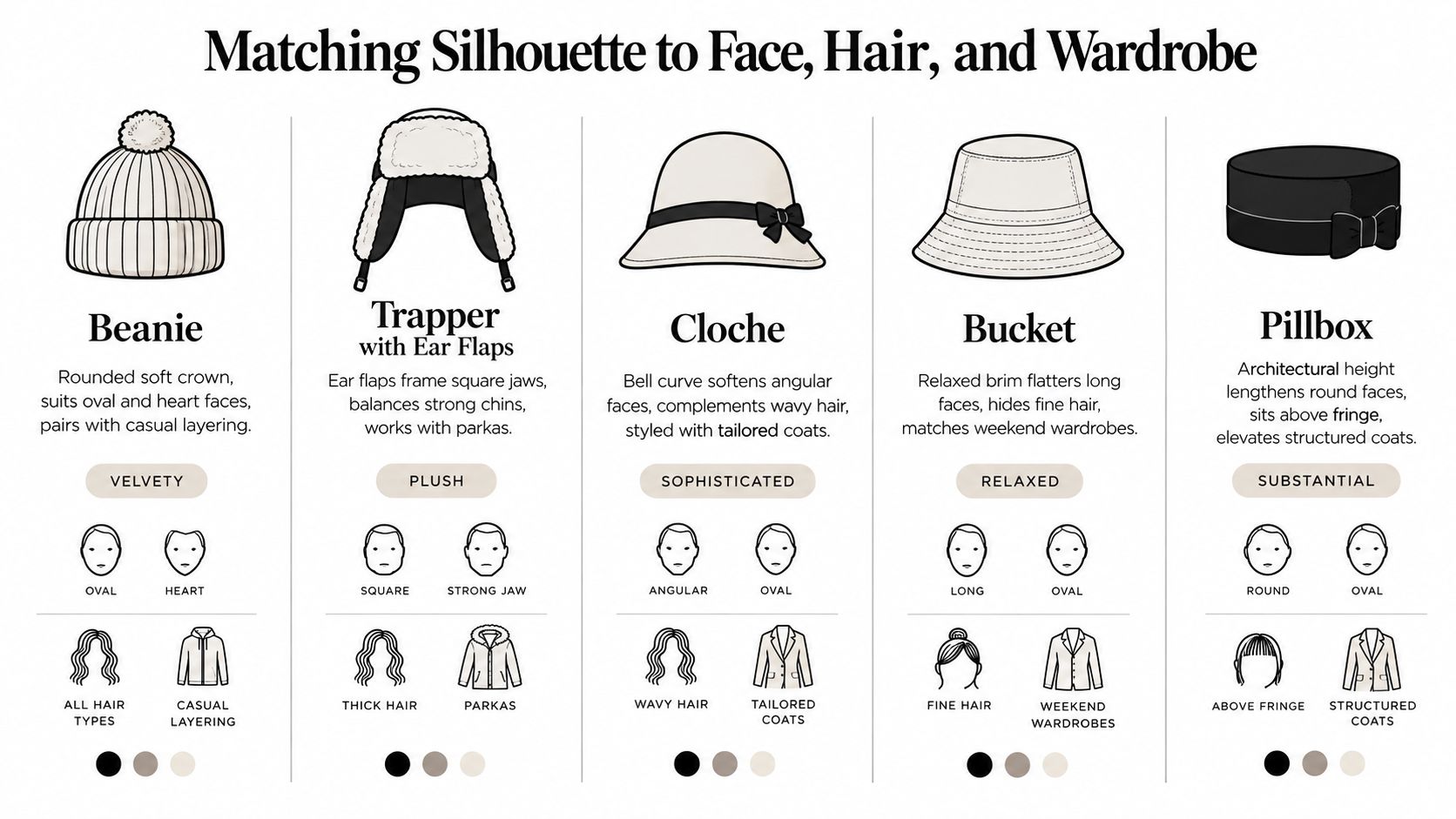
Five shapes, five different jobs
Beanie. A rounded, soft crown suits oval and heart-shaped faces and works naturally with casual layers. Leave a little room at the crown for a layered haircut, and avoid pulling it so tightly that it flattens curls or presses on the ears. A parka, puffer, or oversized knit makes the beanie feel at home.
Trapper with ear flaps. Deep ear coverage is practical on windy ferries and exposed walks. The flaps frame a square jaw and balance a strong chin, while the plush construction pairs best with parkas, rain boots, and substantial outerwear. Over a hood, secure the hat so the hood doesn't push the crown forward.
Cloche. The bell curve hugs the crown and softens angular faces. It's particularly graceful with wavy hair, a low ponytail, or a side part, and it complements wool coats. Keep the front line above the brows so the hat frames the face instead of hiding it.
Bucket. A relaxed brim can flatter a longer face and provide a little visual shelter for fine hair. This is the weekend choice, comfortable with denim, quilted jackets, and casual layers. Black keeps the volume controlled, so the brim can remain expressive without looking costume-like.
Pillbox. A structured, architectural crown adds height to a round face and sits neatly above fringe. It belongs with a structured coat, evening dress, or polished workwear. Because it doesn't provide the same ear coverage as a trapper, reserve it for calmer commutes or style-led occasions.
For a more detailed face-shape approach, use our guide to pairing hats to faces. The safest choice isn't always the silhouette currently receiving the most attention. It's the one that matches how you move through winter.
Getting the Fit Right, From Standard to Custom
Sizing is a craft decision, not a final checkout field. Use a soft tape and measure around the widest part of the head, above the ears and across the middle of the forehead. Keep the tape snug but not tight, then compare the measurement with the maker's chart rather than relying on a generic label.
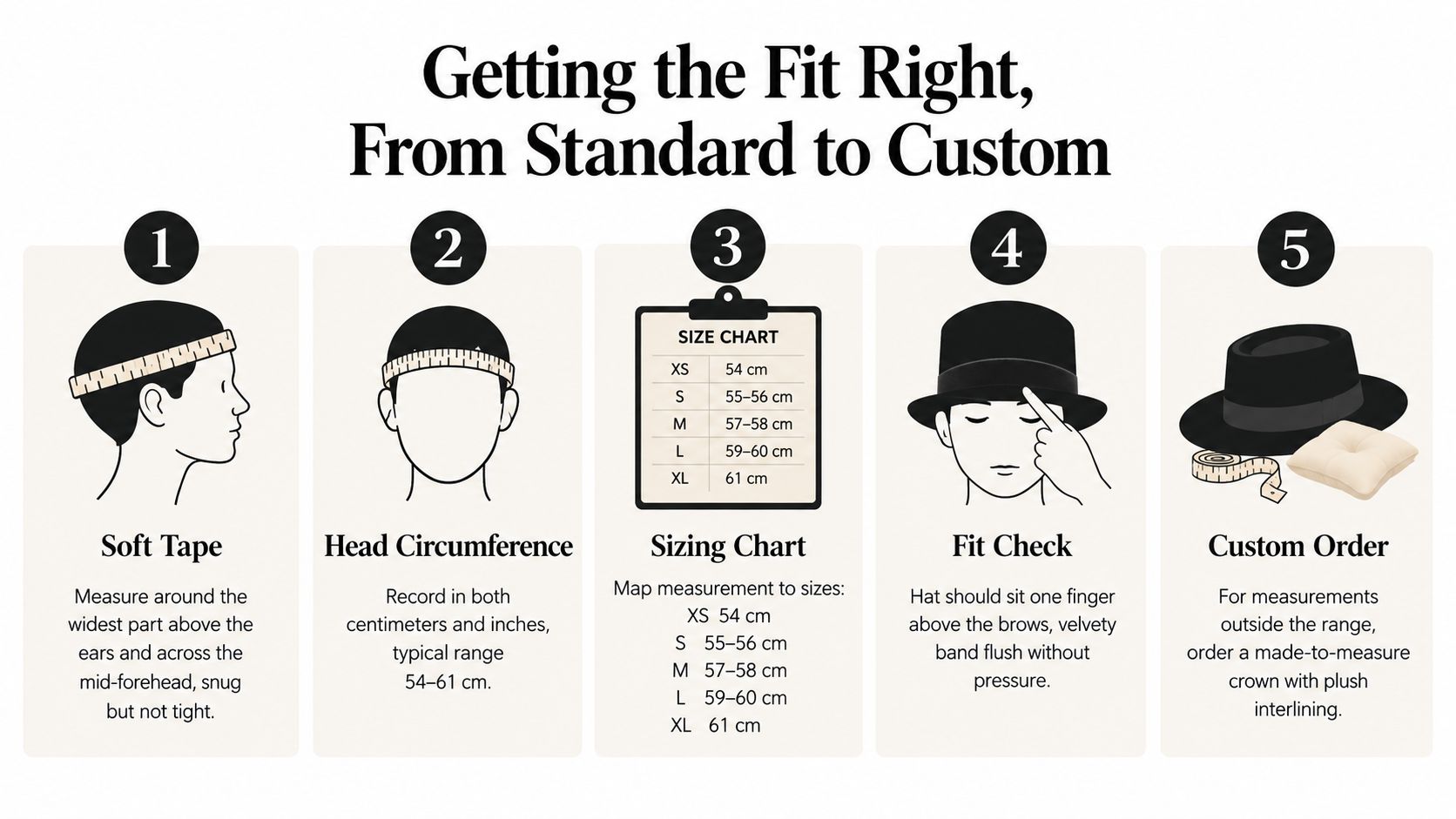
A useful fit check has four parts:
- Crown depth: The crown should clear your hairline without collapsing into the top of your hairstyle.
- Temple pressure: Nothing should pinch above or behind the ears.
- Band position: The band should sit comfortably above the brows, not directly on them.
- Ear coverage: On a trapper, the flaps need to seal around the ears rather than hover beside them.
A hat can be the correct circumference and still feel wrong if the crown depth doesn't suit your hair or if the band presses against glasses. Black pile often hides small shape problems in photographs, yet it can lay flat against the body when the crown or brim hasn't been properly shaped.
Custom sizing is a normal studio service
Small heads below a standard range, larger heads above 60 cm, and sensitivity to firm bands all call for a more personal approach. Glasses, hearing aids, thick hair, fringe, and changes after chemotherapy recovery can also affect how a crown needs to be built.
Pandemonium offers custom sizing and “your fabric, our expertise” services through its Seattle studio. A small-batch manufacturer can also work from custom specifications, as demonstrated by small-batch apparel production with custom sizing. For the measuring method itself, keep our hat-size guide nearby.
If you fall between sizes, email the studio before ordering. A short conversation about crown depth, hair, and eyewear can save a return and help the finished hat arrive ready to wear.
Watch the measuring process before taking your tape to the head. The most useful measurement is a calm, repeatable one, taken while your hair is arranged as you'll usually wear it.
Care and Longevity for Black Faux Fur
Black faux fur looks polished because it has visual depth, but that same dark surface can reveal lint, dust, and compressed pile quickly. Care should restore the fibers without turning maintenance into a second job.
Begin with a shake-out after each wear. This releases surface moisture and resets the pile before it has time to dry in a flattened position. Once a week, use a soft-bristle brush in the direction of the fibers. A lint roller can help, but use a light touch because adhesive pressure can crush guard hairs.
Spot cleaning without flattening the pile
For makeup or city grime, use a damp microfiber cloth with a small amount of diluted wool-safe detergent. Dab rather than rub, then air-dry away from radiators, hair dryers, and direct heat. Synthetic fibers can relax under excessive heat, which may reduce crimp and leave the surface looking tired.
- For loose debris: Shake first, then brush gently.
- For a small mark: Dab with a barely damp cloth.
- For storage: Use a hat box or crown form, not a peg.
- For the brim: Keep it free from coat weight and crushing.
- For a seasonal refresh: Arrange a careful deep clean before long-term storage.
Product care instructions vary substantially. Some black faux-fur hats are listed as machine-washable at 40°C, while others say “do not wash” or “dry clean only”, as illustrated by the guidance on this black faux-fur hat product page. Follow the specific label rather than assuming every pile, lining, or backing behaves alike.
A little shedding can occur during the break-in period as loose fibers release from a new pile. It should taper rather than continue heavily. Over-brushing is a more common mistake than under-brushing. Too many passes can pull fibers loose and create a worn-looking surface long before the hat has reached the end of its useful life.
For broader faux-fur cleaning principles, use our guide to cleaning a faux fur coat, then adapt the method to the hat's own label and lining.
The Ethics, Craft, and Story Behind the Stitching
The ethical case for faux fur begins with the material, but it shouldn't end there. Faux fur is usually made from polyester, acrylic, or modacrylic, and an item isn't automatically vegan just because its pile is animal-free. Backing fabrics and processing inputs can still matter, so the full product and manufacturing process need to meet a 100% animal-free standard when vegan certification is the claim. Vegan Avenue's explanation of faux fur offers useful context for asking better questions.
There's also an environmental trade-off. Plastic-based fibers can shed microfibers and carry pollution impacts associated with fossil-fuel-derived textiles, even when the product is positioned as a cruelty-free alternative. That doesn't erase the value of an ethical alternative, but it does make longevity, repair, and responsible care important parts of the decision. This discussion of vegan fur alternatives explores that tension.
What small-batch making changes
In a working studio, the difference appears in the construction. Patterns and blocks can be refined in-house, linings can be cut and stitched to the crown rather than glued on, and trims can be attached by hand so they're more approachable to repair or alter.
Seattle has a documented maker ecosystem. Seattle Made describes a network of more than 600 urban manufacturers and producers, which gives local production practical substance beyond a label.
At Pandemonium, Leigh Young's 25+ years of design experience informs a small-batch studio practice focused on hand-sewn faux fur accessories and millinery. The useful question isn't whether handmade automatically makes every hat perfect. It's whether you can identify the maker, ask for an adjustment, and find support if the crown needs resizing or the lining eventually needs attention. For more on that local process, read handmade millinery in Seattle.
The same habit of checking provenance applies across ethical luxury categories, including sourcing ethical hair for salons. A hat you'll wear through several winters deserves a maker willing to stand behind the stitching.
Styling a Black Faux Fur Hat Through the Week
A black faux fur hat earns its place by working across real clothes, not by looking impressive in one carefully arranged photograph. The key is to balance the hat's texture with the coat's structure and decide whether the silhouette should frame the face or protect it.
For a downtown meeting, pair a structured cloche or pillbox with a charcoal wool overcoat and turtleneck. Keep the crown clean, pull the front just above the brows, and tuck a low ponytail beneath the back of the cloche. Black faux fur reads dressier than wool felt, so the shape can carry from office hours into dinner.
At the Saturday market, a beanie or bucket works with a parka and rain boots. Let a few strands remain visible rather than forcing all the hair underneath. A bucket's relaxed brim can soften a practical outfit, while a beanie keeps the profile compact when you're carrying a tote or moving through crowded stalls.
Four more combinations that work
- Camel wrap coat: Choose a pillbox or close cloche with leather gloves. The black creates a crisp frame against the warm coat, and a short brim keeps the proportions refined.
- Quilted barn jacket: A bucket or softly shaped beanie suits the jacket's practical texture. Keep the hat's crown relaxed rather than adding another rigid element.
- Parka over a hood: Use a trapper only when the hood doesn't push it forward. If both layers compete for space, wear the trapper beneath the hood and keep the flaps comfortably open.
- Evening layers: A structured black silhouette works with a simple dress or silk blouse. Let the hat provide the tactile focus instead of adding another oversized texture at the shoulders.
Hair changes the fit. A low ponytail slides neatly under a cloche, while a beanie needs about half an inch of slack at the crown to avoid flattening a layered cut. With a side part, place the hat slightly off-center rather than fighting the natural direction of the hair.
Scarf choice finishes the line. A tonal black wool scarf elongates the outfit, while a patterned cashmere scarf creates focal contrast against the solid hat. For customers who want to compare texture and shape in person, a visit to the Faux Fur Hats collection is a practical next step.
Choosing a Hat You Will Wear for Years
A lasting purchase begins with four filters, applied in order. First, choose a silhouette that suits your face, hair, and daily routes. Second, inspect the material grade, favoring a rich, controlled pile such as Tissavel or a well-made modacrylic over a flat fabric with excessive shine. Third, confirm the fit with a soft tape measure. Fourth, look for construction you can verify, including hand-sewn lining work, a shaped crown, and clear small-batch provenance.
The most expensive-looking hat on the shelf isn't necessarily the one that earns its place. Daily wearability is the true test of longevity. A hat that stays comfortable at 34 degrees and remains flattering at 22 has practical value if you'll reach for it through Seattle winters. Those temperatures are useful decision points, not promises of a universal warmth rating, because wind, rain, hair, lining, and activity all change the experience.
Black also rewards restraint. It works with office tailoring, casual parkas, camel coats, and evening clothes, while the pile supplies the tactile interest. The safest long-term purchase may be a simple black crown with excellent density and fit, rather than a louder color or novelty finish that limits your wardrobe.
When customization makes sense
Custom sizing is appropriate for hard-to-fit heads, a preferred crown depth, glasses, hearing aids, or an asymmetric cut after chemotherapy recovery. It's also helpful when your hair volume changes seasonally or when a firm conventional band causes discomfort.
Our black faux fur collection gives you a direct place to compare available shapes and textures. If you're uncertain, send the studio your measurement and describe how you'll wear the hat. That email is a better starting point than guessing from a photograph.
For a handmade black faux fur hat, Pandemonium Millinery combines small-batch Seattle craftsmanship, cruelty-free luxury textiles, and custom sizing, including “your fabric, our expertise” services shaped by Leigh Young's 25+ years of design experience. Join The Crowd for 15% off and studio updates, then visit Pandemonium Millinery to explore the black faux fur collection and choose the silhouette that will carry you through the season.


