



Seattle mornings have a way of testing a coat before breakfast. You leave a warm apartment, cross a wet pavement, and feel the cold settle into your shoulders while mist beads on the fabric. A ladies faux shearling coat can make that walk feel cozy and plush, but the soft surface alone doesn't tell you whether it will stay attractive after repeated rain, commuting, and contact with bags or car seats.
At Pandemonium, our Seattle studio has spent 25+ years working with tactile luxury textiles, including high-end faux fur, hand-sewn accessories, and small-batch apparel. We look at a coat the way we look at a piece of millinery, from the fiber and backing to the fit, finish, and care routine. The ethical alternative only earns its place in your wardrobe when its construction supports the way you live.
What a Ladies Faux Shearling Coat Actually Is
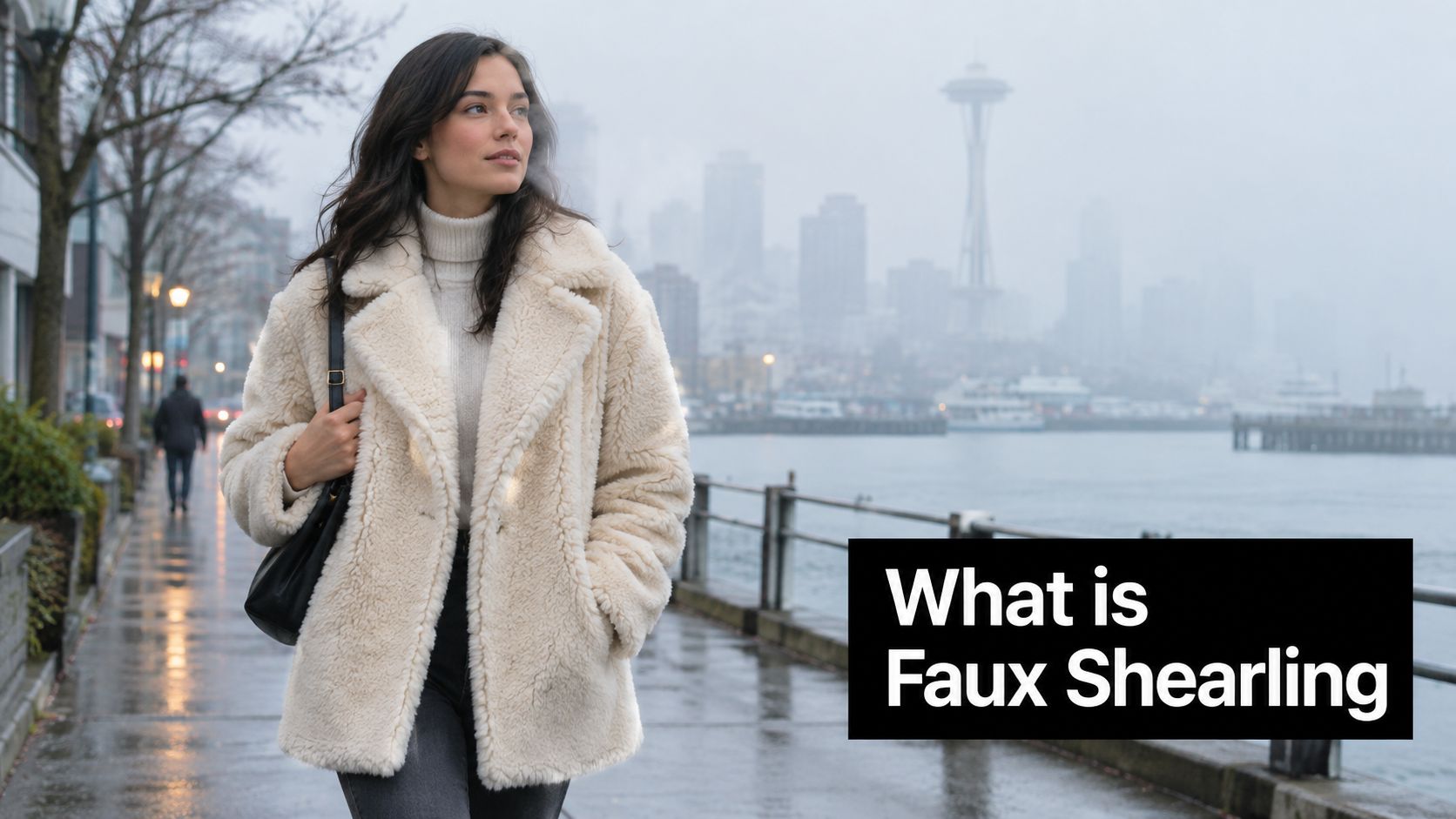
On a rainy Seattle commute, a cream coat may look like lambskin shearling from across the waterfront. Run your fingers over it, though, and its identity becomes clearer: faux shearling is a constructed textile, not an animal hide. Its comfort and longevity depend on how those textile layers are made and joined.
Faux shearling generally combines a lofty, wool-like pile with a woven or knitted backing. The pile creates a soft hand and holds still air near the body. The backing gives the fabric shape and helps it resist stretching. Polyester and acrylic are common fibers, and some versions use recycled polyester. The result is animal-free outerwear that can suit a cruelty-free wardrobe, while still belonging to the broader synthetic-textile system.
Faux shearling and sherpa are not identical
Retail descriptions often blur these terms, yet their hand and performance can differ.
- Faux shearling usually has a deeper, more dimensional pile, with curl or visible variation that resembles wool.
- Sherpa fleece is often lighter and more even, and commonly appears in casual garments or as a lining.
- Bonded-pile faux shearling joins the pile to a separate backing, producing a defined face and reverse.
- Woven or knitted faux shearling uses a more integrated textile structure, which changes its drape and response to stretching.
For a wet, cold commute, backing stability matters. A coat may appear wonderfully velvety in a photograph, yet pull across the shoulders or lose its shape if the foundation offers little support. The same principle applies to seams, closures, and lining. Softness begins the conversation. Construction decides how the coat behaves after contact with rain, a shoulder bag, and a car seat.
Synthetic fibers now provide the structural basis for much modern apparel. They represented about 60% of clothing and 70% of household textiles, while synthetic fibers reached 64% of global fiber output in 2020, according to the European Environment Agency's analysis of synthetic textiles. The source also reports that 88% of synthetic output is fossil-based, so “vegan” and “lower impact” describe different considerations.
Chemical-fiber production surpassed cotton in the mid-1990s and more than doubled during the following 20 years, making animal-free outerwear broadly available. For a closer view of how faux fur can shape a garment, coat construction with faux fur provides useful visual context. B-Sew Inn decoratively stitched inspiration also shows how careful surface stitching can give practical fabric a more architectural character.
How Faux Shearling Is Built From Pile to Lining
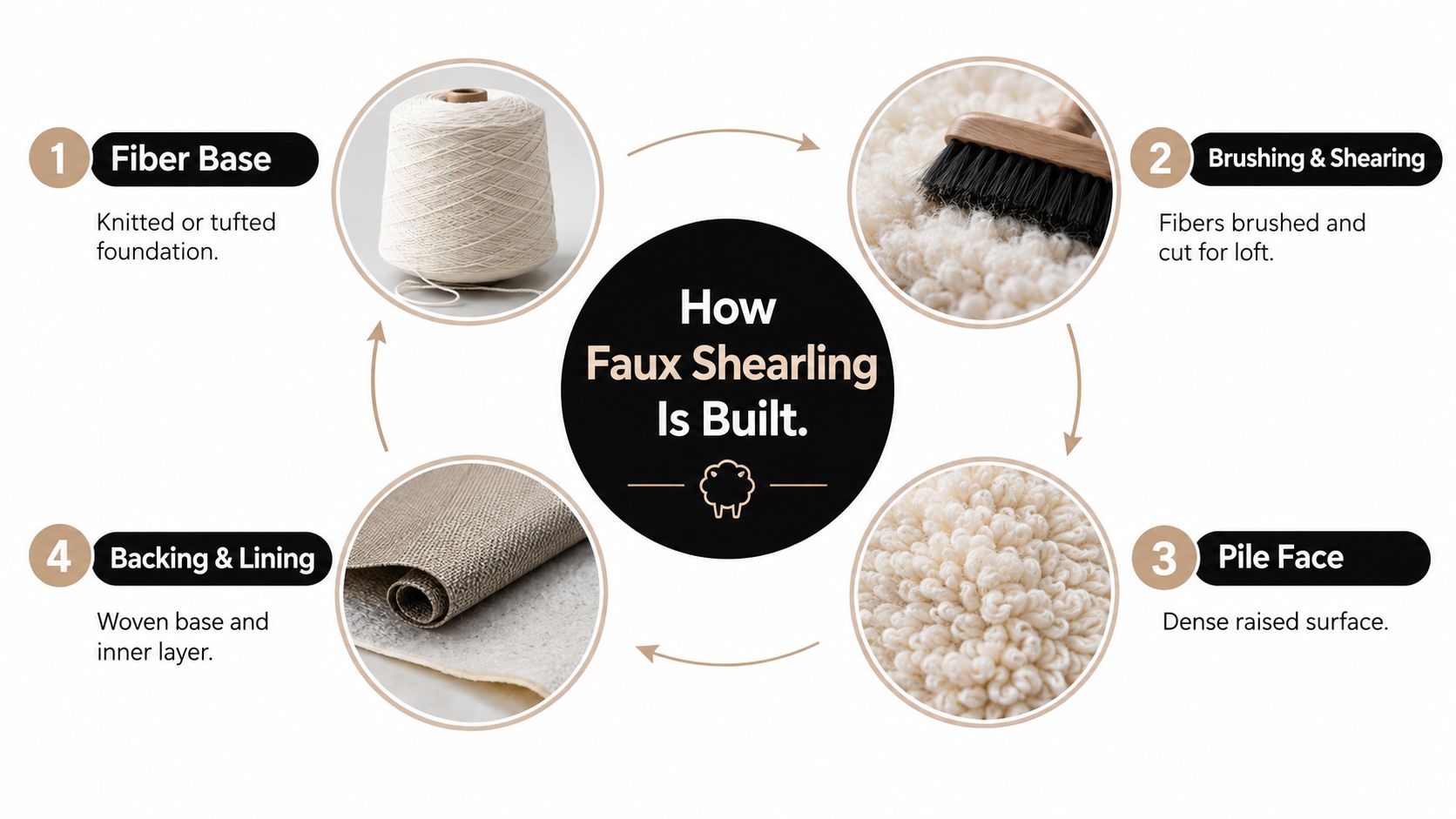
A tailor can explain a coat by placing each layer on a worktable. Faux shearling makes sense the same way. Start at the surface, then move inward.
The pile face
The pile is the part your hand meets first. Fibers may be knitted, brushed, sheared, or tufted to produce a raised, curly, or cloud-like finish. Dense pile can feel substantial and plush, while a sparse pile may reveal the backing when you part it with your fingers.
Pile traps still air in much the same way a marshmallow holds air between two tea towels. It contributes to coziness, but it isn't the entire insulation system. The fibers need a stable base, and the garment needs a lining that allows you to put it over a sweater without dragging the knit upward.
The backing
The backing controls the fabric's behavior. A woven backing can give the coat a more architectural shape. A knitted backing may offer flexibility, while a bonded backing joins pile and foundation into one composed textile.
Look especially at areas that receive stress, including the shoulder, armhole, pocket opening, and front closure. If the backing stretches too easily, the coat may pull across the upper back or develop a tired drape. That issue is particularly noticeable when a bag strap repeatedly presses against one shoulder.
The lining and interlayer
The lining is the quiet layer that makes a coat wearable. Viscose can provide a softer, more breathable feel. Cupro and satin offer a silky surface that slips over knitwear. A quilted lining or separate interlayer can add warmth without relying only on the pile.
Possible insulating layers include recycled polyester fill, Thinsulate, and lightweight down alternatives. Their presence doesn't automatically make a coat suitable for severe cold, but they can change the balance between weight, loft, and mobility.
Synthetic faux-fur and sherpa constructions are generally moderate insulators, with reported thermal resistance around 0.15 to 0.30 m²·K/W, according to this independent faux-fur performance analysis. That supports a practical conclusion. A well-built coat can feel cozy for urban commuting, but it shouldn't be confused with specialized expedition insulation.
Our acrylic faux-fur guide provides another useful material reference. Acrylic, modacrylic, and polyester are thermoplastic fibers with lower vapor permeability than wool, so some wearers may feel clammy during exertion even when the coat initially feels warm.
Faux Shearling Versus Real Shearling in Real Wear
A rainy Seattle morning makes the difference tangible. Real shearling pairs natural wool with a hide, while faux shearling combines a manufactured pile with a textile backing. Both can feel warm at first touch, yet their behavior in damp weather, daily friction, and long-term care is different. The better choice depends on your climate, ethics, budget, and use pattern, not appearance alone.
Faux Shearling vs Real Shearling at a Glance
| Attribute | Faux Shearling | Real Shearling |
|---|---|---|
| Feel | Can be velvety, plush, and highly consistent | Naturally varied, with wool attached to hide |
| Moisture response | Quality versions can recover after light exposure when dried correctly, but moisture can affect the backing | Wetting can mat the wool and reduce loft until carefully dried |
| Breathability | Usually lower vapor permeability, especially in acrylic- or polyester-based builds | Generally offers more natural moisture buffering |
| Care | Care depends on the label, but gentle home maintenance is often possible | Specialist cleaning is commonly required |
| Animal welfare | Animal-free and suitable as an ethical alternative | Livestock-based material |
| Environmental trade-off | Petrochemical content and possible microplastic shedding remain concerns | Higher impacts can arise from animal agriculture and hide processing |
| Best use | Urban wearers seeking cruelty-free luxury and adaptable styling | Wearers prioritizing natural fiber behavior and accepting animal-derived material |
In practice, faux shearling is often easier to fit into an urban wardrobe. Its surface can be made highly consistent, and its animal-free construction suits shoppers who want a cruelty-free alternative. Real shearling offers natural fiber behavior and moisture buffering, though wet wool can mat and the hide needs careful drying.
Faux fur also showed a meaningful environmental advantage over natural mink fur in a major life-cycle comparison. The CE Delft assessment found a faux fur coat's carbon dioxide scores were 4 to 7.5 times lower than those of a natural mink fur coat. Many environmental indicators differed by at least a factor of 3, and some effects were about 10 times lower, according to the CE Delft comparison of natural mink and faux fur.
That comparison does not make every faux shearling coat sustainable. Synthetic fibers still involve petrochemical inputs and may shed microplastics, while a short-lived garment creates more waste than one maintained across many seasons. For a PNW commute, construction and care matter as much as fiber choice. A stable backing, protected seams, and careful drying give the coat a better chance of surviving repeated rain and friction from a shoulder bag.
A simple rule helps: choose faux shearling when animal-free wear, consistent texture, and adaptable styling fit your priorities. Choose real shearling when natural wool behavior matters more and animal-derived material is acceptable. For a broader explanation of those ethical and material differences, see this faux fur versus real fur guide.
How to Judge Quality Before You Buy
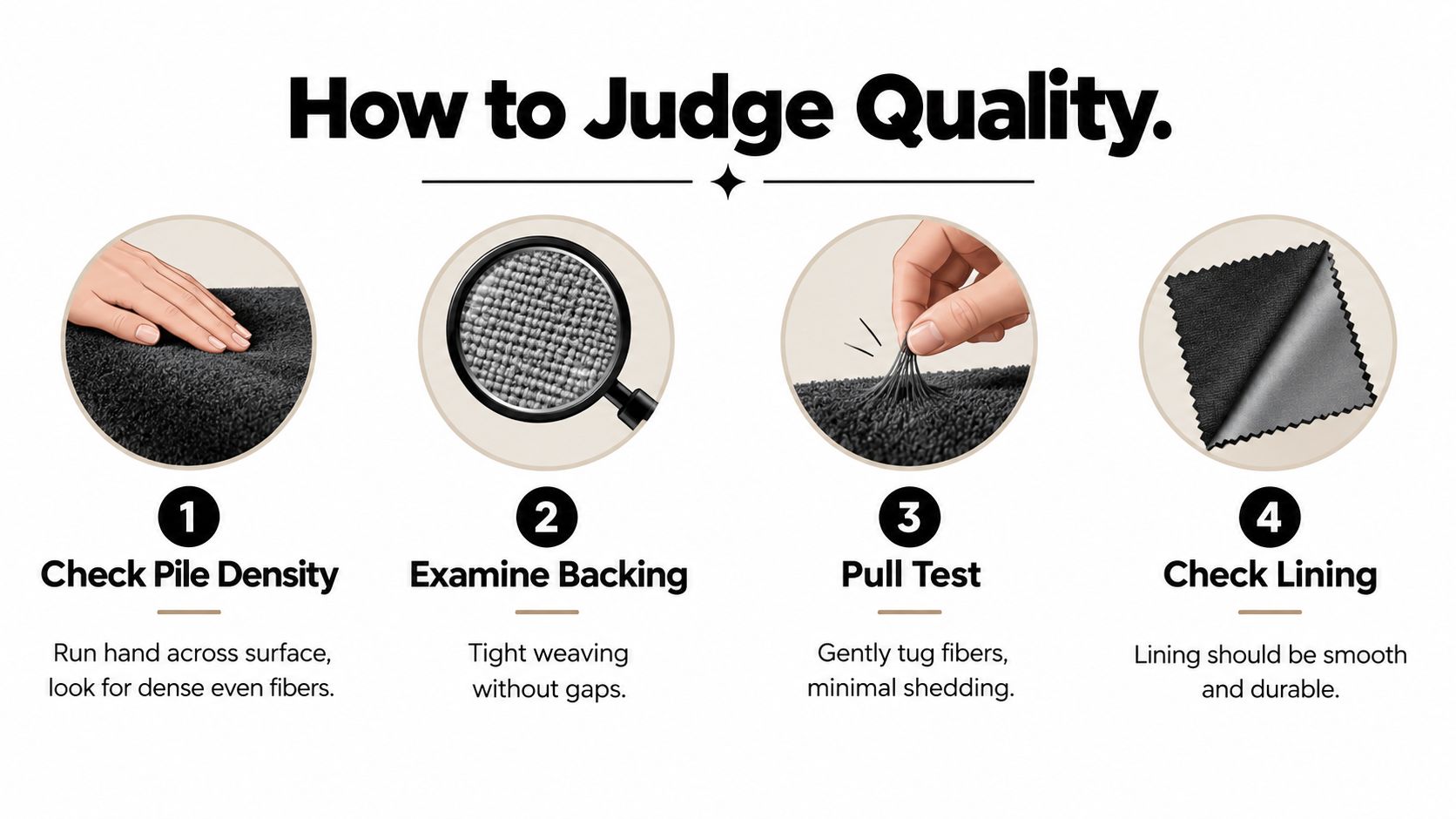
A product listing can show color and silhouette, but it can't replace your hands. If you're shopping in person, begin with the pile. Sweep your palm across it in both directions and press a small area with your fingertips.
Dense, even fibers should rebound rather than remain flattened. Patchy areas, exposed backing, or a thin hand can signal a less resilient construction. A high-quality faux-fur inspection guide offers a useful companion to this tactile check.
A practical inspection list
- Check pile density: Part the surface gently. You want a consistent foundation without obvious gaps.
- Test recovery: Press the pile, release it, and watch whether it regains its loft.
- Examine the backing: Look for a tight, stable base rather than a loose knit that shifts under light tension.
- Try a gentle tug: A few loose fibers aren't unusual, but the pile shouldn't release easily in clusters.
- Inspect the stitching: Look for even topstitching around princess seams, cuffs, pockets, and the hem.
- Look inside: The lining should be attached cleanly and shouldn't hang or bag at the hem.
- Open the pockets: Pocket linings should sit flat and feel compatible with the coat's overall finish.
- Test closures: Snaps and zippers should align without forcing. Toggles need firm anchoring through reinforced webbing or a similarly secure foundation.
- Read the label: Fiber content and care codes tell you whether the garment can tolerate home maintenance.
Weight can offer another clue, though it shouldn't be treated as proof by itself. A coat that feels substantial rather than papery may contain a loftier pile, a more stable backing, or a separate lining layer. Check the shoulder seams and collar roll as well. Those areas reveal whether the maker has balanced the tactile surface with disciplined tailoring.
For a visual demonstration of faux-fur texture and construction, watch the following garment-focused reference:
A label mentioning Tissavel, careful hand-sewn finishing, or a clearly described small-batch process can give useful context, but the physical evidence still matters most. At our local studio, we pay close attention to how a material responds at seams, not only how it photographs under showroom light.
Finding the Right Fit and Silhouette for You
A coat can have beautiful pile and still feel wrong if the shoulders, sleeves, or hem don't suit your daily movement. One Seattle client may need room for a substantial sweater and a backpack, while another wants a polished layer over a knit dress for the office.
Start with the silhouette that matches your routine:
- Cropped trucker: Easy over a knit dress or high-waisted trousers, with enough room for a thin layer beneath.
- Hip-length toggle coat: Practical for office wear and simple to sit in during a commute.
- Mid-thigh A-line: Gives the lower body room and creates a graceful line for pear-shaped figures.
- Full-length duster: Reads polished on a taller frame and creates a more enveloping, architectural profile.
The pile adds both visual and physical volume. We usually advise leaving room for the sweater you wear, rather than measuring only over a blouse. A coat that looks elegant standing still can pull across the back or restrict the arms when you reach for a transit pole.
Sleeves deserve special attention
Sleeve length is one of the most common fitting failures, especially for women with longer arms or narrower shoulders. A sleeve that ends too high exposes the wrist to rain and makes the entire garment look undersized. A sleeve that is too long can swallow the hand and interfere with gloves, cuffs, or a handbag.
The sleeve pitch matters as much as the measurement. That is the angle at which the sleeve joins the armhole. A proper pitch helps prevent pulling across the back yoke when your arms move forward, which makes a noticeable difference on a coat worn for walking, driving, or cycling.
Fit research supports the value of individualized assessment. Literature on clothing-size evaluation describes virtual try-on and customized human models as tools for evaluating fit online, reflecting the fact that fit must account for individual body variation, as discussed in this fit and fashion resource.
At Pandemonium, our approach is your fabric, our expertise. Custom sizing can address shoulder placement, sleeve length, hem allowance, petite proportions, and tall frames when an off-the-rack size comes close but never settles correctly.
Caring for Faux Shearling Across Many Winters
A plush coat needs a routine, not a rescue. Regular, gentle care keeps the pile lifted and helps you catch moisture or surface soil before it becomes embedded.
Your weekly and monthly rhythm
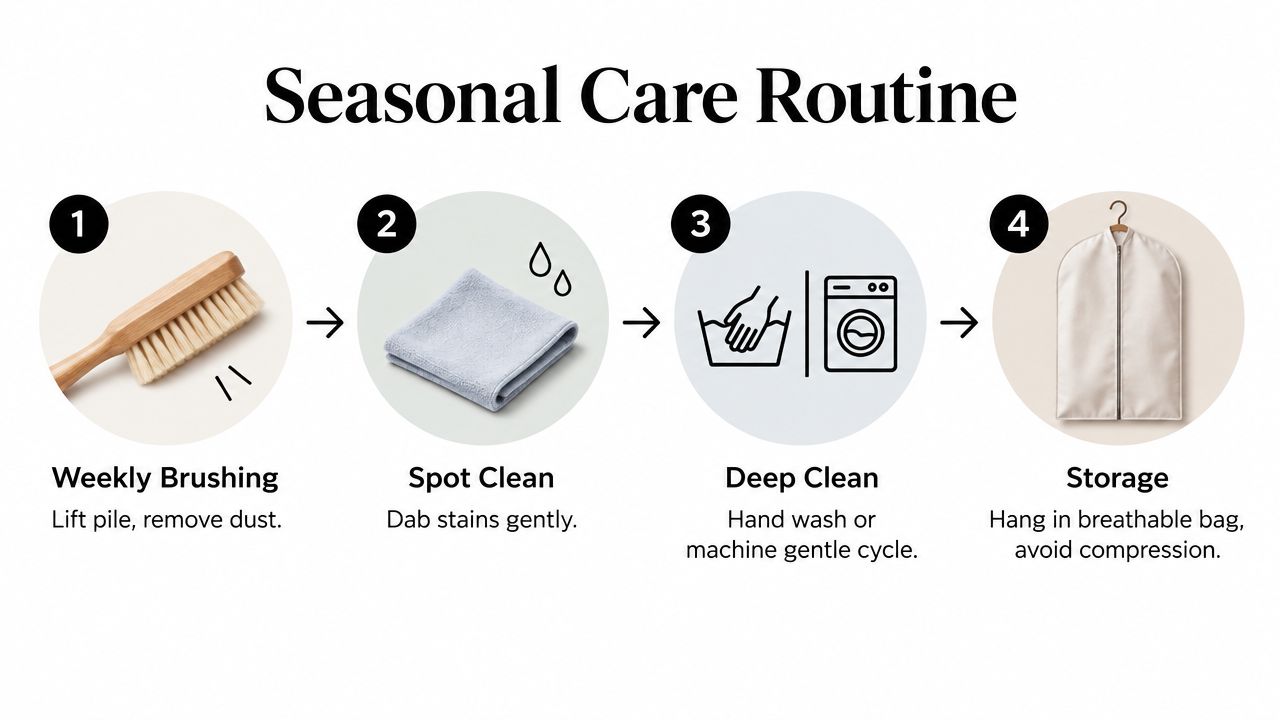
Once a week, use a soft-bristle brush or pet brush to lift the pile and remove surface dust. Work in the direction of the fibers first, then lightly against the pile only if the care label and fabric allow it. Avoid aggressive brushing, which can disturb the backing or encourage shedding.
Once a month, place the coat on a wide wooden hanger in a well-ventilated room, away from direct sun. Airing helps release odors trapped by repeated indoor-outdoor wear. Don't leave it pressed against a radiator, heater, or sunny window.
For a small mark, use cool water and a mild wool-safe detergent. Dampen a clean cloth, blot the area, and avoid rubbing. Rubbing can tangle the pile and drive moisture into the foundation.
What to do after a wet commute
Shake off surface water as soon as you come indoors. Hang the coat at room temperature with enough space for air to circulate, and wait until it's fully dry before brushing the pile back into place.
Machine washing is the mistake we see most often. Agitation, heat, and excess water can mat the pile and may delaminate a bonded backing. Always follow the garment label, and don't assume that a synthetic fiber automatically means a coat can tolerate a hot wash.
Our guide to cleaning a faux-fur coat can sit beside your care label when you're deciding whether a garment needs spot treatment, gentle washing, or professional attention.
Store it loosely
Before off-season storage, clean the coat so stains don't set during its rest. Hang it in a breathable cotton garment bag with cedar blocks, and keep it away from compressed shelves or tightly packed closets.
If the coat must be folded, fold it loosely and avoid placing heavy garments on top. Compression flattens loft and can create lasting creases, especially around the shoulders and collar.
Storage rule: Give the pile room to breathe, and give the backing time to dry before you brush or fold it.
Choosing a Faux Shearling Coat That Lasts
Take this checklist into a boutique or keep it beside a product page. Each point turns a vague impression into a practical test.
- Even stitching: Examine seams, cuffs, pockets, and hem for consistent stitches and clean thread ends.
- Resilient pile: Press the surface with your fingers. A dense pile should recover rather than stay crushed.
- Stable backing: Part the fibers and look for a foundation that doesn't gape or shift.
- Substantial lining: The interior should feel smooth and securely attached, not thin or papery.
- Reliable closures: Zippers, snaps, and toggles should lie flat and connect without strain.
- Layer-friendly cut: Try the coat over the sweater you plan to wear.
- Climate-appropriate shape: A shorter style may suit active city movement, while a longer silhouette offers more coverage in cold, wet conditions.
- Manageable care: Read the label before buying, especially if you don't have access to specialist cleaning.
Faux shearling can be a cruelty-free luxury choice, but longevity depends on matching the coat to your routine. Repeated friction from bags, car seats, and seat belts can flatten pile, encourage pilling, and reduce loft over time. Care, fit, and construction work together.
Our Seattle studio continues Leigh Young's 25+ years of design experience through small-batch, hand-sewn work and bespoke adjustments. If a ready-made coat is almost right but the sleeves, shoulders, or hem never quite settle, custom drafting can close that gap. Pandemonium's approach includes custom sizing and “your fabric, our expertise” services, so a tactile garment can be shaped around the person wearing it rather than the other way around.
Pandemonium Millinery offers hand-sewn faux fur apparel and accessories through a local Seattle studio, with small-batch craftsmanship, custom sizing, and bespoke fabric services for shoppers who care about fit and ethical alternative materials. Join The Crowd for seasonal care notes and 15% off, then explore the coats and jackets collection for a polished faux shearling-inspired layer.


