



A winter commute asks a lot from a hat. You want something that softens a dark wool coat, keeps your ears comfortable at the bus stop, and still looks polished when you step into the office with wind-flushed cheeks and a coffee in hand.
That's why so many shoppers looking for a faux fur trapper hat womens style aren't really asking for a novelty piece. They're asking for a practical luxury. They want plush warmth, a flattering silhouette, and an ethical alternative to animal fur that doesn't read costume-like or clumsy. In our Seattle studio, we've spent more than 25 years watching winter accessories succeed or fail on exactly those points.
A well-made trapper can do something other hats often can't. It frames the face, protects the ears, and adds rich texture close to the skin where winter feels sharpest. If you're browsing our hat collection or reading about the evolution of fur and faux fur garments, you're likely trying to sort out three things at once. Will it be warm enough, will it fit correctly, and will it work with the clothes you already own?
We think those are the right questions. They're also the questions that separate a trend purchase from a winter staple.
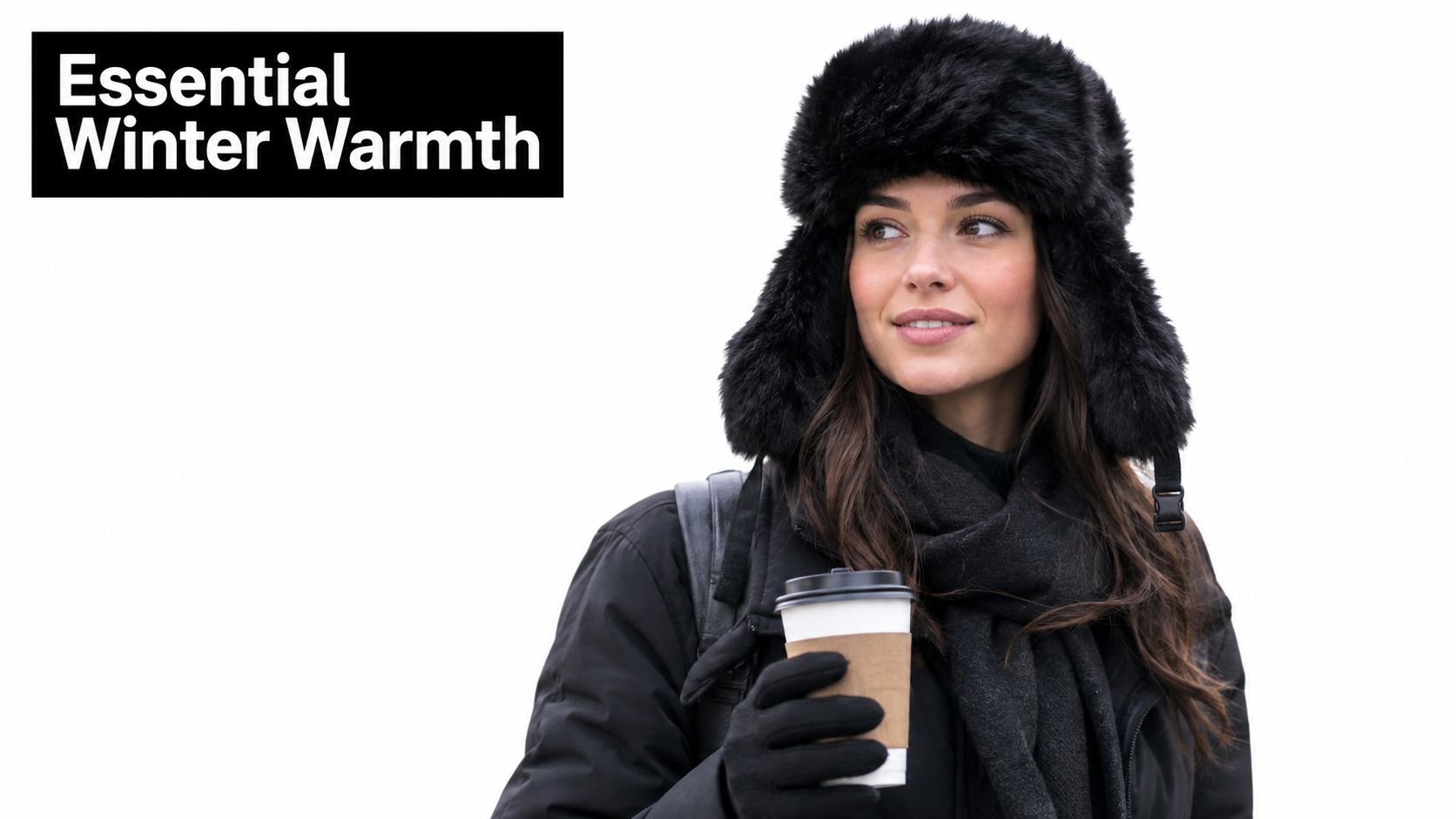
Introduction Why the Faux Fur Trapper Hat Belongs in Every Womens Winter Wardrobe
Cold weather accessories earn their place by solving real problems. A beanie may keep the crown warm. A brimmed wool hat may look elegant. But when wind starts moving sideways down the street, many women want more coverage around the ears, cheek line, and back of the neck without sacrificing style.
That's where the trapper shape shines. It offers a more complete envelope of comfort, and in high-end faux fur it can feel refined rather than rugged. The silhouette carries a sense of old winter utility, yet in rich-toned vegan fur it becomes architectural, feminine, and surprisingly city-ready.
Why this shape feels current again
Fashion doesn't invent every idea from scratch. Faux fur has a long history, and that matters here. The Smithsonian notes that imitation fur appeared in American newspapers in the 1910s, that the U.S. government imposed a 10 percent tax on real fur from 1919 to 1928, and that synthetic pile fabrics such as Orlon in 1948 and Dynel in 1950 marked a major step in making faux fur more practical and convincing in everyday fashion (Smithsonian history of faux fur).
For winter millinery, that history explains something important. Today's faux fur trapper hat isn't a flimsy imitation of a “real” category. It sits inside a long textile story that made plush, cold-weather accessories more wearable and more accessible.
A trapper hat works when it feels like shelter, not decoration.
Why women's demand matters
Women aren't a side audience in faux fur. One industry projection estimates the global faux fur coats market at $6.8 billion in 2025, with women accounting for 62.4% of end-user revenue, or about $4.2 billion (Dataintelo faux fur coats market projection). That figure is for coats rather than hats, but it still points to the same buying instinct. Women are already choosing faux fur for warmth, style, and cruelty-free appeal.
If you want a place to start shopping the silhouette itself, explore our women's collection. If you already know you love face-framing winter hats, you might also enjoy the cleaner cap line in the Valerie Cap Style collection.
What Makes a Trapper Hat Different and Why It Works So Well
A trapper hat succeeds because every part of its shape has a job. We like to think of it as a small winter shelter. Not bulky for the sake of bulk, but designed so each panel helps hold warmth where cold air usually slips in.
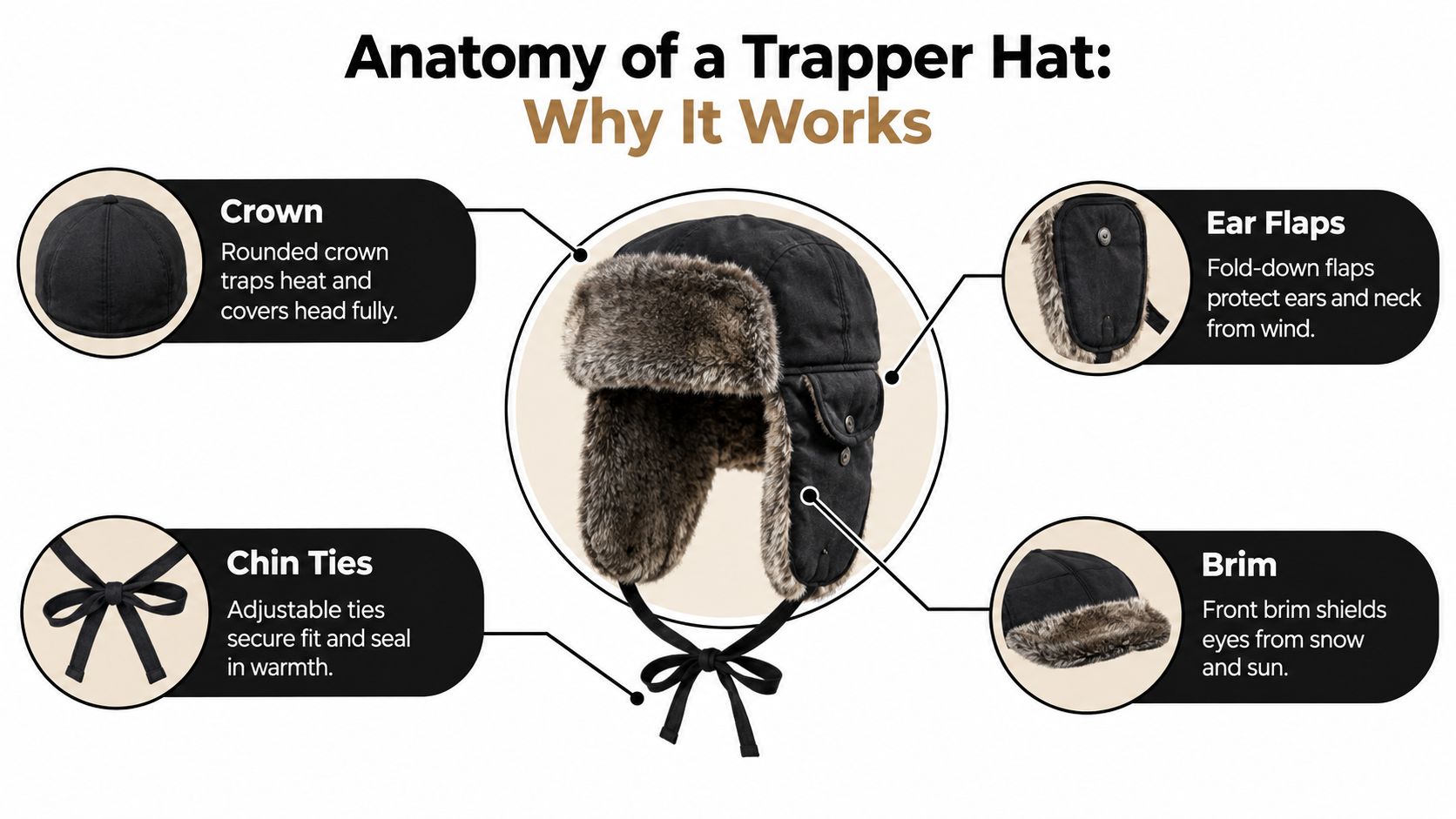
The four parts that matter
A classic trapper has four working parts:
- Crown. The crown covers the top and sides of the head where body heat naturally gathers.
- Ear flaps. These are the true winter heroes. They protect the ears and often extend toward the jaw and upper neck.
- Chin ties. Ties help the hat stay put in gusty weather and improve the seal around the face.
- Brim. A small brim can soften glare, catch light snow, and give structure to the front view.
If you compare that to a bucket hat, the difference is immediate. A bucket gives you a soft brim and casual shape, but very little ear protection. An aviator-style hat may look related, yet trapper hats usually read cozier and more enveloping because the flaps and tie system are central to the design rather than decorative.
Why the shape outperforms simpler winter hats
Think of the hat like a well-insulated cabin. The crown is the roof. The ear flaps are the walls. The ties are the latch that closes the door against wind. The brim is the overhang that helps shield the entrance.
That analogy helps explain why trapper hats often feel warmer in motion than they do on a hanger. The visual loft is only part of the story. Coverage and seal matter just as much.
Here's what to look for when you're comparing styles:
- A rounded crown that sits close enough to avoid cold gaps.
- Flaps with enough drop to cover the full ear comfortably.
- Secure ties or a fastening option for days when the weather turns sharp.
- A brim with purpose rather than one so floppy it collapses into the eyes.
The trapper hat's job is simple. Deliver cozy, plush, weather-resistant coverage where winter hits first.
If you like this silhouette but want to browse neighboring styles too, our faux fur accessories collection is a useful comparison point. It helps many shoppers figure out whether they want full ear coverage or a lighter winter profile.
Inside the Luxury Textile From Faux Fur Pile to Velvet Lining
A trapper hat can look beautifully plush in a photo and still disappoint the moment it meets cold air, static-prone hair, and a long commute. We learned long ago in our Seattle workroom that winter performance starts with touch. The pile has to behave well, the backing has to support the shape, and the lining has to feel good for hours, not just for the first minute.
That is why we talk about faux fur as a true textile category, not a costume effect. One faux fur has a sleek, light-catching surface that reads polished with a wool coat. Another has a deeper bloom that softens the face and feels warmer at the ear line. The difference is a little like choosing between brushed velvet and bespoke suiting. Both can be luxurious, but they create very different results on the body.
Why textile choice changes the whole hat
For a commuter piece, the outer surface does more than set the mood. It affects how crisp the silhouette looks, how the flaps fall, and whether the hat reads playful, dramatic, or refined.
We usually guide shoppers through three material questions at once:
- Surface character. Do you want a smoother, lustrous pile or a fuller nap with more visual depth?
- Structure. Does the textile have enough body to frame the face cleanly instead of collapsing?
- Daily wear feel. Will it sit comfortably against skin, hair, scarf collars, and the inside of a hood?
If you want a clearer way to judge quality by eye and by hand, our guide to telling high-quality faux fur from cheap alternatives walks through the details we pay attention to in the studio.
Choosing Your Faux Fur and Lining Combination
| Textile Option | Best For | Feel and Look | Warmth Notes |
|---|---|---|---|
| Silky pile | Polished commuter styling | Smooth, light-catching, refined | Comfortable when paired with a close fit and protective lining |
| Velvety plush pile | Everyday winter wear | Soft, fuller, rich-toned | Often feels cozier around the ears and cheek line |
| Substantial dense pile | Colder days and stronger wind | Architectural, lush, more sculptural | Can help support a more weather-resistant feel when the hat seals well |
| Velvet lining | Hair comfort and refined finish | Sleek, soft, classic | Helps the interior feel smooth and finished against the head |
| Breathable fabric lining | Longer indoor-outdoor wear | Light, practical, less slippery | Useful for shoppers who want comfort through commutes and heated interiors |
What lining does that shoppers often miss
Lining is the private engineering of a hat. You do not always notice it first, yet you feel its decisions all day.
A beautiful exterior can still fall short if the inside grabs hair, traps too much heat on the train, or feels scratchy by midafternoon. Velvet lining often solves several of those problems at once. It glides more easily against the head, gives the crown a more considered interior finish, and adds that quiet sense of luxury that makes a trapper feel like part of a real wardrobe rather than a once-a-year cold snap purchase.
In our small-batch Seattle production, we treat the inside with the same care as the outside. That balance is where fashion and function finally stop competing. A cruelty-free trapper should look polished with a city coat and still feel reassuring when the wind comes off the water.
Material shortcut: If the exterior feels glamorous but the lining feels like an afterthought, the hat rarely becomes the one you reach for on dark winter mornings.
For shoppers who enjoy comparing texture families across winter accessories, our Fractal Collection and Cozy Cable knits show how dramatically surface choice changes the mood of a piece.
Finding Your Perfect Fit and Custom Sizing for Every Head
A trapper can look beautiful on the shelf and still disappoint on a cold Monday morning. You pull it on before the bus arrives, and within ten minutes you know whether the fit was right. The crown either settles into place like a well-made glove, or it creeps forward, presses at the temples, and leaves the ear flaps sitting just a little too high.
That is why we start with fit before color or styling. A winter hat should disappear into your day in the best possible way. You notice the warmth, the coverage, and the polish. You do not notice fidgeting.
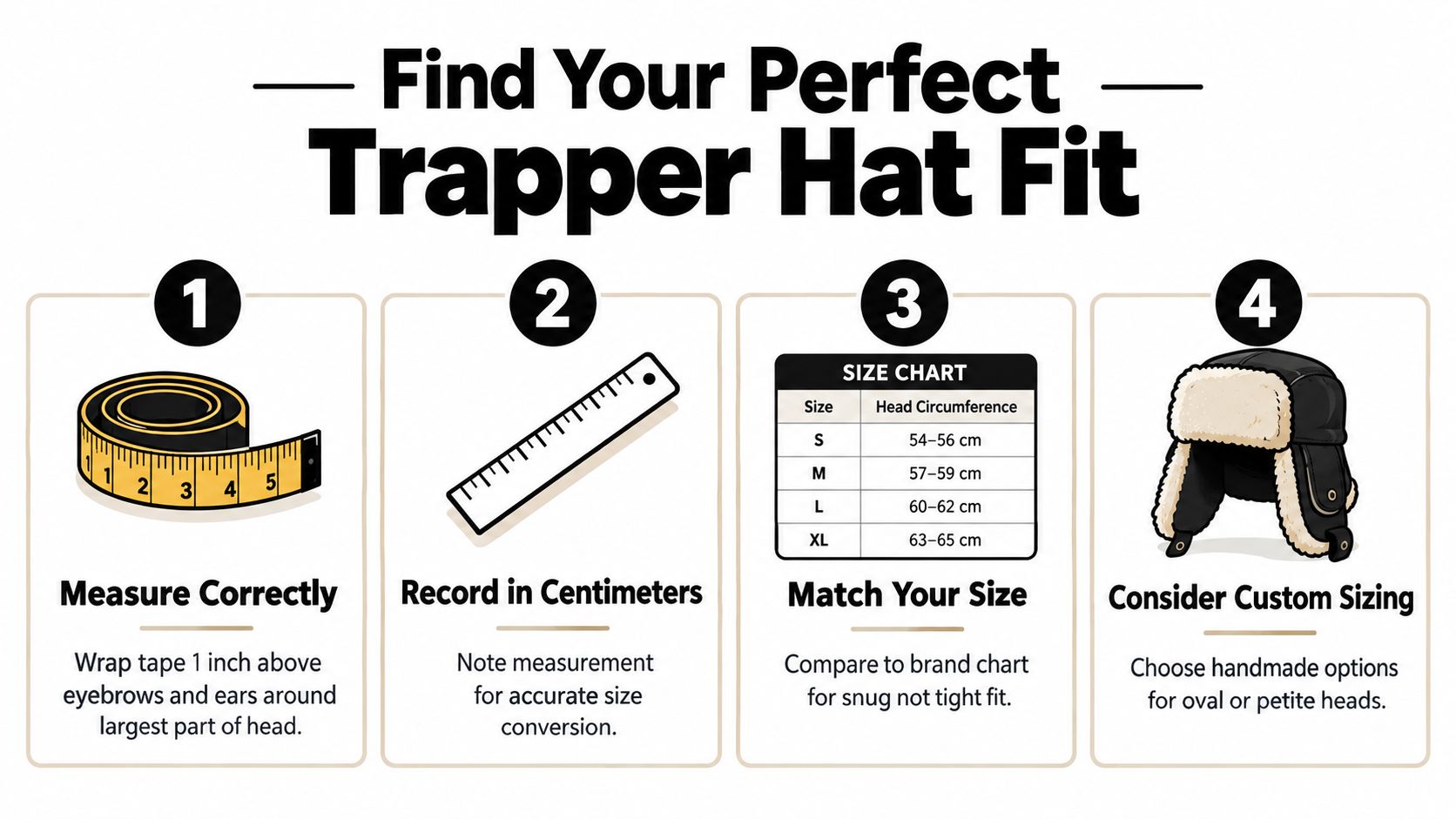
How to measure correctly
The cleanest place to begin is a soft tape measure placed around the head about 1 inch or 2.5 cm above the eyebrows and ears, as outlined in this hat sizing chart and measuring guide. If you want a clearer visual walkthrough, our step by step hat measuring guide for accurate sizing shows exactly where the tape should sit.
Small differences matter here. A trapper hugs more of the head than a loose beanie does, so even a slight mismatch in circumference can change how the crown sits and whether the flaps cover the ears. Independent sizing references reflect that tighter precision, with adjacent sizes often separated by just a centimeter or two, as shown in this MS Pineapple Crafts sizing guide.
Measure twice if your hair changes your profile from day to day.
Why one size rarely flatters every head
Many mass-market hats are cut to a narrow middle range. That works tolerably for some shoppers and poorly for anyone outside it, especially women with thick curls, braids, a low clip, petite proportions, or a fuller head shape through the back. A trapper makes those mismatches obvious because several parts have to agree at once. The circumference, crown depth, cheek opening, and flap placement all need to work together.
A good fit behaves like thoughtful upholstery. The shape follows the structure beneath it rather than fighting it.
Independent product guidance has also noted that one-size trapper hats often center around a fairly limited circumference range, while larger head sizes need true size options for comfort over longer wear (independent trapper hat sizing discussion). We have seen the same pattern in the studio for years. The customer is not difficult to fit. The pattern is too generic.
What to check before you commit
Use this quick fitting test once the hat is on:
- The crown sits securely and does not perch high like it is balancing on top of the head.
- The ear flaps reach the ears fully without pulling the whole hat upward.
- The opening around the face looks intentional and frames the cheeks cleanly.
- The ties or closure rest easily and do not have to overcompensate for a poor crown fit.
- Your usual hairstyle still fits without flattening everything into discomfort.
One point often gets missed. Fit affects style just as much as warmth. A properly sized faux fur trapper reads polished with a wool coat because the proportions look deliberate. If the crown is too shallow or the face opening gaps, even a luxurious fabric can start to look costume-like.
Pandemonium Millinery offers faux fur hats and custom sizing for shoppers who need more precision, including those who fall between standard measurements or want a specific fabric in a shape that suits their proportions. After twenty-five years of small-batch millinery in Seattle, we have learned that hard-to-fit heads are part of real life, not unusual exceptions.
A soft hat can still be the wrong hat. If it shifts, pinches, or leaves part of the ear exposed, the fit needs work.
Custom sizing helps close the gap between fashion and function. You get the clean line of a polished commuter piece, and you keep the practical coverage that makes a trapper worth wearing in the first place.
If custom work appeals to you, our custom and contact pathways through the main studio site are the place to begin the conversation.
How Warm Is It Really Cold Weather Performance for Commuters
A trapper hat can look wintry and still underperform outdoors. That's the fashion-versus-function gap many shoppers feel instinctively. Plenty of hats look plush in a photograph. Fewer hold up in wind at a train platform or during a wet, cold walk across downtown.
Recent style coverage has shown trapper hats entering fashion conversations as expressive, plush accessories, while cold-weather buying guides focus more on flap coverage, insulation, and lining details for real protection (Wallpaper trend coverage on faux fur and shearling). For commuters, that difference matters.
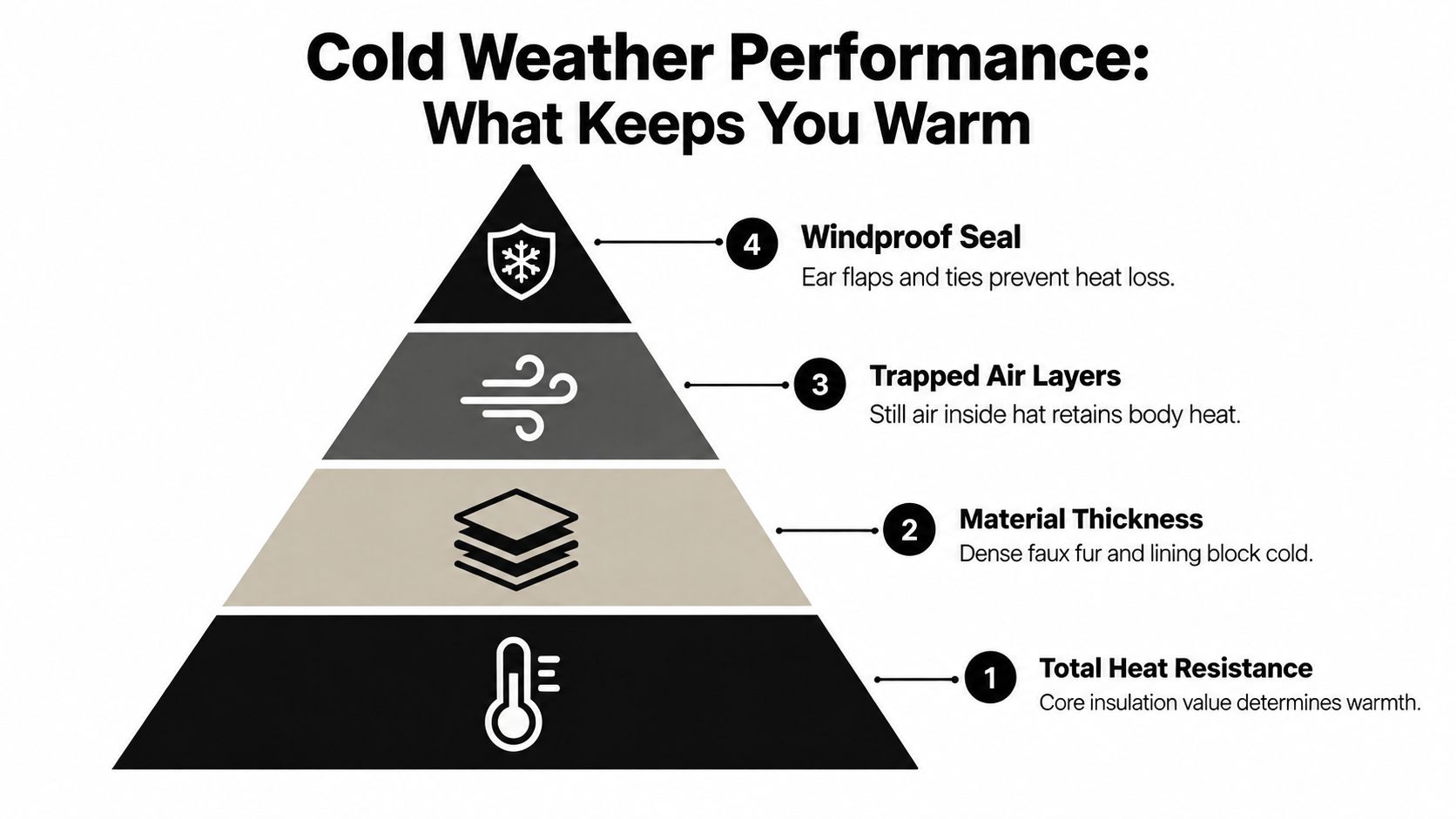
What actually keeps a hat warm
A PubMed-indexed study on winter headgear found strong correlations between headgear thermal performance and total heat resistance, material thickness, and air permeability (PubMed winter headgear study summary). In plain language, warmth doesn't come from fluff alone. It comes from insulation plus resistance to moving air.
For a faux fur trapper, that usually means:
- Dense pile that helps create insulating loft
- A low-air-leak lining that doesn't invite drafts
- A close seal around ears and face so wind can't strip warmth away
- Enough structure to keep the hat in position while you move
Two at-home tests that help
You don't need a lab to judge basic performance. Try these simple checks:
- The doorway test. Put the hat on, secure the flaps, and stand near a drafty door or on a breezy porch. If you feel air sneaking in around the ears or jawline, the hat may be stylish but not commuter-ready.
- The turn-and-walk test. Wear the hat and turn your head left and right while walking. If the crown shifts and opens gaps, the fit or tie placement needs work.
Seattle cold is often damp and mobile. Chicago and New York can add sharper wind and more severe exposure. In all three settings, a trapper earns its keep by sealing well and staying put.
For broader layering ideas around winter dressing, our cold-weather gear notes are a practical companion.
How to Style Your Faux Fur Trapper Hat From Office to Weekend
The weekday test is simple. You pull on a wool coat at 7:30, catch your reflection in the hallway mirror, and ask whether your winter hat looks ready for a meeting or only for a sled hill. A well-made faux fur trapper should do both jobs. It should keep its cold-weather purpose while reading polished, intentional, and city-ready.
We style trappers the same way we style a strong textile anywhere else on the body. Let one piece carry the richness, then keep the supporting shapes clean. Because the hat sits close to the face, it behaves almost like a scarf and a frame at once. That is why line, proportion, and surface matter more than piling on extra volume.
For the office commute
For workdays, start with structure.
A trapper looks especially refined against structured outerwear because the contrast is clear. Smooth coat, plush hat. Straight lapel, soft pile. That pairing closes the gap between fashion and function. You stay warm on the platform or sidewalk, but the outfit still reads professional once you step indoors.
A reliable office formula looks like this:
- A wool coat in black, camel, navy, or charcoal to give the hat a crisp backdrop
- Slim trousers, dark denim, or a knit dress with clean lines so the silhouette stays long
- A structured tote and simple gloves to echo the hat's finish without adding clutter
- Boots with a polished shape rather than overly rugged hardware
If your winter wardrobe already lives in the made-to-measure lane, our guide to business casual winter outfits shows how to keep that balance intact.
One small styling note helps here. If the trapper has generous ear flaps or a fuller pile, choose a coat collar that does not fight for the same space. A simple crewneck, mock neck, or narrow lapel gives the hat room to frame the face cleanly.
For weekend wear
Weekends give you more freedom with texture, color, and shape. The trapper can become the warm focal point of the outfit, especially if the rest of the layers feel easy and grounded.
Try these combinations:
- Cream sweater, dark jeans, and ankle boots for errands, lunch, or a market walk
- Puffer coat, trim knit base layer, and a fuller scarf for colder outdoor plans
- A simple parka with one richly textured hat when you want color and softness near the face
- Leggings, a longer sweater, and sturdy boots for travel days or snowy cabin weekends
The key is proportion. If the hat is plush and luminous, keep the body of the outfit narrower and calmer. If your coat is oversized, choose a trapper with enough shape to hold its own rather than collapsing into the collar. We make this judgment the same way we judge trim on a hat brim. Each element needs its own clear edge.
How to judge whether the look is polished
Online photos can be helpful, but only if they show the hat accurately. Look for front, side, and tied-under-chin views so you can see how the crown sits, how much of the forehead it covers, and whether the flaps hug the face or flare outward. Those details affect style as much as warmth.
Descriptive image text helps too. Phrases such as “Woman wearing handmade black faux fur trapper hat in Seattle” or “Close view of velvet-lined vegan fur winter hat with ear flaps” tell you more than a vague product caption. They let you judge scale, texture, and form before the hat ever reaches your front door.
A polished trapper outfit usually has one plush focal point. Let the hat hold that role.
Caring for Your Investment Ethical Luxury That Lasts
A well-made faux fur trapper hat should age with grace if you treat it gently. The goal isn't to keep it untouched. The goal is to let it keep its plush hand, clear shape, and comfortable interior through many winters.
That care ritual is part of ethical luxury. When you choose a hand-sewn, small-batch accessory from a local studio, maintenance becomes an extension of craftsmanship rather than a chore.
Everyday care habits
A few simple habits make the biggest difference:
- Let the hat air out after snowy or damp wear before storing it.
- Brush the pile lightly with your hands to restore direction and loft.
- Spot clean carefully instead of over-washing the entire piece.
- Store it with room around the flaps so the shape doesn't crease sharply.
Neutral textile and craft sources describe U.S.-made woven goods as the result of domestic production, time-honored techniques, and thoughtfully sourced materials (Kindly Woven on U.S.-made woven goods). We think that spirit applies beautifully to artisan accessories too. Care is part of honoring how something was made.
Off-season storage
When winter turns, store your hat in a breathable container or fabric bag rather than crushing it under heavier items. Keep it away from direct sunlight, dust, and unnecessary heat. If the pile looks flattened after storage, a gentle shake and patient reshaping usually bring it back to life.
Cruelty-free luxury works best when it's built to stay in rotation. That's one of the quiet pleasures of boutique millinery. A trapper can be expressive, cozy, and practical, then return next season still looking elegant.
Join The Crowd for 15% off if you'd like first access to new small-batch releases, custom sizing notes, and tactile winter styling ideas from our Seattle studio. If you're ready to find a faux fur trapper that balances polished city style with real cold-weather comfort, visit Pandemonium Millinery and explore our handmade vegan fur hats, bespoke options, and cruelty-free winter accessories.


