



The leash is in your hand, rain is needling sideways across the pavement, and your companion has begun lifting one paw at a time. In Seattle, winter rarely arrives as a clean, sparkling postcard. It arrives as damp fur, cold ground, wind through a thin coat, and a dog who wants to walk but clearly wants to go home sooner.
That's where warm pet coats earn their place. A thoughtfully made coat isn't a costume or a substitute for shelter and supervision. It's a carefully fitted layer that helps a vulnerable pet stay dry, comfortable, and mobile during necessary outdoor activity. At Pandemonium, our local Seattle studio has spent 25+ years working with hand-sewn textiles, tactile construction, and the small details that make a garment feel natural rather than cumbersome.
Why Warm Pet Coats Matter Beyond Fashion
A scruffy little dog wrapped in a blanket on a snowy walk tells the story plainly. The blanket may offer comfort, but it shifts, drags, and leaves the chest exposed. A proper coat should sit closer to the body, cover the areas that lose heat readily, and let the animal walk, turn, sit, and eliminate without interruption.
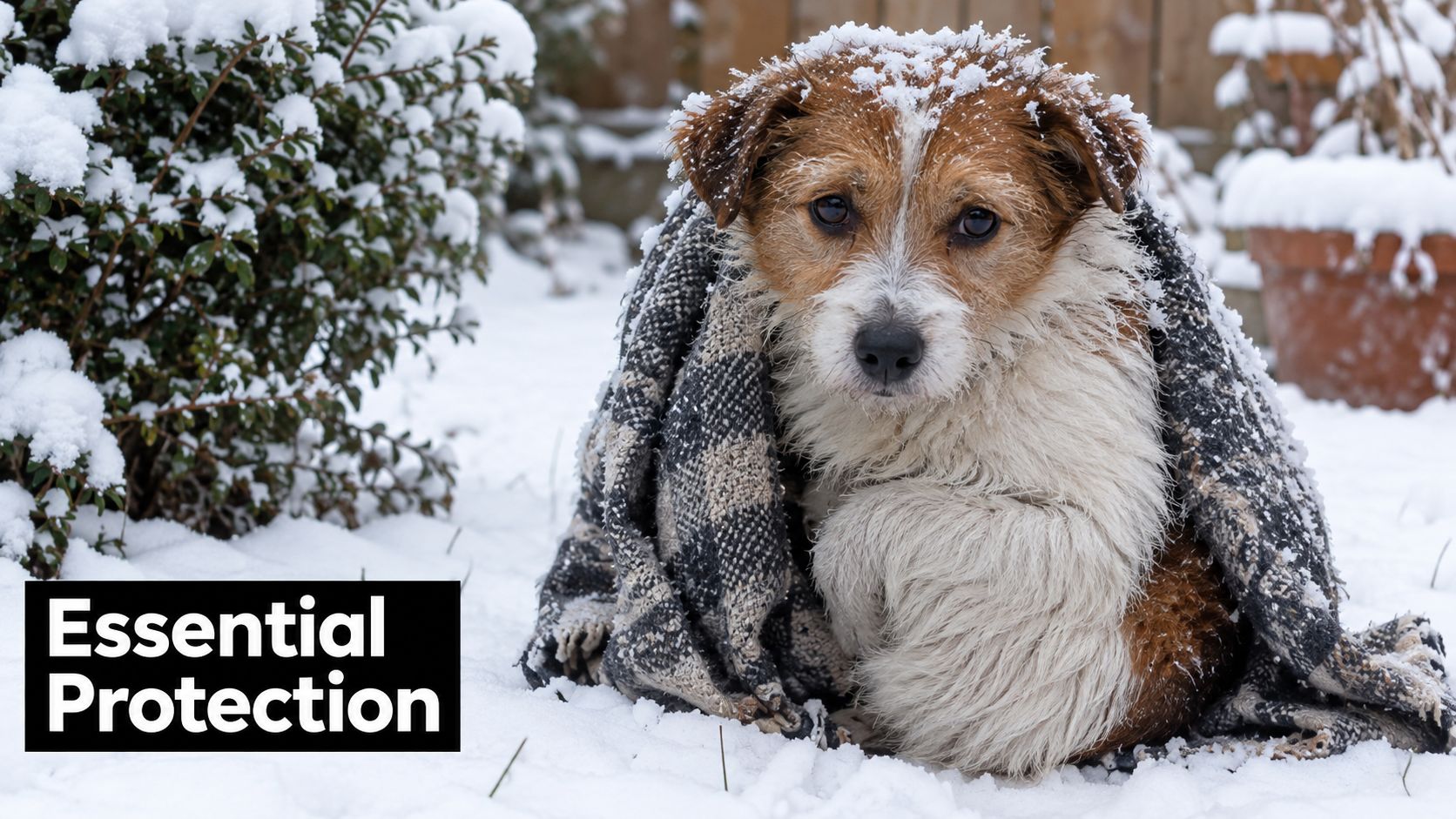
The distinction matters because functional warmth is different from decorative dressing. A polished bow or charming print can be delightful, but it shouldn't be mistaken for insulation. The useful garment keeps the animal dry, preserves comfortable movement, and supports the owner's ability to monitor changing conditions.
At our Seattle studio, we think of luxury as a conversation between beauty and responsibility. A coat can have a rich-toned pattern, a plush collar, and the velvety hand of high-end faux fur, while still being shaped around the animal's body. That's the spirit behind our approach to designer pet accessories with a cruelty-free point of view.
A coat should support care, not replace it
Cold-sensitive pets may need a shorter outing, a warm indoor retreat, or veterinary advice rather than another layer. The RSPCA explains that wet fur can cause chilling, while wind and cold can contribute to hypothermia, so a coat should be only one part of a broader routine. Shelter, supervision, dry bedding, and attentive observation remain essential.
Studio rule: If the garment looks beautiful but the pet resists walking, struggles to turn, or comes home damp beneath it, the design has failed its first purpose.
This is why we favor small-batch, adjustable construction over a generic shape that treats every body as interchangeable. Our team works with faux fur, vegan fur, and other luxury textiles because ethical alternatives can be tactile, substantial, and beautiful without using animal fur. The right warm pet coat should feel like considered equipment, not an ornament placed on top of an animal.
Recognizing Cold Stress and Safety Thresholds
Temperature is a useful starting point, but it isn't the whole decision. The RSPCA states that when outdoor temperatures reach freezing, all dogs face a risk of hypothermia and frostbite, with small, slim, young, elderly, and short- or hairless dogs particularly vulnerable. Its winter guidance recommends indoor temperatures between 10°C and 25°C, noting that cold-sensitive animals may begin to struggle below 10°C. Read the RSPCA winter guidance for dogs alongside your pet's individual needs.
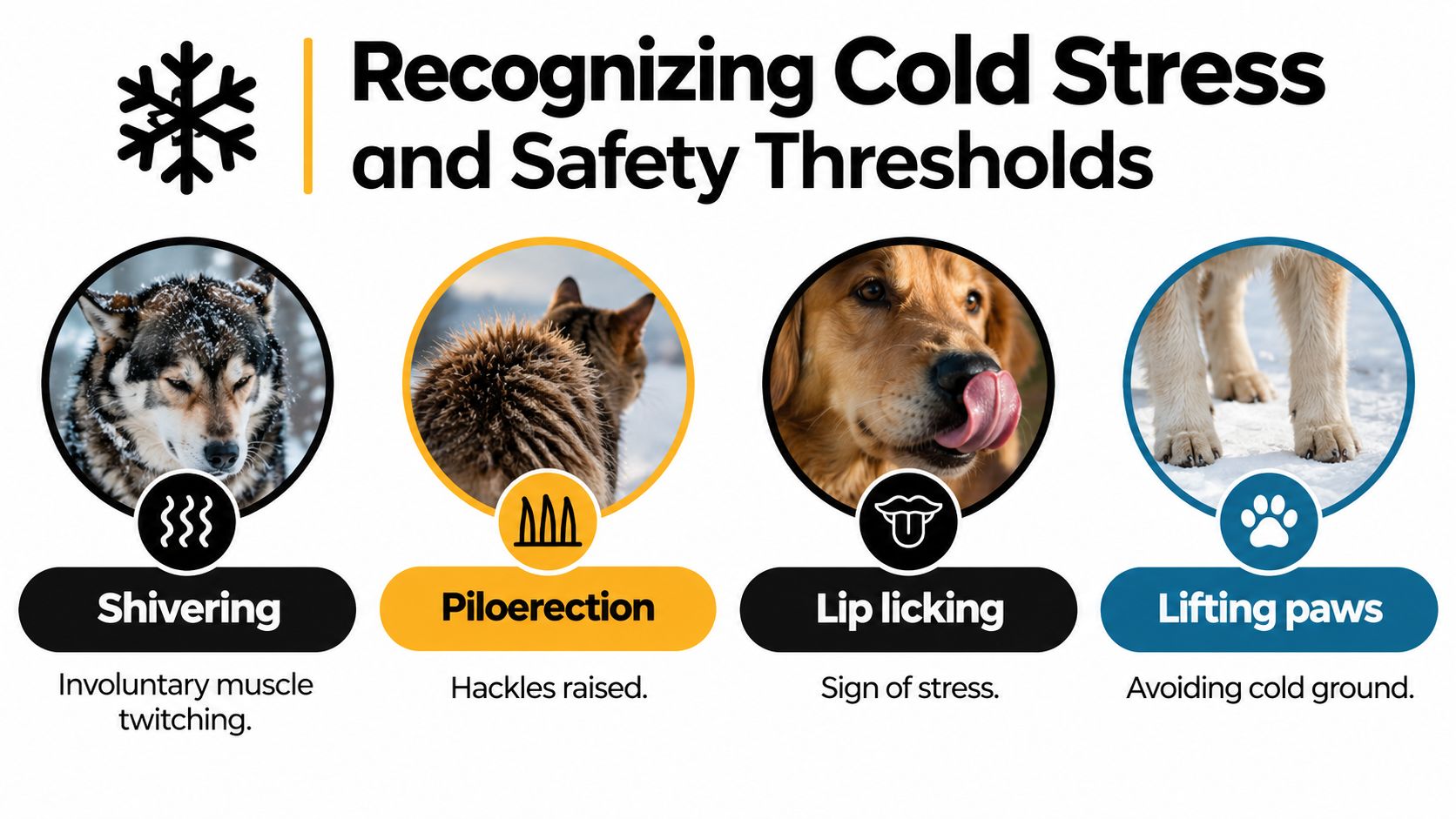
A thick-coated adult and a short-haired senior may stand in the same air and experience very different levels of discomfort. Size, age, body condition, coat density, health, breed, and acclimatization all influence tolerance. Short legs also bring the abdomen closer to snow and frozen ground, increasing exposure to conductive and convective heat loss.
Watch the animal, not only the thermometer
At 32°F (0°C), veterinary guidance identifies a practical point for increased winter precautions. At or below 20°F (-7°C), VCA warns that even short walks can become risky as wind chill increases the danger, and recommends limiting outdoor walks to approximately 5 to 10 minutes while using protective clothing such as a coat. See the VCA winter safety guidance for the broader context.
A coat is appropriate only if it improves comfort without creating a new problem. Bring the pet indoors and remove the garment if you notice:
- Shivering: Involuntary movement signals that the body is struggling to maintain warmth.
- Paw lifting: Repeatedly raising paws can indicate discomfort from cold ground, ice, or salt.
- Slowing or refusal: A pet that stops, turns back, or refuses to continue is communicating clearly.
- Anxiety or weakness: Restlessness, a hunched posture, or weakness requires immediate attention.
Frostbite often affects exposed areas, including earflaps and tail tips. Skin may appear pale or blue, and a coat won't reliably protect the nose, paws, ears, or tail. Inspect those areas after a walk, and seek veterinary care for tissue that is pale, cool, painful, blistered, or discolored.
Selecting Ethical Luxury Textiles and Insulation
The plushest fabric isn't automatically the warmest choice. A coat should follow the animal's heat-loss profile rather than merely piling on insulation. Veterinary guidance recommends coverage across the chest, back, and abdomen, while preserving unrestricted shoulder and elbow movement, as outlined by the American Veterinary Medical Association's cold-weather safety guidance.
A well-made textile usually reveals itself through construction before branding. Run your hand over the pile and notice whether it feels silky, velvety, and resilient, or stiff and papery. Examine the backing. It should support the nap without making the garment rigid, because excessive stiffness can interfere with bending and turning.
What to assess before choosing a coat
- Pile character: A plush, even pile can provide a cozy hand and help retain still air near the body.
- Backing flexibility: The fabric should bend across the chest rather than stand away from it.
- Weather resistance: The outer surface should resist light precipitation and dry promptly.
- Inner comfort: The lining should feel smooth against fur and skin, with no abrasive seams or bulky closures.
- Ethical sourcing: Look for faux fur, vegan fur, and cruelty-free luxury textiles rather than animal-derived materials.
We've worked with premium textiles, including Tissavel, through our 25-year design history under Leigh Young's direction. That experience teaches a simple lesson. A rich, architectural texture is valuable only when the construction respects the body wearing it.
Insulation and frostbite protection also solve different problems. A coat can reduce heat loss across the torso, but it can't make exposed paws safe on salted pavement or protect a tail tip in freezing wind. For owners interested in fabric choice, shape, and custom construction, our notes on custom pet apparel offer a useful companion to veterinary advice.
Mastering Bespoke Fit and Movement Testing
A static size chart can't tell you whether a coat will rub behind the elbow when your dog trots. It can't show whether the belly panel catches during toileting, whether the neck closure interferes with a harness, or whether a deep chest leaves a cold gap beneath the front legs.
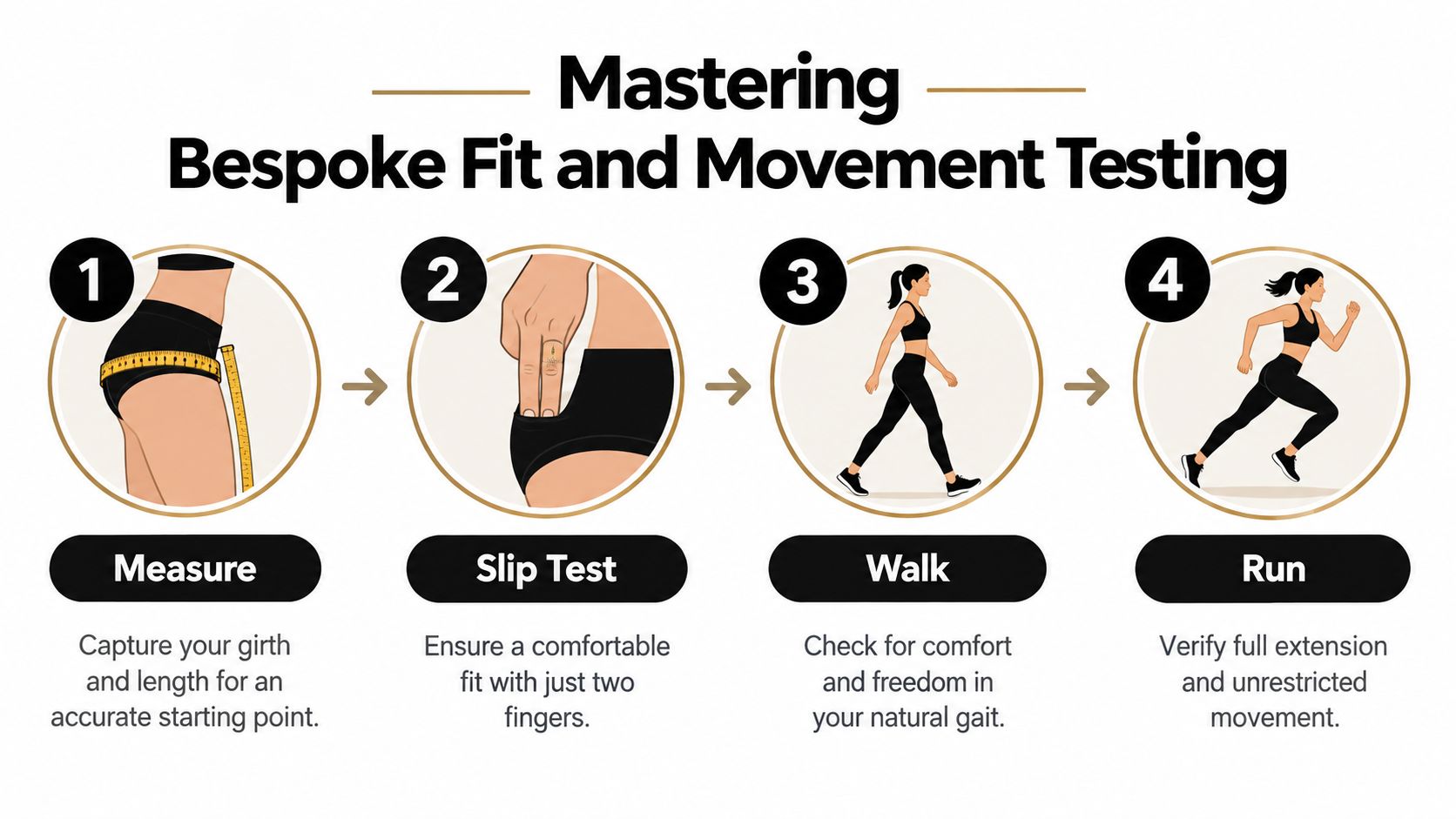
Start with two measurements. The AKC identifies body length and chest circumference around the widest part of the chest as essential measurements for choosing a dog coat. Its guide to winter coat sizing also supports measuring carefully before purchase, especially for unusual proportions.
Test the garment in motion
Measure while the pet is standing naturally, not stretched or crouched. Then use a quiet indoor fitting session to check the following:
- Walking: Watch the natural gait. The coat shouldn't pull across the shoulders or shorten the stride.
- Trotting: Look for twisting at the spine, lifted elbows, or fabric bunching behind the front legs.
- Sitting and stairs: Confirm that the back panel doesn't ride forward and that the belly remains clear.
- Harness attachment: Check that the leash opening aligns with the harness ring and doesn't force the fabric against the neck.
Leave enough room for comfortable breathing and movement, but don't leave loose openings that let cold air reach the chest. Check the neck, armpits, belly, and tail clearance after the first outing, then inspect for rubbing or dampness.
Deep-chested, barrel-chested, short-legged, elderly, and mobility-limited pets often benefit from separate adjustments rather than a longer or bulkier coat. That's where custom sizing earns its keep. At Pandemonium, our philosophy is “your fabric, our expertise”, pairing personal measurements with hand-sewn construction and practical alterations. Our dog coat guidance for Labrador shapes is another useful reference when a standard silhouette doesn't sit correctly.
Functional Design Features for Variable Weather
Seattle weather can turn a dry morning walk into a wet, windy outing. A warm pet coat should respond without sacrificing movement, fit, or ethical material choices. Reversible construction lets one carefully fitted garment present a more weather-suitable surface, while also offering visibility and a second finished look.
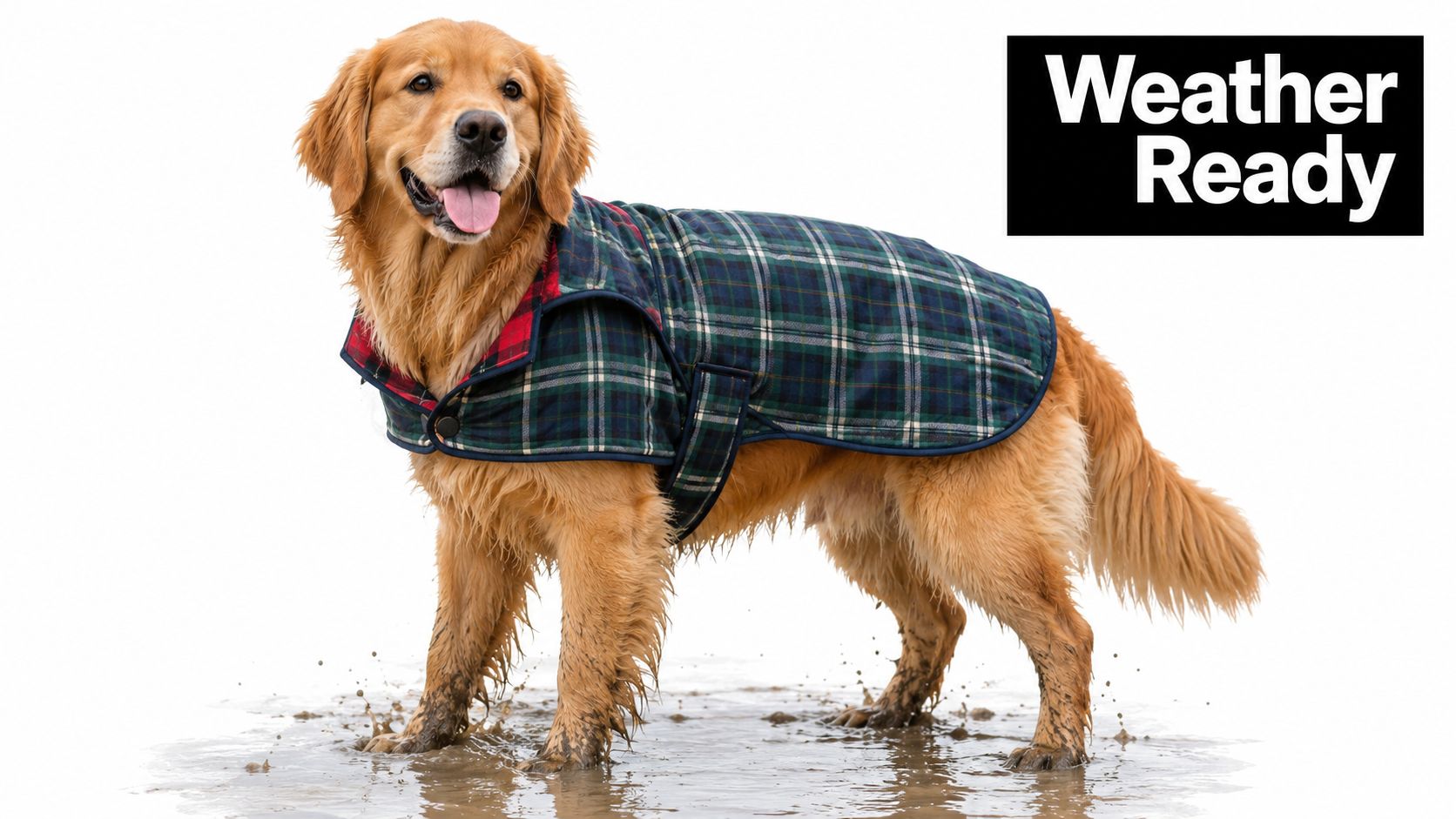
Given the cold-stress thresholds noted earlier, the design response for variable Seattle weather is targeted coverage rather than unnecessary bulk. A weather-resistant outer surface, adjustable closures, chest protection, and a stable hem help keep the garment useful as conditions shift. Fabrics should remain comfortable against the coat and skin, with cruelty-free textiles offering a considered alternative to animal-derived materials. For broader guidance, see this resource on companion animal coat health.
Details that earn their space
- Adjustable neck and waist closures: Set them close enough to reduce drafts, while leaving the chest free from pressure.
- A nonbinding chest panel: Cover the front of the body without restricting shoulder reach or shortening the stride.
- A leash opening: Align the opening with the harness or collar ring so the lead does not pull the coat backward.
- Reversible construction: Two finished surfaces can suit different weather and outfits, reducing the need for separate garments. The reversible dog coat design shows how this construction can be planned rather than treated as decoration.
- A practical hem: Keep the lower edge clear of puddles, mud, and wet snow, especially on shorter pets.
A useful coat also supports clean handling after a wet walk. Rinse salt and deicers from paws and lower legs, then dry the garment fully before turning it or storing it. Damp fabric trapped against the body can undermine comfort, even when the outer shell looks protective.
At our handmade-in-Seattle studio, reversible pet coats are shaped in small batches instead of forced into one standard silhouette. We treat fit, closure placement, and textile behavior as part of the garment's safety, while hand-finished details preserve the feel of ethical luxury.
Caring for Plush Faux Fur Garments
A warm pet coat works best when its fabric stays dry, supple, and evenly lofted. Cornell veterinary guidance explains that wetness increases risk because water conducts heat away from the body more efficiently than trapped dry air. That's why a useful outer shell should resist precipitation and dry rapidly, as described in the Cornell winter safety guidance.
Begin after every wet outing by shaking off surface water and blotting rather than rubbing the pile. Hang the garment in a well-ventilated place, away from direct heat, until the lining and backing are fully dry. A radiator or hair dryer can distort fibers, damage closures, or create uneven heat.
Preserve the hand of the textile
Brush gently in the direction of the pile with a soft garment brush once the coat is dry. Avoid aggressive grooming tools that can pull at the backing or flatten the fur. Follow the maker's cleaning instructions, and spot-clean small marks before they become embedded in the fibers.
Store the coat clean and completely dry, with enough room for the pile to breathe. A compressed garment can lose its plush, weightless feel, while a damp garment can develop an unpleasant odor or mildew. For owners managing several textiles in a pet-friendly home, this guide to keeping your home fresh with pets offers useful housekeeping context.
Luxury becomes more ethical when it lasts. Proper care preserves the coat's cozy hand, weather-resistant function, and tactile value, allowing one well-fitted piece to serve through many outings rather than being replaced when the surface mats. Our luxury faux fur dog blankets follow the same principle of comfort through durable, cruelty-free textiles.
Join Our Community of Ethical Pet Parents
The most satisfying winter garments are the ones that disappear into daily life. Your dog moves naturally, the leash opening lands where it should, the collar stays warm, and the fabric returns from a damp walk ready to dry. That quiet reliability is what we pursue in our Seattle studio, where Leigh Young's design legacy has grown through 25+ years of millinery, faux fur, and bespoke craft.
Our approach is intentionally personal. We make in small batches, work with high-end faux fur and other vegan textiles, and offer custom sizing when a standard shape doesn't honor the animal's proportions. A deep chest, compact torso, or mobility concern deserves more than a guess from a size chart.
For pet parents who enjoy coordinating their companions with a polished home or wardrobe, a reversible coat can carry that visual language without compromising comfort. Rich patterns, classic neutrals, and plush collars create an expressive look, while adjustable closures and thoughtful coverage keep the piece grounded in practical use.
A considered choice for the colder months
Before ordering, gather the body length and widest chest measurement, note whether your pet wears a harness, and observe how they respond to cold. Consider where the coat will be used, whether rain is likely, and how easily the garment can be dried and cleaned.
If you'd like studio news, new small-batch releases, and thoughtful textile ideas, join The Crowd email list and receive 15% off. When you're ready to choose a garment shaped around comfort, explore the warm pet coat collection and look for the details that make fit more than an afterthought.
Pandemonium Millinery creates hand-sewn, cruelty-free faux fur accessories and pet essentials in our Seattle studio, with custom sizing and “your fabric, our expertise” services for companions who don't fit ordinary charts. Join The Crowd for 15% off, then visit Pandemonium Millinery to find a warm pet coat made with comfort, ethical luxury, and enduring craft in mind.


