



You're probably standing in a damp hallway with a coat half-zipped, a beautiful faux fur scarf in your hands, and one question: how do you wear this without looking swallowed by it? That's the Pacific Northwest problem, not whether the scarf is pretty. A faux fur scarf should work like an architectural frame around the face, not a pile of texture that fights your coat.
We've spent decades in Seattle working with high-end faux fur and other tactile accessories, and the pattern is always the same. When the scarf respects your proportions, your outerwear, and the weather, it reads polished instead of costume-like. When it doesn't, even the plushest piece can feel fussy.
The Art of Wearing Faux Fur
Every winter, people bring us a new scarf and hold it up like they're asking permission to wear joy. I understand that hesitation. A faux fur scarf is visually loud by nature, and that's exactly why it's useful, because it can carry the whole line of an outfit without needing much else.
The larger market tells the same story from a different angle. Faux fur sits inside a global market estimated at about $6.8 billion, with Asia Pacific at 41.2%, North America at 24.6%, and Europe at 21.3% (faux-fur market overview). That scale matters because this isn't a novelty fabric anymore, it's a mainstream winter-accessories category with real regional demand.
Why the scarf changes the whole silhouette
Historically, scarves have always done double duty. They've protected the neck since ancient Rome, and later winter styles swung between utility and statement, from the thick, extra-long pieces of the 1910s to the very long scarves of the 1970s (scarf history notes). That's why a modern faux fur scarf looks right when it sits visibly on top of a coat. It's meant to be seen.
At Pandemonium, our Seattle studio treats that visibility carefully. We think in terms of proportion, drape, and warmth, because the scarf is doing three jobs at once. It insulates the neck, it frames the face, and it sets the tone for the rest of the look.
Practical rule: if the scarf looks like it's borrowing the coat's space, it's too bulky. If it creates a clean vertical line or a neat collar shape, you're in the right zone.
For a broader context on how we approach winter styling in the Pacific Northwest, our PNW fashion notes are a useful companion read. The core idea stays the same, wear the scarf as a deliberate top layer, not a hidden afterthought.
Matching Scarf Proportions to Your Frame
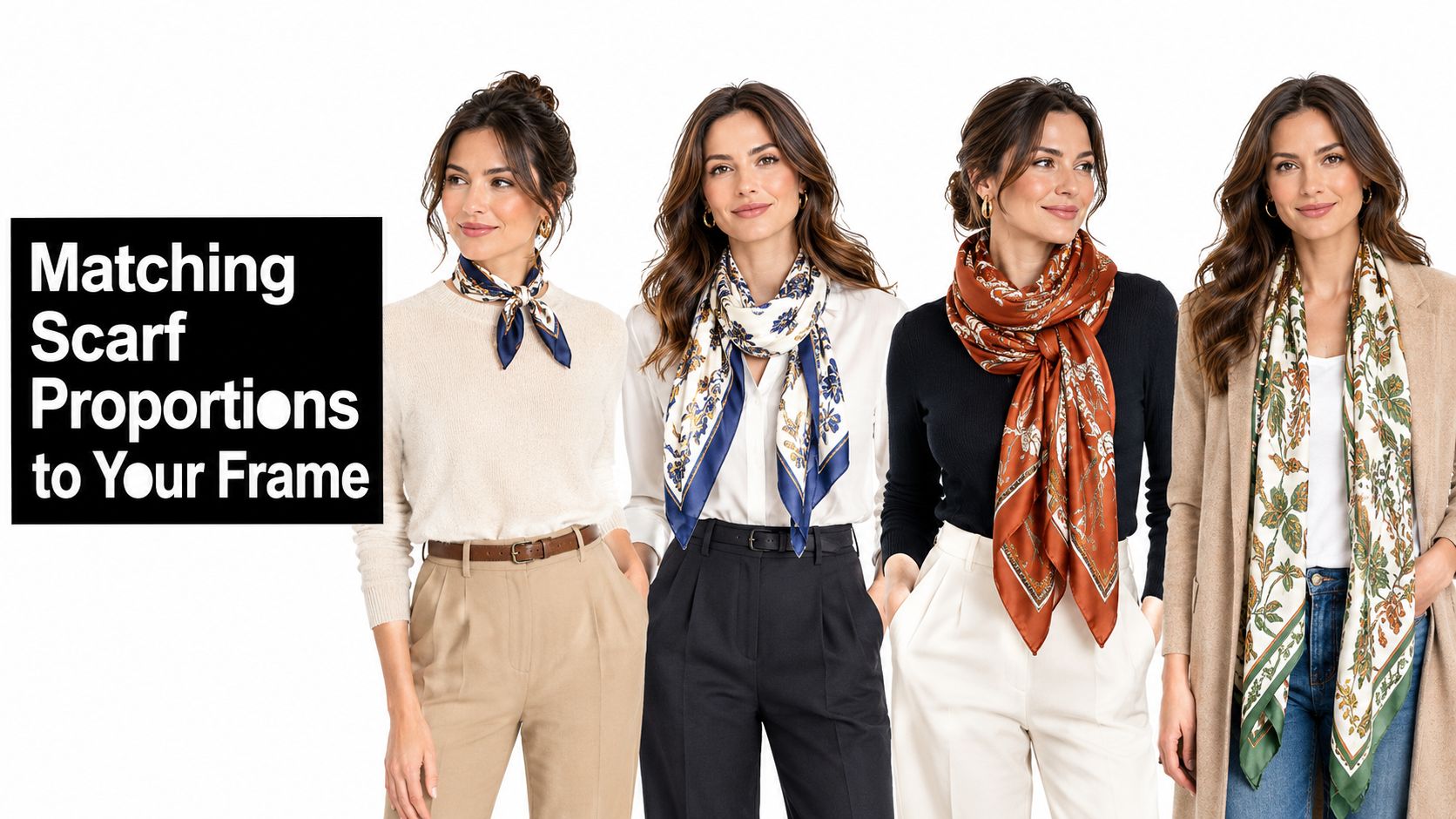
The biggest styling mistake is treating every faux fur scarf like it belongs on every body in the same way. It doesn't. A voluminous scarf can lengthen one person and overwhelm another, and the difference usually comes down to shoulder line, torso length, and where the eye stops.
Keep the line honest
For petite or narrow-shouldered wearers, the safest move is a vertical, elongated drape. Let the scarf fall long over a structured coat, or tuck it neatly inside the lapel so it creates a clean stripe down the front. That avoids the boxy effect that makes smaller frames disappear into the accessory.
Broader-shouldered or taller wearers can usually carry more structure. A single wrap, or a drape over one shoulder like a stole, adds presence without forcing the torso wider. Curvier frames usually look sharpest when the scarf stays closer to the neckline and the pile isn't overly bulky.
Keep the volume where the face can enjoy it, not where the middle of the body has to absorb it.
The most useful trade-off is this, volume brings drama, but verticality brings polish. If you want the scarf to feel office-ready, that vertical line matters even more. Our inclusive sizing notes speak to that same reality, because real bodies need more than generic drape advice.
Why fit changes the feeling of the whole outfit
A scarf that sits too low on the chest flattens the upper body and can make the coat look heavy. A scarf that hangs with intention, especially over a long wool coat or trench, gives the outfit structure. That's why bespoke clients ask for placement guidance as often as they ask for length.
For readers who like seeing the shape changes play out visually, the video is worth studying alongside the image. The key is simple, keep the scarf aligned with the body you have, not the body a trend board assumes.
Three Elegant Ways to Knot and Drape
A good scarf knot should look inevitable, like it settled itself into place. The best methods don't just hold warmth, they create a clean edge around the face and stop the pile from wandering all over the coat. That's especially important with faux fur, because too much motion can turn plush texture into visual noise.
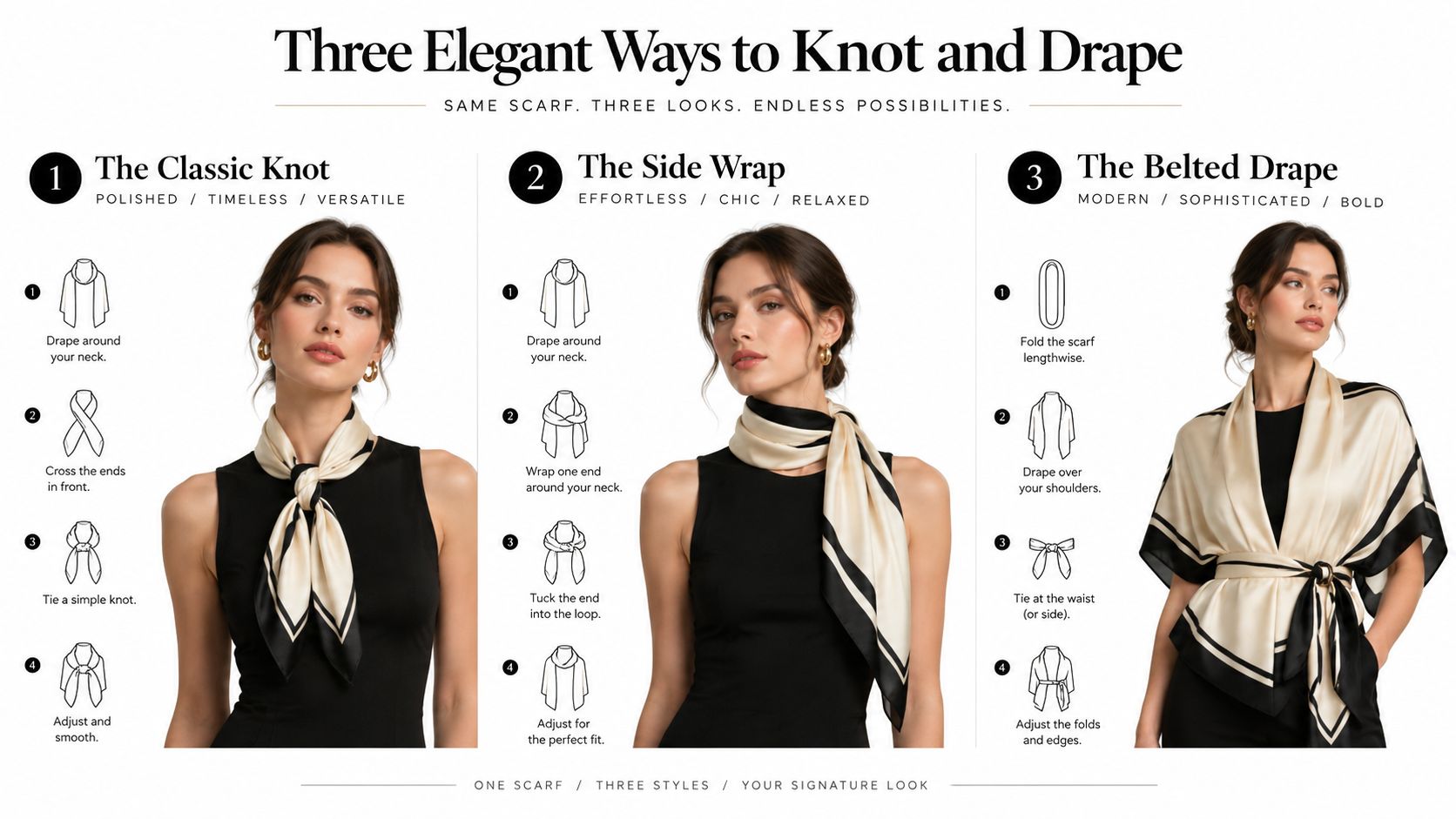
The seamless loop
Start with the scarf at the back of the neck, one end longer than the other. Wrap the longer end loosely once, then tuck both ends underneath so the front reads like a soft collar.
This is the cleanest option when you want the scarf to stay close to the neckline. It works well with structured coats because it keeps the visual mass centered and controlled. The result is warm, tidy, and a little more formal.
The effortless shoulder drape
Let the scarf hang over one shoulder, then secure the waist with a coat belt if you want definition. That little point of pressure keeps the fabric from sliding and gives the silhouette some intention.
This version is useful when you want movement without fuss. It has a relaxed, almost bohemian feel, but the belt keeps it from looking accidental. I like it most on long coats because the vertical lines stay intact.
The loose wrap
Wrap the scarf once around the neck and leave the ends soft, not tight. You want the pile to sit substantial and cozy, not compressed.
This is the warmest-looking option, and it's the one most likely to read as full winter luxury. It does demand balance, though. If the coat is already heavy in the shoulders, keep the wrap light so the upper body doesn't close in.
For a deeper look at statement silhouettes, our statement scarves guide pairs well with these techniques. The styling principle is the same in every case, keep the shape readable.
Styling for Every Occasion from Commute to Evening
A faux fur scarf earns its keep when it moves through the day with you. On the commute, it should defend you from rain, wind, and cold platforms without fighting your coat. In the office, it should calm down enough to look deliberate beside a blazer or wool outerwear.
Commute, office, evening
For commuting, pair the scarf with a weather-resistant coat and keep the wrap simple. A rich-toned scarf gives the outfit depth, while the coat handles the weather so the scarf can stay visible and plush. That division of labor matters in Seattle, where a scarf that gets buried under a hood rarely feels worth wearing.
At the office, structure wins. A neat tuck at the neckline or a short loop against a blazer reads more professional than a large, loose wrap that keeps slipping off one shoulder. If you want a useful textile reference while thinking about edge treatment and pile, the faux fur trim guide is a smart outside comparison point.
In the evening, let the scarf become the focal point. Pair it with a sleek dress or well-cut trousers, and keep the rest of the look quiet enough for the texture to do the work. One tactile piece is usually enough.
Studio note: the most wearable outfits usually have one dominant texture and one supporting texture, not three competing ones.
If you want a practical office-to-evening comparison from our own archive, the business casual winter guide covers the same principle in colder-weather terms. We also think of faux fur scarves as one of the easiest ways to move from weekday to dinner without changing the whole outfit.
Preserving the Plush Texture of Your Scarf
Heat will ruin faux fur faster than almost anything else. The fibers can melt or fuse, which leaves the pile flat, uneven, and permanently damaged. That means no tumble drying, no radiators, no hot hairdryers, and no hot wash cycles.
Care that protects the loft
Air dry the scarf away from direct heat after cleaning. Once it's fully dry, brush it gently to bring back the loft and separate the fibers.
That routine sounds simple because it is. It's also the difference between a scarf that stays velvety and substantial and one that turns limp after one bad drying mistake. If you'd rather outsource the cleaning than manage it at home, affordable drycleaning services can be a practical fallback for pieces that need extra care.
The same caution applies if you're tempted to steam it aggressively. A little patience preserves the texture far better than speed, and that matters for a luxury textile you want to keep in rotation. Our steam care notes are worth a read before you improvise with heat.
Find Your Perfect Handcrafted Fit
At Pandemonium, we make accessories in our Seattle studio in small batches, and that changes the fit conversation completely. With more than 25 years of design experience through Leigh Young's legacy, we build for real heads, real shoulders, and real weather, not an abstract mannequin.
Why custom matters with scarves
A faux fur scarf can be cut, looped, or proportioned to behave very differently on one body than on another. That's why custom sizing matters. Our team also works in a your fabric, our expertise model, which lets a piece land where it should instead of forcing the wearer to adapt.
We're drawn to cruelty-free luxury because it gives the tactile drama without the ethical compromise. In practice, that means the scarf can stay plush, weather-ready, and office-friendly at the same time. It also means the piece can be made with the wearer's neckline, coat collar, and shoulder width in mind.
If you're comparing options, look for these signs of good construction:
- Hand-sewn seams that keep the pile smooth instead of puckering.
- Small-batch consistency that doesn't flatten the texture.
- Fabric choice that suits how you dress in winter.
- Custom placement so the scarf complements, rather than crowds, your coat.
We work with pieces that include scarf styles designed to loop, drape, and sit cleanly at the neck, and that practical range matters when the weather turns wet. A well-made faux fur scarf should feel substantial, look architectural, and still move easily.
If you're ready to find one that suits your frame and your climate, explore Pandemonium Millinery for a hand-sewn, small-batch piece that fits the way you dress in Seattle, not just the way a trend board poses it. Join The Crowd for 15% off while you're there, and choose a scarf that brings plush warmth, clean proportion, and cruelty-free luxury into your winter rotation.


