



You're standing at the entryway with a gift in your hands, and the moment already feels more important than the object inside. The box is substantial, the ribbon is silky beneath your fingers, and nothing crackles with disposable plastic. When the recipient lifts the lid, a plush faux fur accessory rests inside an intentional interior, ready to be worn, remembered, and used again.
That's the promise of well-considered luxury gift boxes. They don't need excess to feel special. They need proportion, protection, beautiful materials, and a clear relationship between the gift and the person receiving it. For ethical shoppers, the presentation should also reflect slow-fashion values, cruelty-free luxury, and respect for the resources used to make every component.
The Art of the Ethical Unboxing Experience
A guest at our Seattle studio often begins with the box. Their fingers feel the weight, the ribbon sliding across linen, and the quiet resistance of a lid fitted with care. Inside, a hand-sewn accessory rests with room around its shape, ready to leave the box in perfect condition.
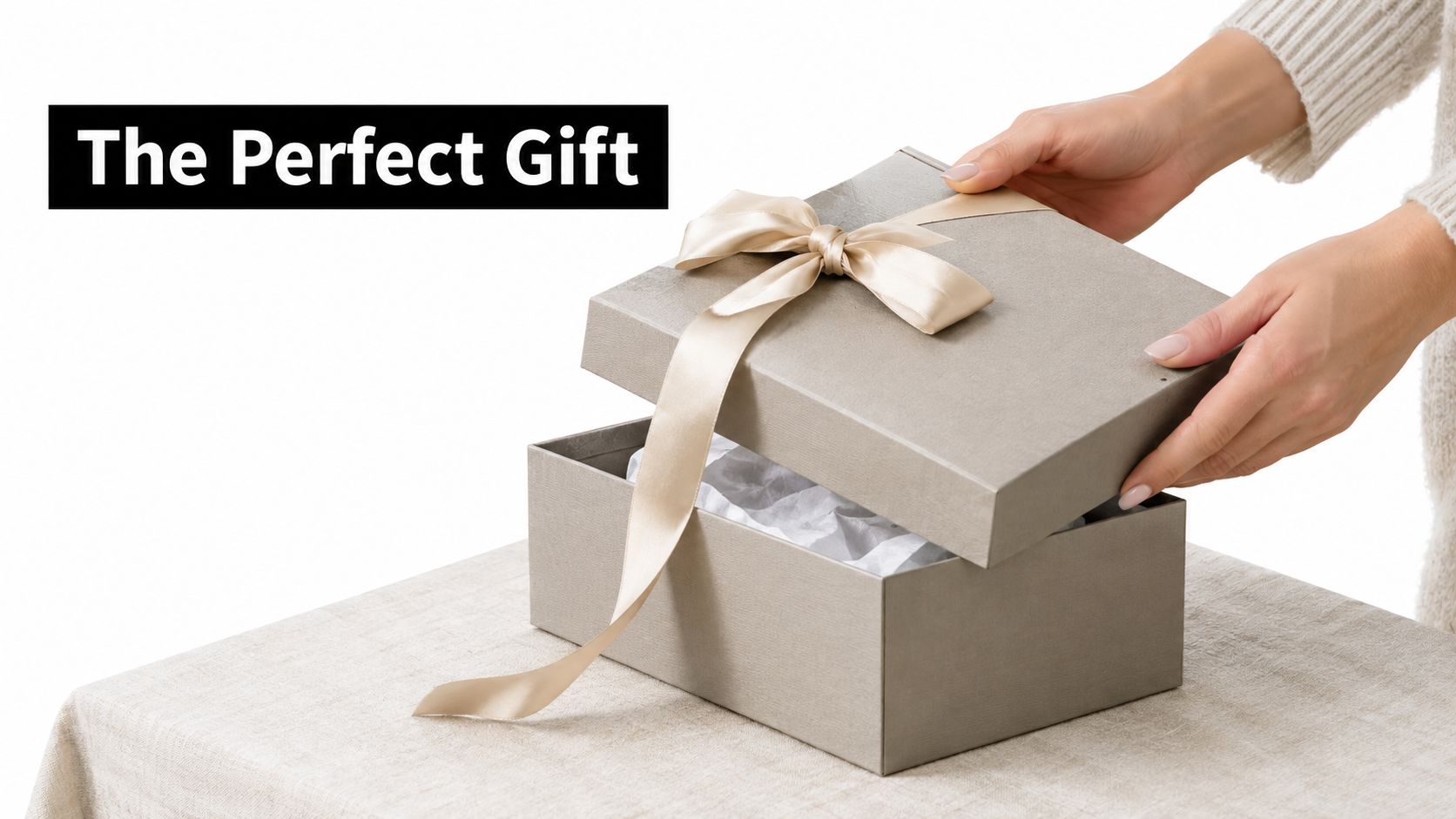
The box continues its work after the first opening. Rigid walls can hold a hat between occasions, a textile wrap can return to a drawer, and a paper insert can be separated for recycling once the accessory is safely settled. Reuse keeps the presentation connected to the object rather than reducing it to a delivery layer.
That choice reflects slow fashion. A luxury accessory may involve careful cutting, hand-sewing, fitting, and finishing. Its packaging should carry the same respect for materials, time, and cruelty-free craftsmanship.
Where craftsmanship begins
At our Seattle studio, presentation follows the principles of millinery. Small-batch production, tactile materials, and thoughtful construction make each opening feel personal rather than standardized. Leigh Young's 25+ years of design experience guide the process, from the first silhouette to the final fold of tissue.
A well-made package frames the item. A rich-toned box can give a classic hat an architectural presence, while a soft interior offers plush faux fur a calm place to rest. The proportions matter as much as the decoration.
A carefully chosen food or beverage detail can complete the presentation without crowding it. These sugar-free kombucha gift ideas show how an intentional consumable can accompany a tactile, reusable gift box.
A practical rule: The packaging should extend the story of the gift rather than hand the recipient a second story to manage.
The history of modern packaging offers a useful lesson in function and presentation. In 1890, Brooklyn printer Robert Gair discovered that paperboard could be scored and cut in one operation, helping manufacturers produce prefabricated folding cartons at scale. Later advances in corrugated board, folding, and die-cutting helped boxes protect products while communicating quality and occasion before opening.
Ethical brands can draw on that history while choosing longer-lasting materials and fewer unnecessary layers. The guidance in custom apparel packaging applies when a package must protect a hand-sewn item, look polished, and remain useful after the gift has been opened.
Materials and Textures That Define Luxury Gift Boxes
In our Seattle studio, the first clue is often under the fingertips. A flimsy carton flexes at the corners. A carefully engineered rigid box feels substantial, with clean edges, a controlled lid fit, and a surface that invites the hand to linger.
Board weight, described in points or gsm, shapes that first impression before the lid moves. A heavier sheet gives the shell a steadier presence, while precise wrapping keeps the corners crisp and the surface smooth. Construction matters as much as weight, since a dense board with a poorly fitted wrap can still feel unfinished.
The strongest presentation joins structure with softness. Thick paperboard provides a stable shell, while fabric lining or a shaped insert keeps a hat, scarf, or home textile from shifting. The result feels like a small room prepared for the object inside, with the lining holding the piece exactly where it belongs.
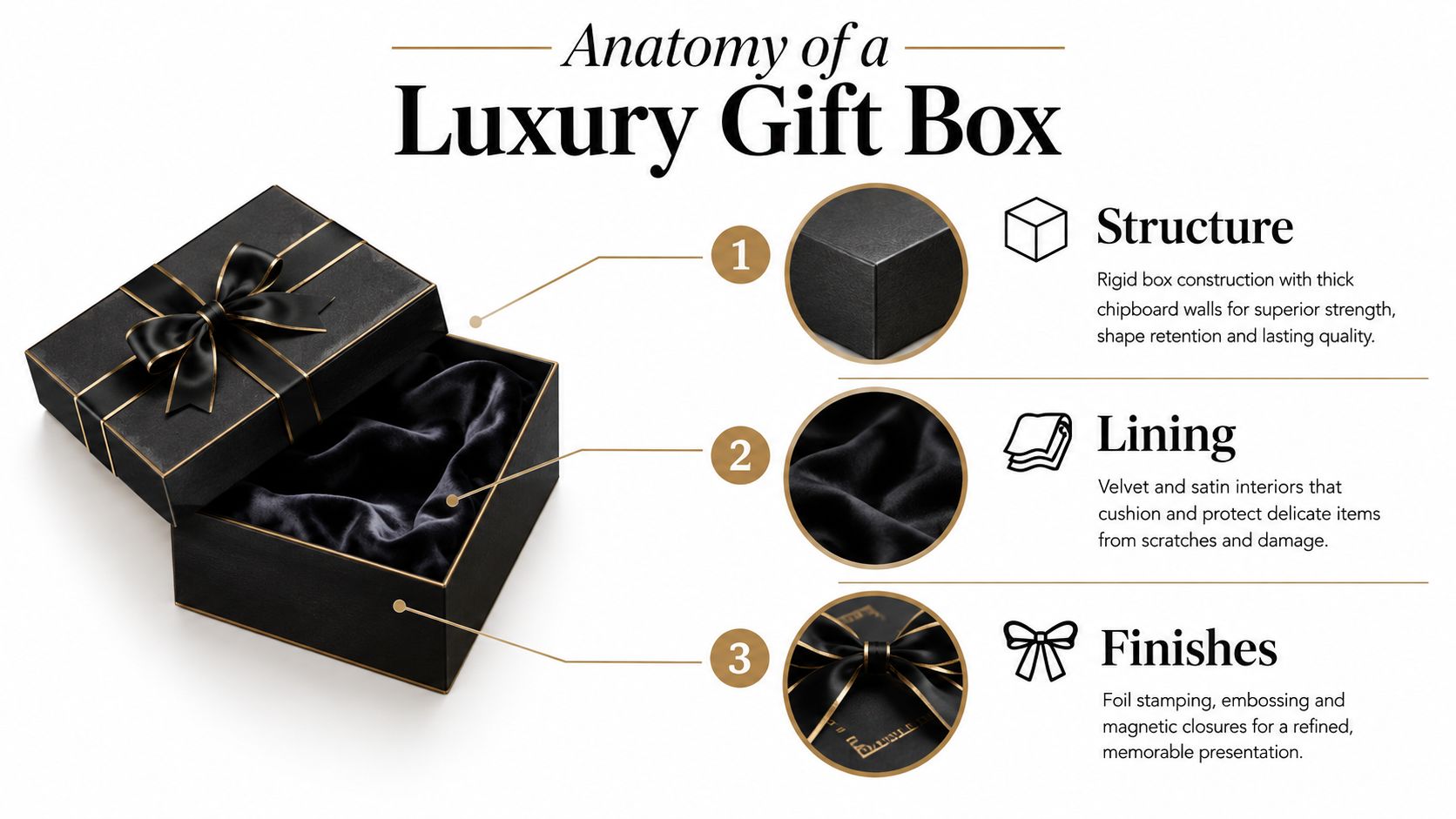
Structure, lining, and finish
A useful way to evaluate a gift box is to examine three connected layers:
- Structure: Rigid board gives the package dimensional stability and a more substantial hand-feel than lightweight folding stock.
- Lining: Velvet, satin, cotton, or a carefully selected paper surface can cushion the item and create soft visual contrast.
- Finish: Embossing, restrained foil, paper texture, ribbon, and a precise closure can add distinction without covering every surface in decoration.
For a plush accessory, the lining should support the item while preserving its pile. A shaped insert can keep a hat crown from collapsing, while a gentle wrap protects a scarf's rich surface from abrasion. Cotton ribbon and fiber-based papers introduce warmth without depending on petroleum-heavy decorative laminates.
A black box with a tactile uncoated sleeve, a narrow ribbon, and a clean embossed mark can feel more luxurious than a glossy package layered with plastic film. One shimmering finish gives the eye a clear point of rest.
The market helps explain this continued investment. The global luxury gift-packaging market is projected to reach approximately USD 30.18 billion in 2026, driven by premium presentation and consumers' willingness to pay for a more memorable gifting experience, according to market analysis of luxury gift packaging.
The material story beneath the surface
A box also communicates its values through what happens after the gift is opened. Recycled-content board, water-based or minimal coatings, and fiber-compatible inserts can support a reusable package suited to slow-fashion habits. A well-made box may return to a wardrobe shelf, storage cabinet, or desk rather than becoming a single-use layer.
The tactile choice should match the item. Tissavel vegan fur has a velvety, plush presence, so a rough, poorly finished insert may feel jarring. Softly textured paper, cotton tie, or satin-like lining creates a quiet dialogue between the box and the accessory. For a closer look at pile, hand-feel, and performance, this guide to types of faux fur fabric offers useful vocabulary for the selection.
A refined package needs considered contact points, from the edge of the board to the way the lid settles into place. That care lets the box remain part of the gift long after the first unboxing.
Curating Faux Fur Accessories for Every Recipient
A wet Seattle morning calls for a different gift than a quiet evening at home. Start with the recipient's habits, then choose the accessory and presentation together, so the box feels personal rather than mass-produced.
For a PNW commuter, select pieces that feel cozy, plush, and weather-resistant while keeping a polished silhouette. A faux fur ear warmer adds warmth without the bulk of a large winter hat. A statement scarf can travel from an outdoor commute to an office coat. Choose a rich neutral for a classic wardrobe, or a vibrant print for someone who treats accessories as punctuation.
A practical curation guide
- For the polished commuter: Pair a refined ear warmer with a statement scarf. Keep the palette coordinated, then let the pile or print provide visual interest.
- For the millinery admirer: Select a velvet-lined pillbox or sculptural hat. Shape the insert around the crown so the profile stays intact during storage.
- For the interior enthusiast: Choose a faux fur throw with a soft drape. A substantial textile can settle onto a sofa, reading chair, or guest room and remain useful beyond the season.
- For the treat-yourself pet parent: A reversible coat or bolster bed brings the same tactile language into the home. Match its tone to existing furnishings rather than treating pet design as an afterthought.
- For the hard-to-fit recipient: Begin with measurements and adjustment needs. A custom circumference or made-to-measure proportion can turn a beautiful gift into one that is actually worn.
The ethical case for vegan fur deserves precise language. Producing one kilogram of average mink, fox, and raccoon-dog fur requires five times as much water as one kilogram of cotton and 104 times as much as one kilogram of acrylic, according to an analysis commissioned by Humane World for Animals using publicly available Kering data. The comparison supports high-end faux fur as an ethical alternative to animal fur, while textile durability, care, and end-of-life choices still require honest consideration.
Texture can guide the final choice. A recipient who loves touch may appreciate a silky lining against a dense pile. Someone with a quieter style may prefer a classic shape in a neutral tone. A theatrical dresser might welcome a shimmering, architectural silhouette that makes the gift itself feel like an occasion.
Make the set feel discovered
Leave room around the hero piece. One hand-sewn accessory, a handwritten note, and a useful keepsake container can feel more generous than a crowded assortment of unrelated objects.
Personal details can enter through monogrammed faux fur accessories, especially when the gift should feel unmistakably chosen for one person. Build a visual rhythm with one dominant texture, one supporting tone, and one small detail that shows close attention to the recipient. The reusable box then extends the experience, moving from presentation to storage instead of becoming disposable packaging.
Sustainable Packaging Without the Guilt
In our Seattle studio, a finished gift may leave the worktable inside a rigid box, wrapped with care and designed for another life. The box protects a delicate hat, then stores it at home. A textile wrap can become a scarf-drawer accessory or a reusable cover. A paper insert can separate cleanly after unboxing instead of binding several materials together.
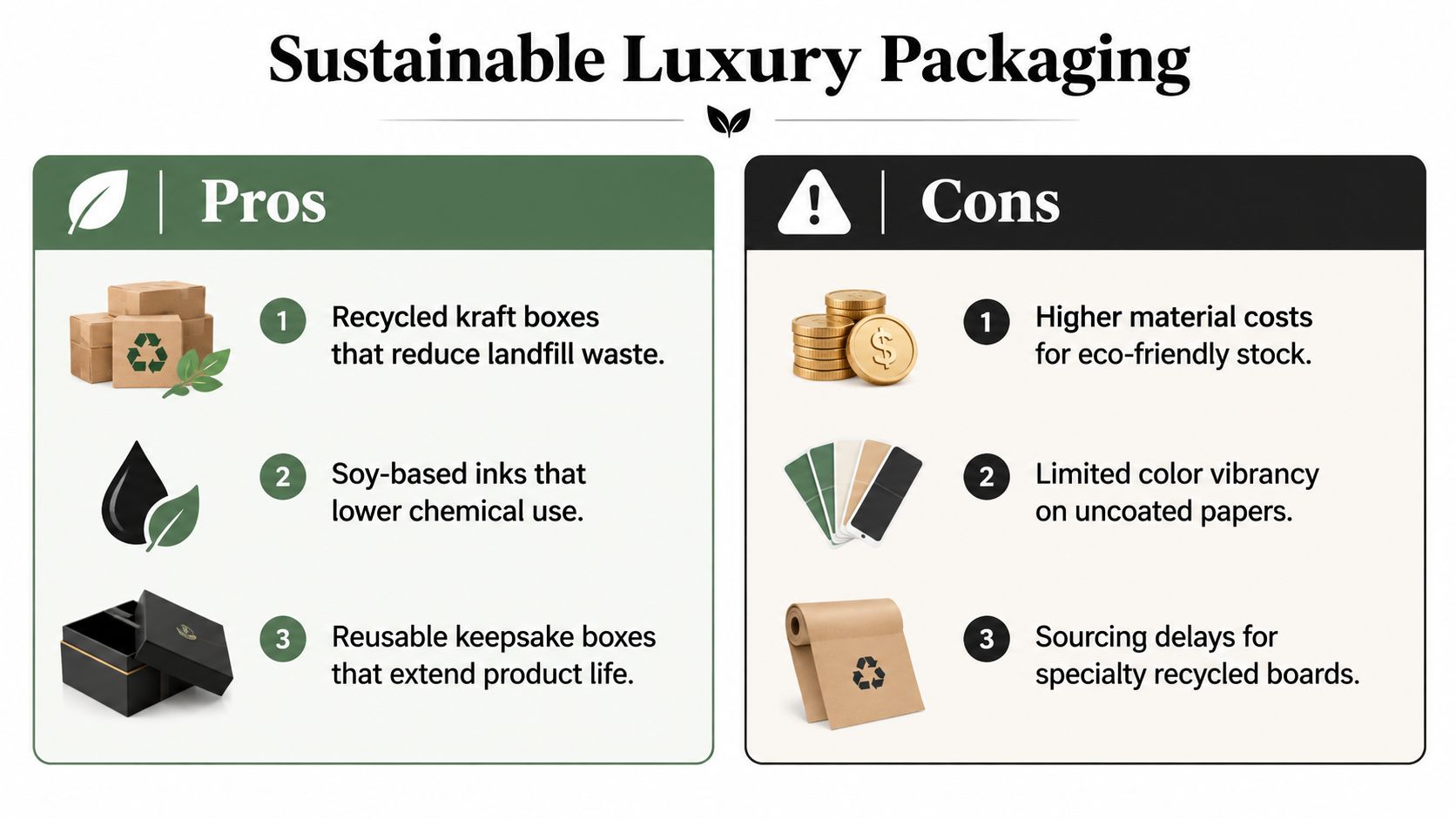
Choose fewer materials with clearer jobs
Begin with the item's real protection needs, then give every packaging component a clear purpose.
- For protection: Use a shaped insert that prevents lateral movement, rather than filling empty space with loose material.
- For presentation: Choose one tactile outer surface, such as textured paper or a soft textile wrap, and let its texture carry the visual interest.
- For reuse: Select a box with enough structural strength to store hats, scarves, or small personal items after the gift is opened.
- For recycling: Favor fiber-compatible components and make ribbon, lining, paperboard, and non-fiber details easy to separate.
- For transparency: State the recycled-fiber content, coating chemistry, board weight, and intended end-of-life route. An unsupported “eco-friendly” label explains little.
Fewer materials still require careful choices. A coating can improve moisture resistance while making fiber recovery harder. A vivid printed surface may need a different finish from uncoated paper. A lighter package uses less material, yet may lack the compression resistance required during parcel shipping.
Comparative research gives these choices useful context. A life-cycle assessment comparing paperboard, CPET, and recycled-PET trays found that the paperboard tray had a lower climate-change impact than the comparable plastic trays. Research discussed in this consumer perspective on sustainable paper-based packaging reported that using 75% recycled fiber reduced energy demand by as much as 41% and greenhouse-gas emissions by up to 11%, depending on fiber source, manufacturing energy, transport, coatings, and end-of-life assumptions.
The best sustainable package is the one whose materials, protection, reuse, and disposal route can be explained clearly, label or no label.
Plush accessories and home textiles still need thoughtful protection. Moisture, compression, and abrasion can change the look and feel of a pile. A responsible package should preserve the object's condition, not ask the product to arrive damaged in pursuit of a smaller box.
A carefully proportioned, reusable container keeps that balance in view. It respects slow-fashion values, avoids disposable presentation, and lets the pleasure of the gift continue through storage and future use.
The Power of Bespoke Customization and Personalization
In our Seattle studio, a gift may begin with a practical request: a crown deep enough to sit comfortably over the recipient's glasses, a sleeve adjusted for reach, or a lining changed from quiet neutral to rich jewel tone. A monogram can rest inside the piece, known only to the wearer. Each decision gives the object a reason to exist.
Customization that serves the wearer
Personalization earns its place when it answers a fit question, reflects a color preference, or gives the item a role in the recipient's existing wardrobe. A hat shaped for a specific head circumference feels different from an interchangeable accessory because its proportions follow one person.
At a Seattle studio, “your fabric, our expertise” describes a conversation rather than a fixed menu. The gift-giver or recipient may bring a material, reference, or half-formed idea. The maker then considers proportion, construction, millinery, and everyday wearability before turning that direction into a finished piece.
The same care changes the unboxing. The box holds an object made for a particular person, so a reusable container suits it naturally. After the gift is opened, the box can protect the piece between occasions and remain useful long after the first celebration.
A 2025 customization-statistics review estimated that 18% of luxury-goods buyers consider customization a decisive purchase factor, with global personalized-gift sales projected to reach $54.15 billion by 2033, as reported in this review of customization statistics. Those figures reflect a familiar experience at the worktable: personalization is part of the value the recipient receives, from fit to finish.
Where the process becomes personal
A useful consultation can begin with a few grounded questions:
- How will the piece be worn or used? Daily commuting, occasional events, home styling, and pet comfort each call for different construction choices.
- What should the recipient feel? Cozy warmth, silky softness, architectural drama, or quiet classicism can guide texture and silhouette.
- What needs to fit? Head size, sleeve length, storage space, and existing furniture dimensions all affect the final result.
- What should last? Durable construction and a design suited to more than one occasion make a gift easier to keep in rotation.
For modifications and curated decisions, bespoke alterations show how a thoughtful adjustment can turn an attractive accessory into a dependable favorite.
Bespoke judgment appears in small choices. A maker may refine crown depth for glasses, adjust an edge for balance, or alter an interior finish so the piece feels comfortable through repeated wear. The result is a gift whose beauty continues in use, with personalization carried through every stitch and proportion.
Shipping Handcrafted Luxury Safely and Beautifully
The last test of a gift box happens after it leaves the worktable. A velvet-lined hat can look flawless in the studio, yet arrive with a compressed crown if the outer package flexes, the insert shifts, or the item travels without enough support.
Shipping design should therefore begin with the fully assembled pack, not an empty carton. Place the actual faux fur accessory inside its actual insert, close the box, and evaluate how the materials behave under stacking, vibration, humidity, and handling.
Protect shape, pile, and presentation
A protective insert should prevent lateral movement without crushing the item. For a velvet-lined pillbox, that may mean supporting the crown and brim while leaving the visible surfaces untouched. For faux fur, the interior should preserve pile direction and prevent trim from rubbing against hard edges.
A rigid outer mailer adds another layer of protection, but it should be sized with care. Too much empty space encourages movement. Too little space transfers pressure directly to the gift.
The packaging can be assessed against ASTM D642, a relevant benchmark for determining the compressive resistance of shipping containers. The method measures force and deformation to help designers compare board grades, corner construction, lid fit, and internal supports before setting a conservative stacking limit, as described in this guide to compression resistance for shipping containers.
Final inspection: Open the package as the recipient will, then check the item's shape, pile direction, trim, lining, and overall presentation before sealing it.
The same care that protects a gift in transit should make the package pleasant to unpack. Clear end-of-life instructions can sit beneath the lid. A reusable box can be chosen for its next purpose. The recipient should find no unnecessary barrier between the object and the experience.
For a broader look at giftable, hand-sewn pieces designed with presentation in mind, custom apparel gifts provides a useful starting point. The principle remains consistent: local craftsmanship deserves packaging that carries the work safely and presents it with dignity.
At Pandemonium Millinery, our Seattle studio brings together small-batch millinery, high-end faux fur, bespoke sizing, and cruelty-free luxury. Join The Crowd for 15% off and discover how a reusable, tactile presentation can make a hand-sewn gift feel even more personal, then explore Pandemonium Millinery for distinctive accessories, apparel, and home pieces made to be enjoyed beyond the unboxing moment.


