



The moment usually arrives at the front door. You're dressed for the office, the ferry, or a damp walk through Seattle, and your hat is doing more than completing the outfit. It's keeping rain from your hair, adding warmth, and holding its shape while you move. A well-chosen set of custom hat bands can make that hat feel secure, personal, and properly finished rather than decorated.
At our Seattle studio, we approach a hat band as a small piece of millinery engineering. The material, width, curve, attachment, and adjustment all affect how the hat wears. With more than 25 years of design experience, our team combines hand-sewn technique with cruelty-free luxury, including high-end faux fur, velvet, grosgrain, and other tactile textiles.
The History and Heart of Hat Bands
A hat band can change the entire character of a familiar hat. A restrained grosgrain strip makes a felt fedora feel polished and architectural. A braided texture gives a broad-brimmed style a more rugged, substantial presence. A shimmering or rich-toned textile can turn a quiet winter hat into the focal point of an outfit.
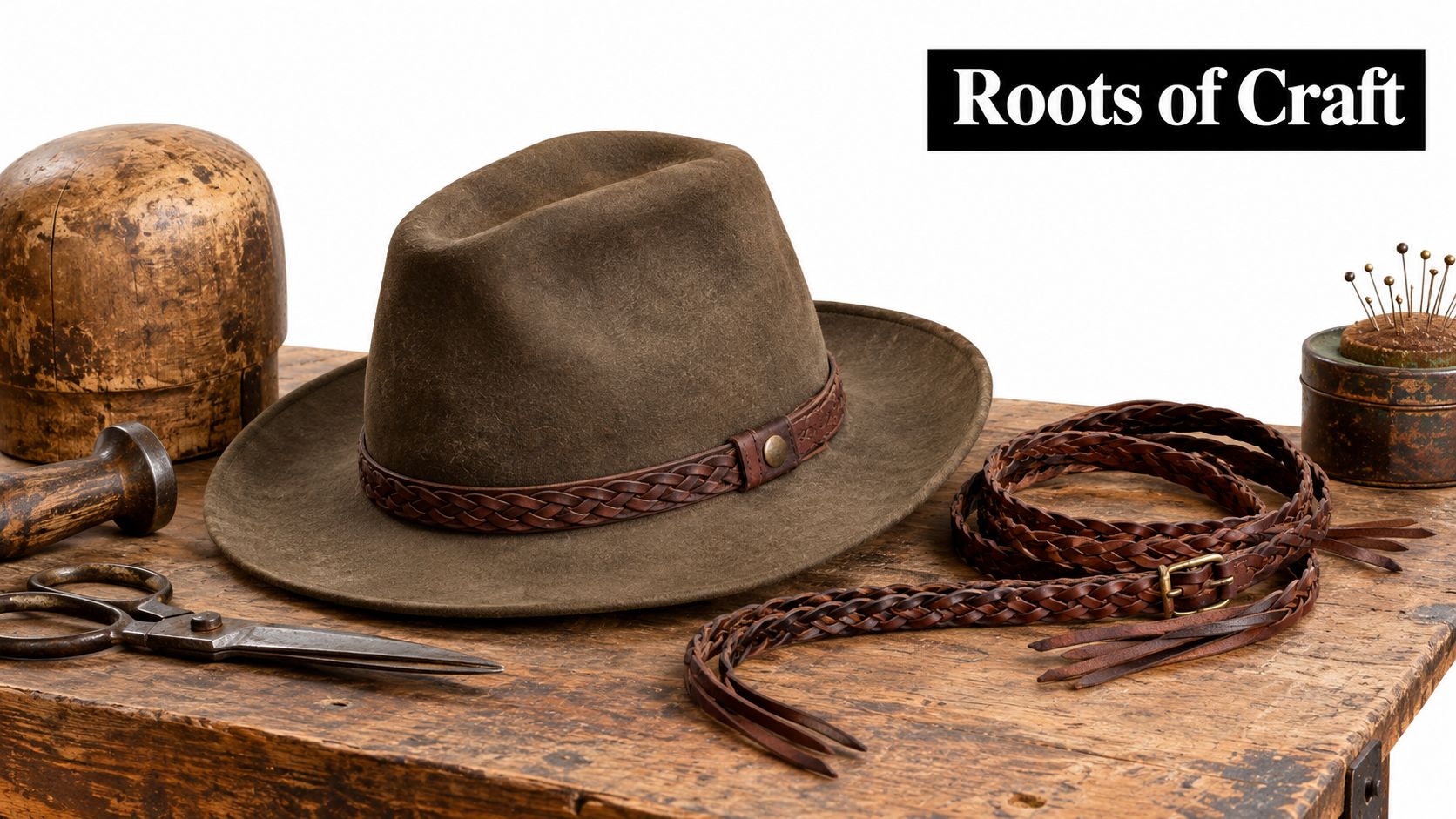
The practical origins of hat bands matter because they explain why fit and durability still deserve as much attention as appearance. According to a detailed history of hat bands and their construction, hat bands emerged as structural reinforcements in the 17th century, when early Spanish vaqueros used braided rawhide strips to help keep felt crowns from collapsing in desert heat.
From working gear to visible style
By the 1880s, American cattle drives had standardized leather bands measuring 1.5 inches wide, with copper rivets spaced at 12 mm intervals. The same historical source states that these bands were designed to withstand winds of up to 45 mph while mounted, a useful reminder that early hat bands had a job beyond ornament.
That working history is close to the way we handle materials in our small-batch production. A band should sit neatly against the crown, remain comfortable during movement, and support the visual proportions of the hat. Decorative choices work best after those practical decisions are settled.
Hat bands also have a long history as fashion objects. A separate account of the changing role of historic hatbands notes that they became fashionable in the sixteenth century, reached a high point in jewelled forms during the late Elizabethan and Jacobean periods, and declined toward the end of the seventeenth century as hat styles changed.
Studio principle: Decoration lasts longer in the wardrobe when it begins with a sound structure.
By the second half of the seventeenth century, hat decoration increasingly shifted toward feathers, cockades, and brim edging because those details were more visible than the band itself. We see the opposite opportunity today. A custom band can be subtle, but it can also provide the exact contrast a classic hat needs.
At our local studio, we draw from both traditions. The working band gives us lessons in resilience, while the history of ornament encourages us to use color, texture, and ethical alternatives with confidence. Our approach to the evolution of fur and faux fur garments follows the same line of thinking. Luxury should feel rich and expressive without relying on animal fur.
Measuring for a Perfect Custom Fit
A beautiful band that fits poorly will reveal itself quickly. It can twist, pucker, slide below the crown, or create a distracting ridge where the hat should feel smooth.
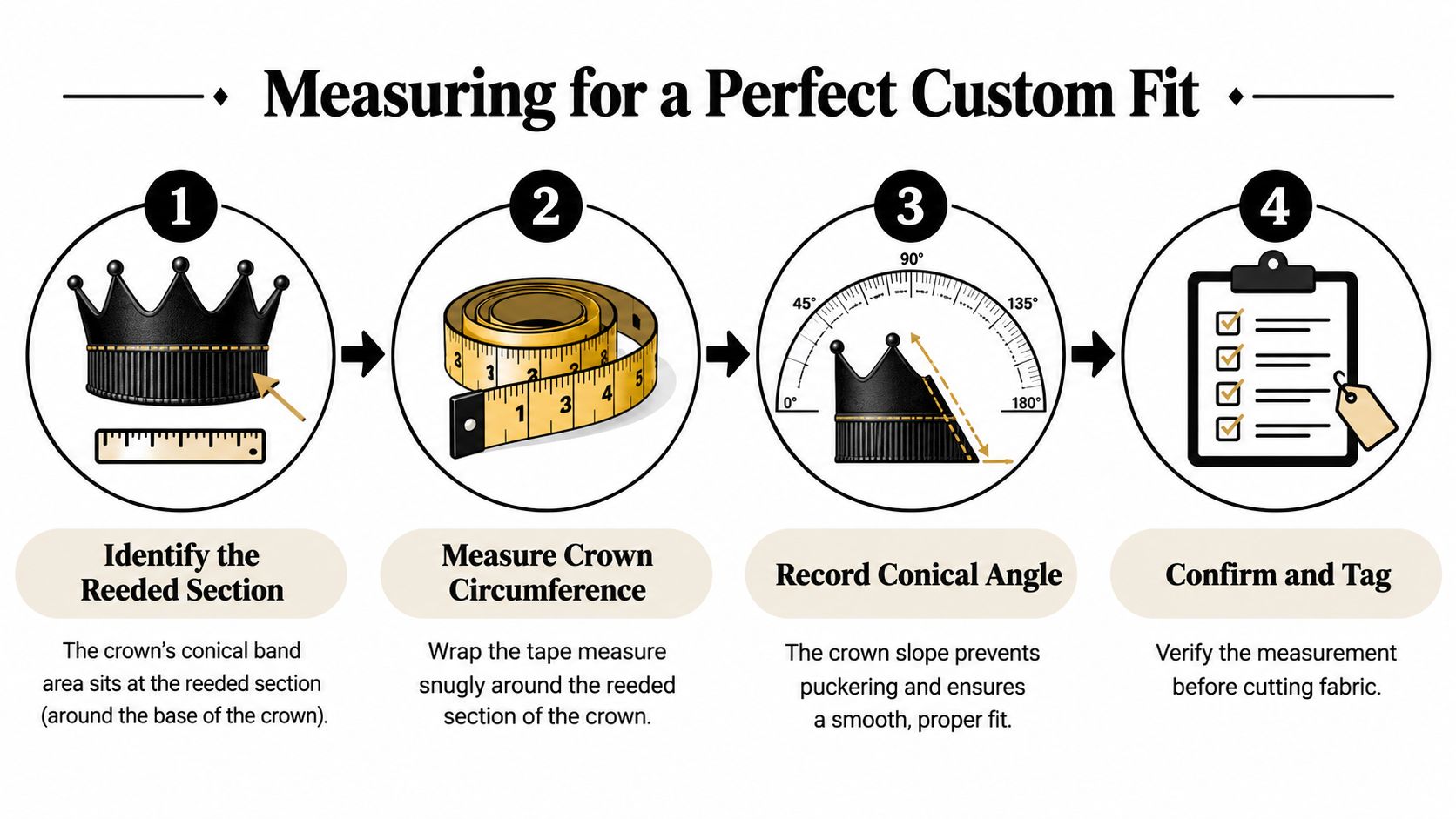
We measure the reeded section, the narrowest part of the crown just above the brim, rather than assuming the lower circumference is the correct measurement. Hat crowns have a conical geometry, so the top edge of a band needs to follow the slope of the crown. Cutting it as though the crown were a straight cylinder is a common cause of poor seating.
Four measurements that prevent trouble
- Identify the reeded section. Find the narrow band of crown immediately above the brim. The hat band should sit here, not necessarily at the widest point at the bottom.
- Measure the crown circumference. Wrap a flexible tape snugly around the reeded section. Keep the tape level and avoid pulling it so tightly that it compresses the felt or textile.
- Record the conical angle. Note how sharply the crown slopes from the reeded section toward the top. The band's upper edge must accommodate that angle or it may pucker.
- Confirm and tag the measurement. Write the measurement directly on a paper pattern or tag before cutting fabric. A second check is much easier than correcting a band that has already been trimmed.
For readers who want another practical reference before cutting, this hat band measurement guide offers useful context on taking measurements and considering the crown shape. We use the same basic discipline in our own small-batch work, especially when a client needs a size outside a standard range.
Fitting an adjustable band
For an adjustable band, the attachment method also affects the final fit. A millinery supply guide recommends pinning the single selvedge edge about 1/4 inch from the lower inside edge of the crown, trimming the band to fit, tucking the unfinished end under, and then machine sewing or hand-basting it in place before pulling the ribbon string to adjust the size. Those measurements and steps are detailed in the adjustable hat band instructions.
Metal headbands can be custom-bent and shortened, while wire headbands can be shaped into different forms. When additional support is needed, the center can be filled with horsehair so hairpins can pass through it. These options are particularly useful when the band is intended to sit around, rather than permanently attach to, the crown.
Our broader guide to measuring hat size is a helpful companion when you're choosing the hat itself. For a bespoke order, we can work from your measurements, your existing hat, or your fabric. Our service promise is simple: your fabric, our expertise, with custom sizing for smaller, larger, or unusually shaped fits.
Choosing Materials for Climate and Comfort
Material choice should begin with the conditions your hat will meet. A band for a warm commute has a different job from one designed for a cold evening, a formal occasion, or a hat that spends most of its time indoors.
Cotton terry and cotton twill are practical choices when breathability and sweat absorption matter. Their surfaces feel familiar and relatively easy to live with, making them suitable for active days or warmer settings. Beaded, hemp, and faux-leather bands can create beautiful texture, but available guidance also identifies them as more fragile or more likely to slip during daily use.
Our guide to types of faux fur fabric provides a useful starting point for comparing pile, hand, and visual texture. High-end faux fur can bring a velvety, plush finish to a winter hat, especially when you want a weather-resistant and cozy impression without using animal fur.
Match the material to the day
| Wearing condition | Material direction | What to watch |
|---|---|---|
| Warm or active commute | Cotton terry or twill | Prioritize breathability and easy cleaning |
| Cold-weather city dressing | High-end faux fur or another plush luxury textile | Keep the band secure and protect the pile from unnecessary moisture |
| Formal styling | Grosgrain, velvet, or carefully finished embellishment | Check that the surface supports the hat rather than overpowering it |
| Rustic or western-inspired wear | Leather alternative, hemp, or textured braid | Test for slipping and inspect the finish before regular use |
Width is another build decision, not an afterthought. A made-to-order listing offers bands in 1/2 inch, 3/4 inch, 7/8 inch, and 1 inch widths, showing how commonly custom makers treat width as a core part of the design rather than a generic specification. You can review those width tiers in this custom beaded hatband listing.
A narrower band can keep a small crown looking light and refined. A wider band can balance a broad brim or provide more visual weight on a substantial felt hat. The right choice depends on the hat's proportions, your features, and how much contrast you want.
For a leather-centered reference, the western vine leather hat belt from Bridle Up Hope shows how tooling and a substantial surface can become the dominant character of a hat. We often recommend making that decision deliberately. If your hat already has a strong crown shape, a quieter band may let the architecture speak.
Luxury also includes sensory performance. A band should feel silky or weightless when the hat is light, substantial when the hat needs grounding, and plush when the climate calls for coziness. That's where vegan fur and other ethical alternatives offer a compelling balance between expressive texture and cruelty-free design.
Attaching and Adjusting Your Band
Attachment begins with alignment. Place the band against the crown and check the position from the front, sides, and back before making a permanent stitch. A band that looks centered from one angle can climb or dip when the crown slopes.
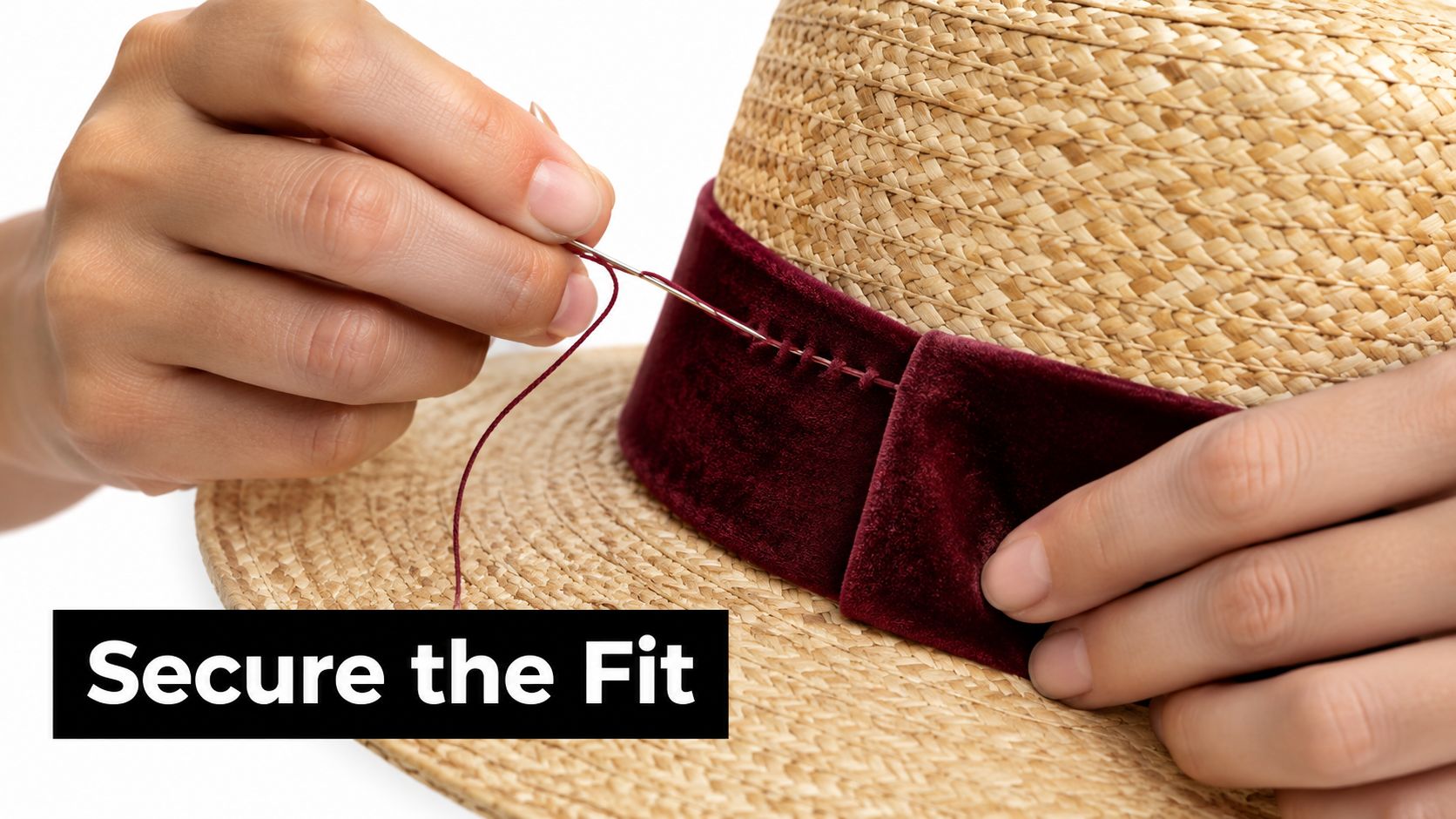
Pin the single selvedge edge about 1/4 inch from the lower inside edge of the crown. Trim the band to fit, tuck the unfinished end under, and secure the placement with temporary stitches. You can use a machine for speed, but hand-basting gives you more control while you check the curve.
A cleaner sequence
- Set the front first. Find the visual center of the crown and place the band without stretching it.
- Follow the slope. Let the top edge track the reeded section. Don't force a straight strip around a tapered crown.
- Trim conservatively. Remove excess only after the band has sat in place without tension.
- Tuck the end. A folded finish keeps the cut edge from fraying and gives the attachment a more substantial appearance.
- Secure the final seam. Use small, even hand stitches where the material deserves a discreet artisanal finish.
Practical trim advice for fabric projects can help when you're working with a textile that ravels, has a directional pile, or needs a neat enclosed edge. Faux fur deserves special care during trimming because cutting through the pile can leave a visibly blunt line.
For an adjustable band, pull the ribbon string gradually until the band feels secure without compressing the crown. The adjustment should hold the hat comfortably during movement, not create a tight ridge against the head.
We use hand-sewn details when the finish calls for patience and precision. Metal and wire headbands can also be shaped or shortened to suit a specific hat, and our custom sizing service is useful when ready-made bands don't accommodate your proportions. If you're working with your own textile, your fabric, our expertise allows the material's color, nap, and weight to guide the construction.
Styling and Caring for Your Custom Band
A custom band can act as the bridge between a hat and the rest of an outfit. Match a velvet or faux fur texture to a handbag, scarf, coat collar, or pair of gloves for a cohesive look. The effect can be quiet and classic, or it can be vibrant, shimmering, and deliberately architectural.
Color matching doesn't require an exact duplicate. A rich-toned band can echo a darker accent in a print. A neutral band can calm a dramatic hat. If the hat has a strong brim, a restrained band often creates better balance than adding several competing details.
Build a small rotation
One hat can serve several moods when the band is removable or adjustable.
- For everyday polish, choose a smooth grosgrain or understated velvet.
- For winter texture, use a plush high-end faux fur with a cozy, tactile pile.
- For a statement look, select a shimmering embellishment or a vivid textile that contrasts with the crown.
- For practical travel, choose a band that can be adjusted and cleaned without complicated handling.
Care begins with the surface. Brush faux fur gently with a soft-bristle brush to keep the pile velvety and plush. Avoid excessive moisture unless the textile is designed to be weather-resistant, and if the band becomes damp, let it air dry away from direct heat.
Heat can distort fibers, flatten pile, or affect the shape of the crown beneath the band. Store the hat in a way that doesn't crush the trim, and keep embellished bands away from rough hooks or abrasive surfaces.
Our guide to caring for velvet offers related guidance for protecting delicate pile and maintaining a rich surface. The same principle applies here: gentle handling preserves the hand of the textile.
The texture can also carry into the home. Coordinated reversible coats and bolster beds can extend a plush, hygge-inspired feeling to a pet's space, while a hat band keeps the idea personal and wearable. That continuity is part of ethical luxury. You're choosing fewer, more considered pieces and learning how to keep them beautiful.
Why Choose Bespoke Seattle Craftsmanship
A hat that slips during a damp commute, presses against an unusual head shape, or loses its balance under a heavy trim needs more than decoration. A custom band can steady the crown, manage warmth and moisture at the head, and make the hat comfortable enough for regular wear. Bespoke work earns its place by solving details that ready-made accessories often overlook.
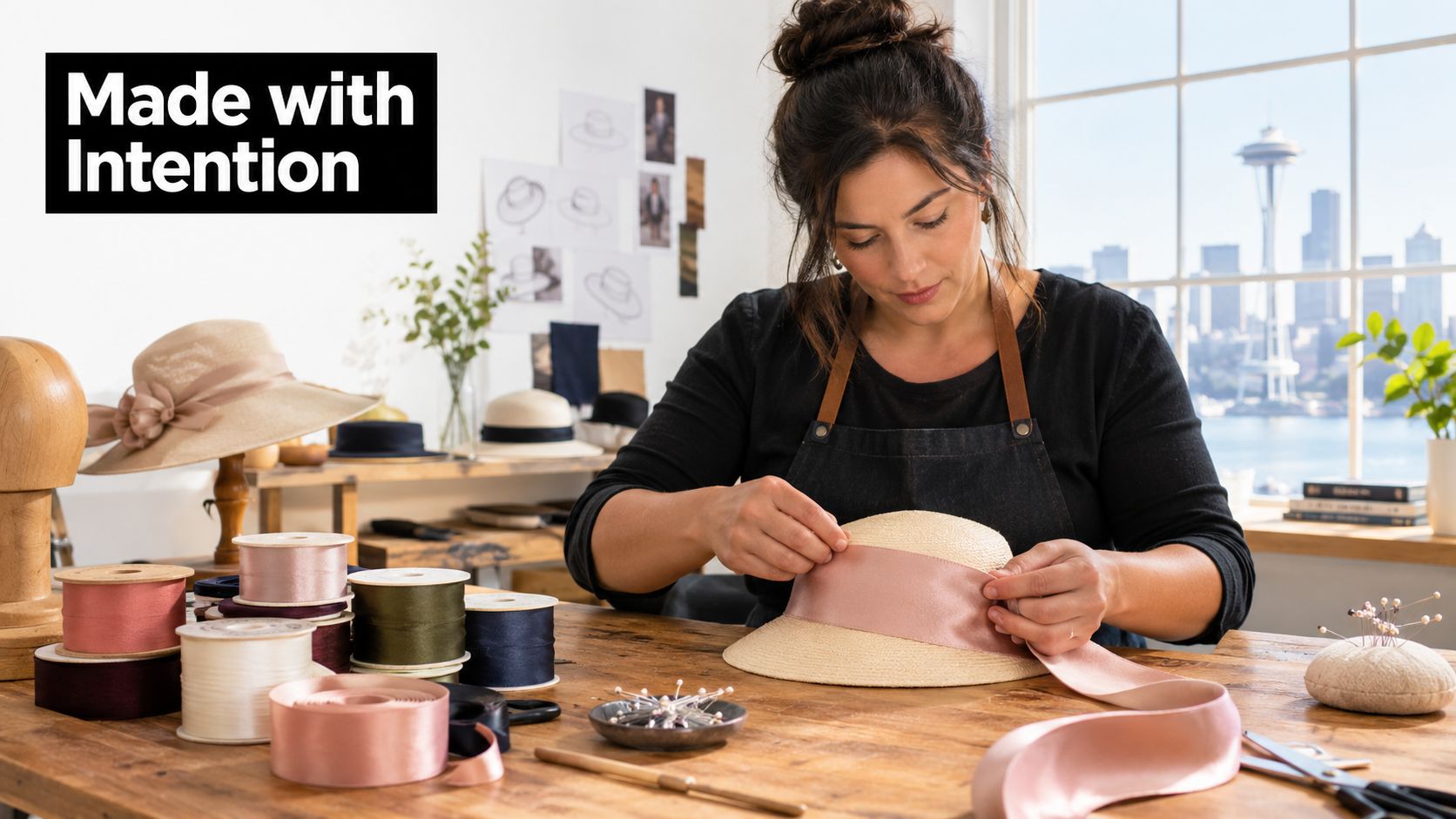
Our Seattle studio works in small batches, shaping millinery and hand-sewing faux fur accessories with close attention to how each material behaves. Founded by designer Leigh Young, the practice reflects 25+ years of design experience and a commitment to cruelty-free luxury. High-end faux fur, vegan fur, Tissavel, velvet, and other luxury textiles provide warmth, texture, and visual richness without animal fur. Those choices support a more considered form of ethical luxury, where durability and responsible material selection guide the design.
What a studio can resolve
A ready-made band works well when its dimensions, tension, and textile suit the hat. Custom work becomes more useful when you need:
- Custom sizing for a larger, smaller, or nonstandard head measurement.
- A shaped fit that follows a conical crown without puckering or pulling.
- A particular textile supplied by you and finished with experienced millinery technique.
- A climate-aware choice for a damp commute, cold weather, or active wear.
- A coordinated design that connects your hat with a coat, scarf, bag, or home textile.
The difference is tactile and structural. A hand-sewn edge can feel more substantial than a rushed machine finish, while a carefully positioned band follows the architecture of the crown instead of fighting it. Material choice also affects daily comfort. A textile selected for its surface, flexibility, and response to moisture remains more satisfying long after the first styling photograph.
Explore handmade millinery in Seattle to see how local studio practice shapes the finished experience. Working with a Seattle workshop keeps measurements, materials, adjustments, and care within a practical conversation rather than reducing the project to a generic size chart.
Our collections include bold prints in The Fractal Collection and the classic comfort of Cozy Cable knits. That design language carries into custom hat bands through color, tactile surface, proportion, and the way a smaller piece supports the whole hat.
Join The Crowd, our email list, for 15% off your first order and occasional access to new small-batch work. You can also explore our millinery and accessory collection to compare textures, silhouettes, and ethical luxury options.
Watch the hands, tools, and material decisions involved in the making process here:
Whether you are dressing a felt hat for rainy weather, refreshing a vintage find, or working with your own fabric, a custom band should fit the crown, suit the climate, and feel unmistakably yours. Pandemonium Millinery offers small-batch, hand-sewn hat accessories, custom sizing, and your fabric, our expertise services for distinctive hats that feel secure and considered.


