



You're standing at a rainy Seattle bus stop, coffee cooling, slush creeping over the sole of a boot that looked perfect in photos. That's the moment fur boots for women either work or they don't. We don't judge a pair by its plush cuff alone. We judge it by warmth as a system, by how it handles wet pavement, and by whether it fits your width, instep and calf without pinching.
At our Seattle studio, we've spent more than 25 years hand-sewing high-end faux fur in small batches under designer Leigh Young. This guide shares that practitioner view, candid about trade-offs like plush lining versus drying time, so you can choose for your wettest, coldest hour.
Fur Boot Types for Women and Where They Came From
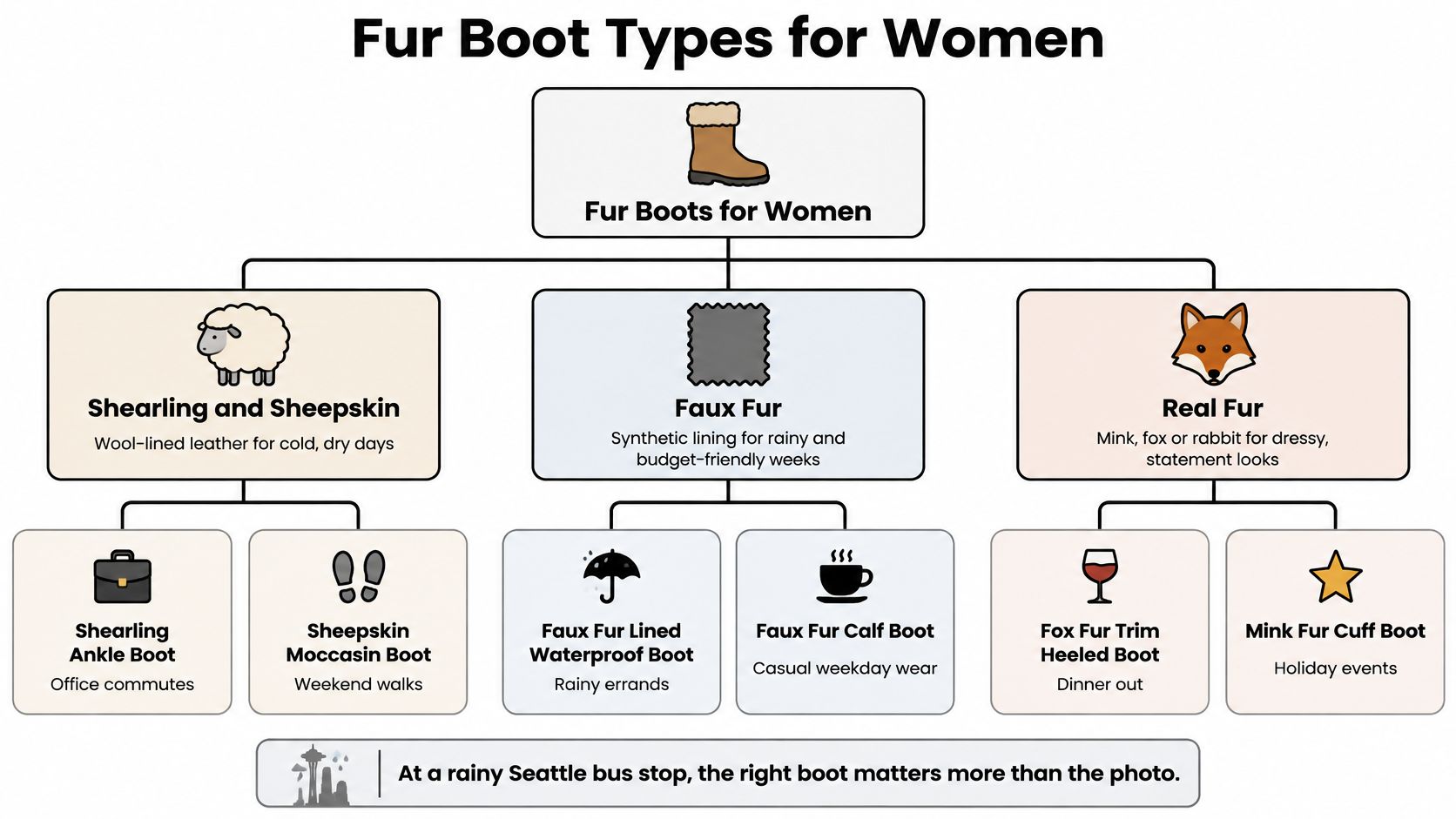
Start with the lookup, because the right type depends on your week, not a trend photo. At a rainy Seattle bus stop, the right boot matters more than the photo.
Fur boot types at a glance
| Type | Construction | Best use | Relative warmth |
|---|---|---|---|
| Fur-lined boots | Full faux fur or shearling lining inside a leather, suede or vegan shell | Dry cold days and standing outdoors | High |
| Fur-trim boots | Fur cuff or collar on an ankle or tall boot | Office and evening wear | Moderate |
| Shearling-style boots | Sheepskin-look pile with a wool-like feel | Heavy cold and long outdoor time | Very high |
| Carriage (motor) boots | Velvet body, quilted lining and rabbit-fur or faux trim | Vintage styling and dry winter travel | Moderate |
| Fur boot toppers | Removable faux fur cuffs worn over existing boots | Refreshing boots you already own | Low to moderate |
| Fur-lined pull-on boots | Step-in design with full lining and no zipper | Daily commuting and wet snow | High |
What the table is really telling you
Fur-lined boots put the pile where your foot lives, so they feel instantly cozy and substantial. Fur-trim boots place fur at the cuff only. They look polished, but the lining and sole still do most of the actual thermal work.
Shearling-style boots mimic that dense, wool-like pile for long, dry cold. Carriage boots are the romantic ancestors here, while fur boot toppers let you refresh a sturdy pair you already trust without buying a whole new boot.
Fur-lined pull-on boots skip hardware that can jam in ice. For commuting, that simplicity often beats a fussy closure.
Choose the type that handles your wettest, coldest hour of the week, not your mildest afternoon.
History backs up that practical streak. Carriage boots popular from the 1860s combined velvet bodies with quilted lining and rabbit-fur or faux trim, and pull-on styles gained ground in the 1950s because they avoided frozen zippers. Warmth, coverage and ease of use have always mattered as much as appearance.
We're Pandemonium, a small-batch Seattle studio making hand-sewn faux fur pieces for over 25 years, founded by Leigh Young. If you love that lineage, read The Evolution of Fur, then browse our handmade fur-trim pieces to see the textures up close.
Real Fur, Faux Fur and Shearling Compared
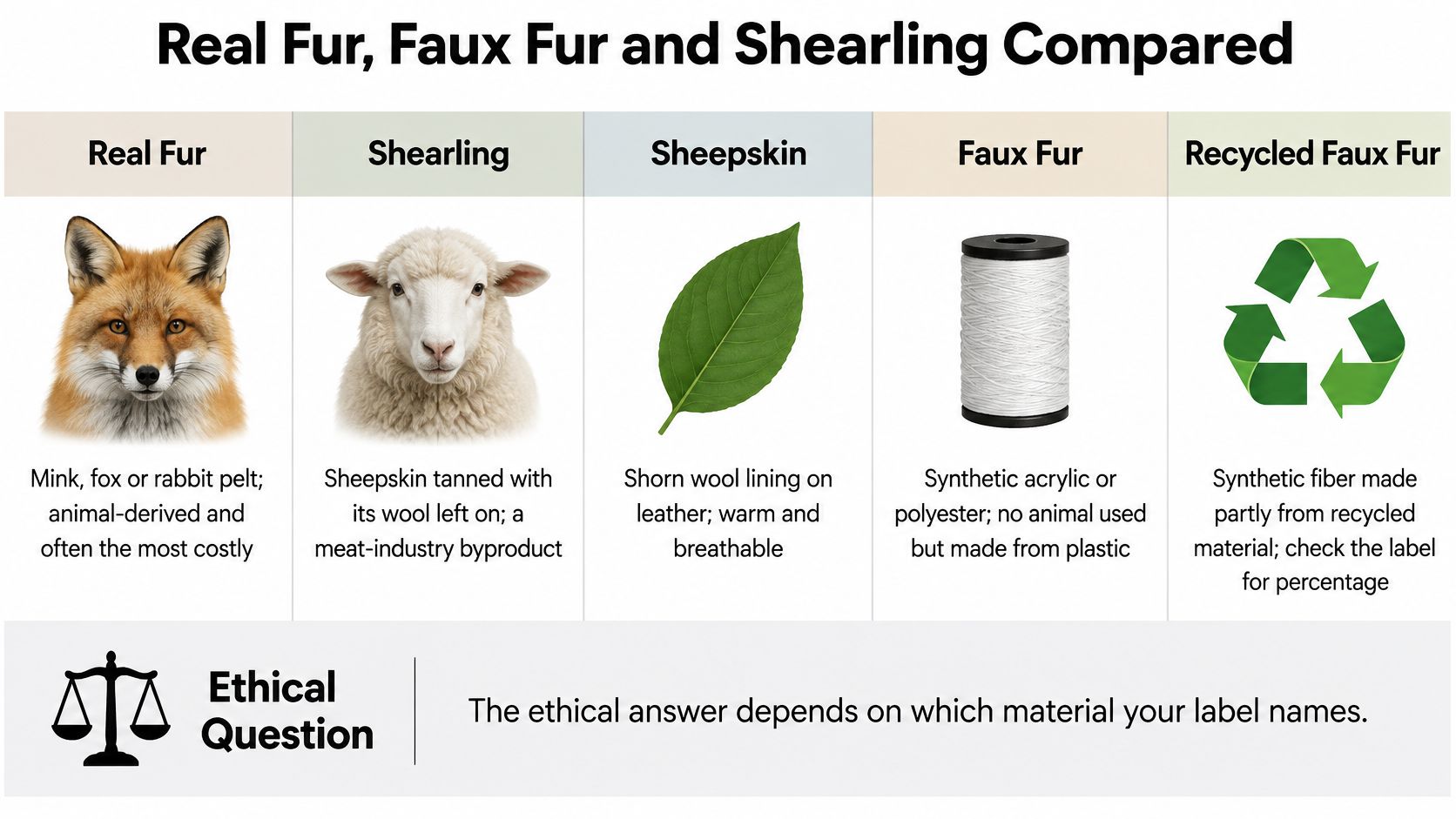
The word fur on a label can mean five different materials. The ethical answer depends on which one your label names.
Boot fur and lining materials compared
| Material | What it is | Feel and warmth | Ethics and care |
|---|---|---|---|
| Real fur (mink, fox, rabbit) | Animal pelt | Very warm with a heavy, luxurious weight | Animal-derived; not offered by Pandemonium |
| Shearling or sheepskin | Animal hide with the wool left on | Warm and naturally breathable | Animal-derived by-product; check tanning method |
| High-end faux fur | Synthetic pile, often acrylic or modacrylic, on a knit backing | Plush, cozy and lightweight | Vegan; ask for disclosed fiber content |
| Recycled-polyester faux fur | Pile made from recycled plastic bottle fiber | Plush, and weather-resistant with a sealed shell | Vegan; ask for recycled content percentage |
| Velvet and quilted lining | Woven or quilted textile under a fur trim | Soft, with warmth from the insulating layer | Depends on fiber; check care label |
How to check what you're holding
Part the pile at a cut edge or seam allowance and look at the base. Real pelts show leather-like skin beneath the hair, while faux pile sits on a knit or woven backing. Then ask the maker for fiber content and sourcing in writing before you buy.
That second step matters because vegan doesn't automatically mean low impact. We offer cruelty-free luxury and don't use real fur, so our focus is high-end faux fur and vegan fur, including Tissavel luxury textiles, hand-sewn in Seattle in small batches.
Why labels alone aren't enough
Textile Exchange data showing recycled fibers at approximately 8.1% of total global fiber production in 2021, with recycled polyester from plastic bottles at about 7.6% tells a useful story. The same data notes about 99% of recycled polyester was bottle-based, cited in that report.
An ethical alternative should be judged by disclosed fiber content and sourcing, not just the word vegan or recycled. A plush hand feel tells you little about where the fiber came from or how it'll age.
Ask any maker these questions:
- Exact fiber content: What's the pile, what's the backing, and in what proportions?
- Recycled claim: What percentage is recycled, and is it bottle-based?
- Country and maker: Who sewed it, and can they repair it?
- Care reality: Can it handle rain, brushing and spot cleaning without matting?
For a deeper comparison, read our guide to faux fur versus real fur. When you're ready to compare textures yourself, shop our high-end faux fur pieces and feel the difference between velvety pile and a thin, shiny substitute.
Insulation and Waterproofing for Cold Climates
Warmth is a system. Shell, lining, insole, midsole and seam sealing work together, and visible fur is only one part. Find your scenario first.
Insulation and waterproofing by winter scenario
| Scenario | Insulation target | Waterproofing priority | Key note |
|---|---|---|---|
| Wet transit commute (Seattle slush, rain) | About 200 g, moderate | Highest, sealed seams and water-resistant shell | Choose a quick-dry footbed over extra lining |
| Dry subzero walking | 400 g or more | Moderate | Most warmth needed; match it to time outdoors |
| Prolonged standing (markets, events) | 400 g or more | Moderate | Cold travels up through the sole; check the midsole |
| Occasional snow | About 200 g | Moderate to high | A plush lining with a weather-resistant shell is usually enough |
| Heavy, all-day outdoor work | 400 g or more | High | Confirm the insulation rating before buying |
Reading the numbers without being misled
Guidance that roughly 200 grams of insulation may suit active winter use, while more than 400 grams is intended for substantially colder conditions is a starting point, not a guarantee. Time outdoors and walking versus standing still change the answer for the same boot.
Walking generates heat. Standing on icy concrete at a market doesn't. That's why the table gives prolonged standing a higher target, plus a warning about cold conducting up through the sole.
Watch this short overview before you compare ratings between brands, because test conditions vary more than marketing suggests.
The wet warmth trade-off
Wet insulation loses practical warmth, and moisture can enter through the tongue or boot opening even when the outer material is labeled waterproof. Dense faux fur improves insulation by trapping still air, but it can also slow drying if it absorbs moisture.
For a Seattle-style wet commute, a moderately insulated, weather-sealed boot can outperform a heavily lined boot that soaks up slush or overheats you on the bus. Look for a removable or quick-drying footbed and a moisture-resistant lining.
We also think in layers beyond the boot. Pairing a weather-sealed pair with our Cozy Cable knits adds warmth you can remove indoors, instead of baking inside maximum insulation all day.
For more layering logic, explore our cold-weather gear notes, then shop fur-lined options suited to wet city winters with your scenario row in mind.
How to Measure Your Fit for Fur Boots
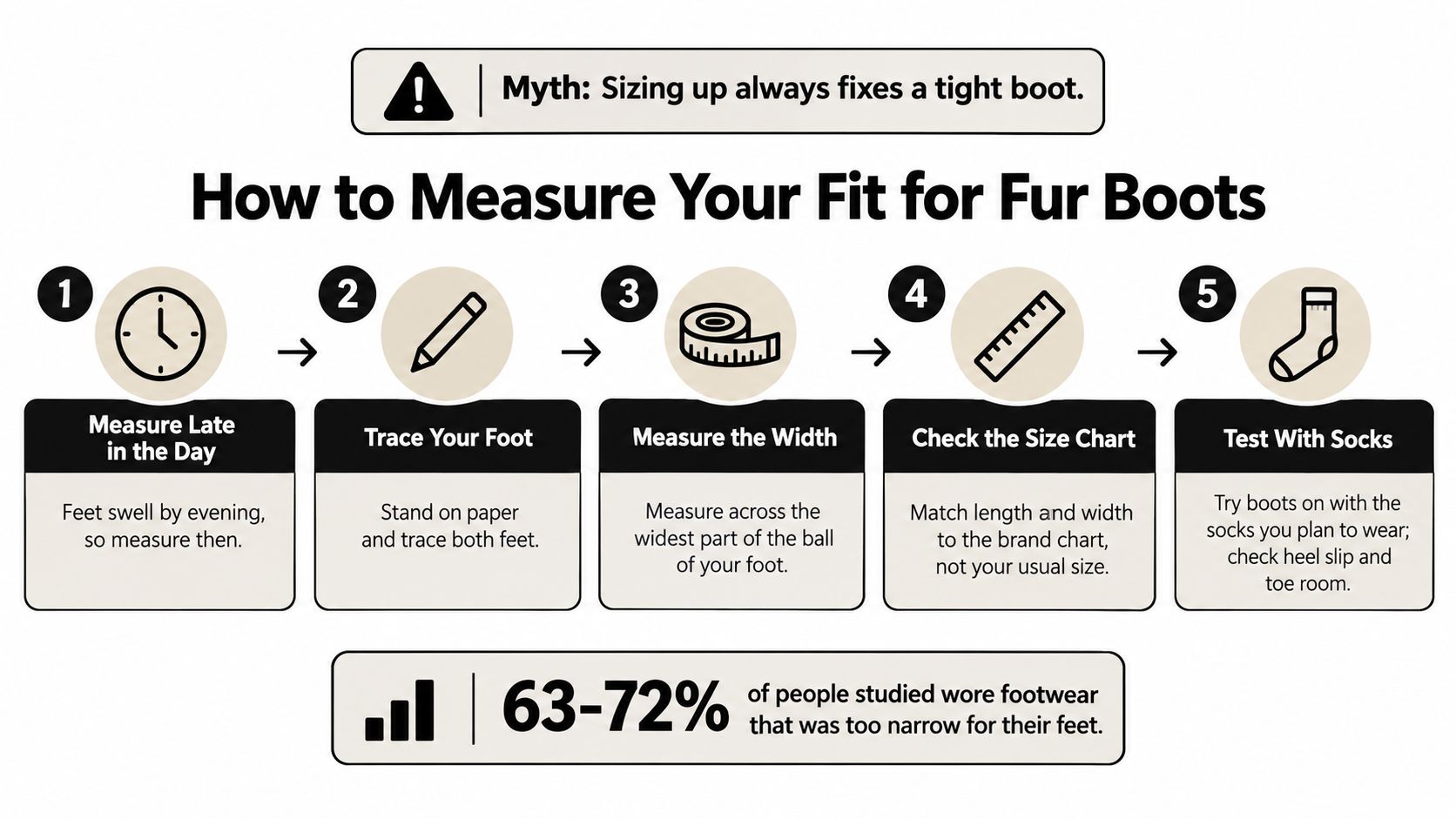
Sizing up doesn't always fix a tight boot. That's the myth that leaves many women with a loose heel and a pinched forefoot at the same time.
Research finding 63 to 72% of people studied wore footwear that failed to accommodate either foot length or width explains why length-only charts fail. One study of American women in that review found 88% wore shoes narrower than their feet, with an average discrepancy of 1.2 cm.
Your six step fit audit
- Measure both feet at day's end. Feet swell during the day, and many people have one foot slightly larger.
- Measure length and ball width. Stand on paper, trace, then measure across the widest part of the forefoot.
- Measure instep height. A high instep needs volume over the top, not extra length in front.
- Measure calf circumference. Do this at the widest point for tall styles, over the leggings or denim you'll tuck in.
- Test with socks and orthotics. Wear your warmest socks and any insert, then check for heel lift and forefoot pinch as you walk.
- Choose the right fix. Decide between a half size, a removable insole, or custom sizing instead of automatically going a full size up.
Safety point: Excess length with inadequate width can leave the heel unstable and increase tripping risk, especially on icy steps.
A roomy toe box also protects warmth. When a tight fit compresses plush lining, it squeezes out the still air that insulates you.
At Pandemonium, we offer custom sizing and personalized adjustments for hard-to-fit feet and calves, plus our your fabric, our expertise service for one-of-a-kind pieces. If standard charts keep failing you, request a custom fit consultation and bring your measurements from tonight's audit.
Styling Fur Boots from Office to Weekend
One statement piece works best with calm, classic basics. Build around a powerful black coat or a calming brown one, then let texture do the talking.
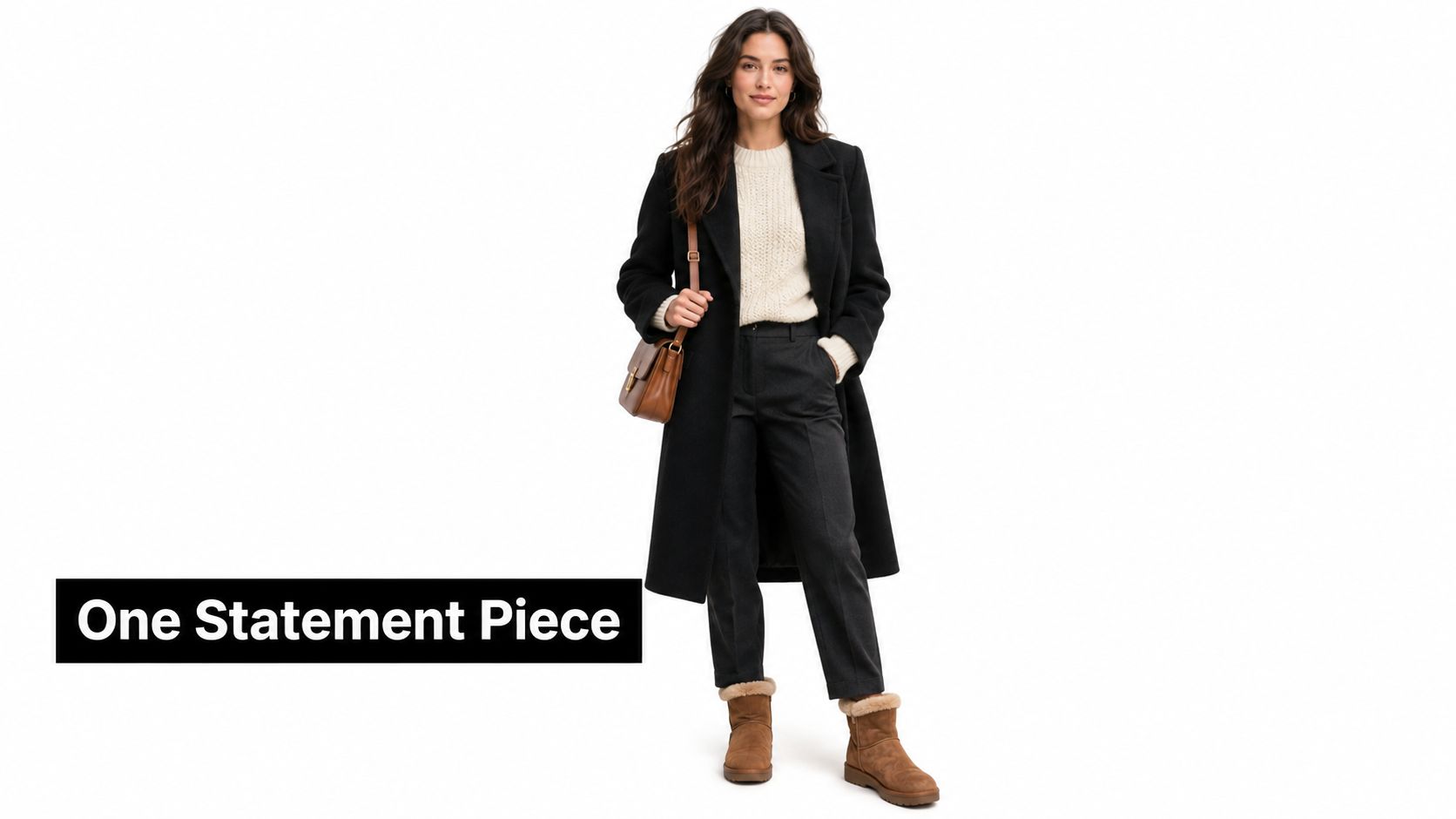
- Office polish: Fur-trim ankle boots with charcoal fitted trousers and a camel coat. The plush cuff softens sharp tailoring without looking casual.
- Weekend errands: Fur-lined boots with dark denim, a chunky cream knit and a structured bag. Substantial wool against silky pile keeps it intentional, not sloppy.
- Evening out: Carriage-style boots with a velvety velvet midi dress and a faux fur wrap. Rich-toned, shimmering textures stack beautifully under low light.
- Refresh what you own: Fur boot toppers over black boots you already trust. Swap topper colour by season and the same base boot feels new.
Colour that earns its place
Black, cognac and camel suit most coats in a working wardrobe. They repeat well, hide salt marks better than pale suede, and don't fight patterned scarves.
Bold prints are different. A vibrant pattern from The Fractal Collection works best as the single statement, with everything else quiet and architectural. Two competing prints plus fur texture is where outfits start to shout.
Texture contrast is your friend. Pair weightless faux fur with matte wool, smooth leather, or crisp denim so each material reads clearly.
For more combinations, read Get the Most From Your Winter Wardrobe. Then explore the Fractal Collection when you want that one bold piece to anchor a simple coat.
Caring for Fur Boots Through Winter
Faux fur tolerates care well when it's handled gently and dried properly. Most damage we see comes from heat, rubbing, and storing boots while they're still damp.
Fur boot care tasks and timing
| Task | How often | Method | Note |
|---|---|---|---|
| Brush the pile | After each snowy or damp wear | Soft dry brush, stroking with the pile direction | Keeps the faux fur plush and lofted |
| Spot clean | As soon as a mark appears | Cool water, mild soap, blot without rubbing | Test a hidden spot first |
| Dry after a wet day | The same day | Stuff with paper, dry at room temperature | Keep away from radiators and heaters |
| Protect the shell | Once per season | Apply a breathable protectant to leather or suede | Test on a hidden patch; ask the maker which product suits vegan shells |
| Professional checkup and repair | About every six months | Inspect seams, lining and heel wear | Address small repairs early |
| Off-season storage | Between seasons | Shape with acid-free tissue in a cool, dry place | Avoid sealed plastic bags |
The drying rule people miss
Stuff boots with paper and let them dry at room temperature. Direct heat can flatten pile and stiffen leather, and it often sets a water mark instead of removing it.
Rotate pairs when you can. A boot that doesn't fully dry between wears stays clammy, loses loft, and starts to smell like a damp closet.
Repair on a rhythm, not in a panic
A University College London study of 297 participants found the most common clothing repair frequency was once every six months, at 40.1% before COVID-19 and 32.7% during the pandemic. That six-month rhythm suits boots too. Check seams, linings and heel wear before small faults become replacements.
That research identified three routes, do-it-yourself repair, hiring a professional, and community repair services. Use the one that matches the fault. Loose surface pile needs brushing, while a splitting seam needs stitching.
Our Seattle studio offers bespoke repair and custom adjustments, so a favourite pair can be refreshed rather than replaced. Read our fur cleaning guidance for technique details, then book a repair or tailoring consultation before next season's rush.
Confirm Your Fit and Choose Your Pair
You don't need another checklist. You need three clear answers before you spend.
Which type handles your wettest, coldest hour? Which row in the insulation table matches your actual week? Has a fit check with both feet and your winter socks passed without heel lift or forefoot pinch?
If any answer is fuzzy, pause there. A beautiful cuff won't compensate for a narrow forefoot or soaked insulation on your commute.
Pandemonium Millinery is our Seattle studio, with more than 25 years of design experience under Leigh Young. We hand-sew high-end faux fur in small batches for women who want cruelty-free luxury that lasts beyond one winter.
Our bespoke offer includes custom sizing, personalized adjustments, and your fabric, our expertise for a one-of-a-kind pair built around your measurements. It's slow, tactile work, and it's why hard-to-fit shoppers find us.
Join The Crowd, our email list, for 15% off your first order. Then take the hard step tonight, measure both feet, and Explore the Fractal Collection with those numbers beside you.
At Pandemonium Millinery, we hand-sew plush, high-end faux fur hats, scarves and accessories in our Seattle studio, with custom sizing for pieces that fit your life as beautifully as your warmest boots. Visit Pandemonium Millinery to explore small-batch, cruelty-free luxury and start your bespoke piece today.


